Portugal has a way of surprising you. Most people arrive expecting cobblestone streets, pastéis de nata, and fado music, and they get all of that. But what catches many visitors completely off guard is how extraordinary portugal nature turns out to be. From the misty granite peaks of the north to the dramatic sea cliffs of the Algarve, from cork oak forests to volcanic calderas, this country packs more natural diversity into its borders than most places twice its size. I’ve explored a good stretch of it, and I’ll tell you honestly: it rewards the curious traveler who goes looking beyond the city centers.
The landscape here is shaped by an unusual mix of Atlantic winds, Mediterranean warmth, and ancient geology. That combination produces ecosystems you won’t find anywhere else in Europe, and a biodiversity that scientists are still working to fully document. Whether you’re a serious hiker, a wildlife photographer, or just someone who wants to walk somewhere beautiful without another tourist immediately behind you, portugal nature has something to offer at almost any time of year.
Overview of Portugal’s Natural Landscape
Portugal sits at the southwestern edge of Europe, and that position matters enormously. It’s where the Atlantic Ocean meets the Iberian Peninsula, where northern dampness transitions into southern aridity, and where ancient mountain ranges give way to wide river valleys and coastal plains. The result is a country that feels geographically much larger than its actual size.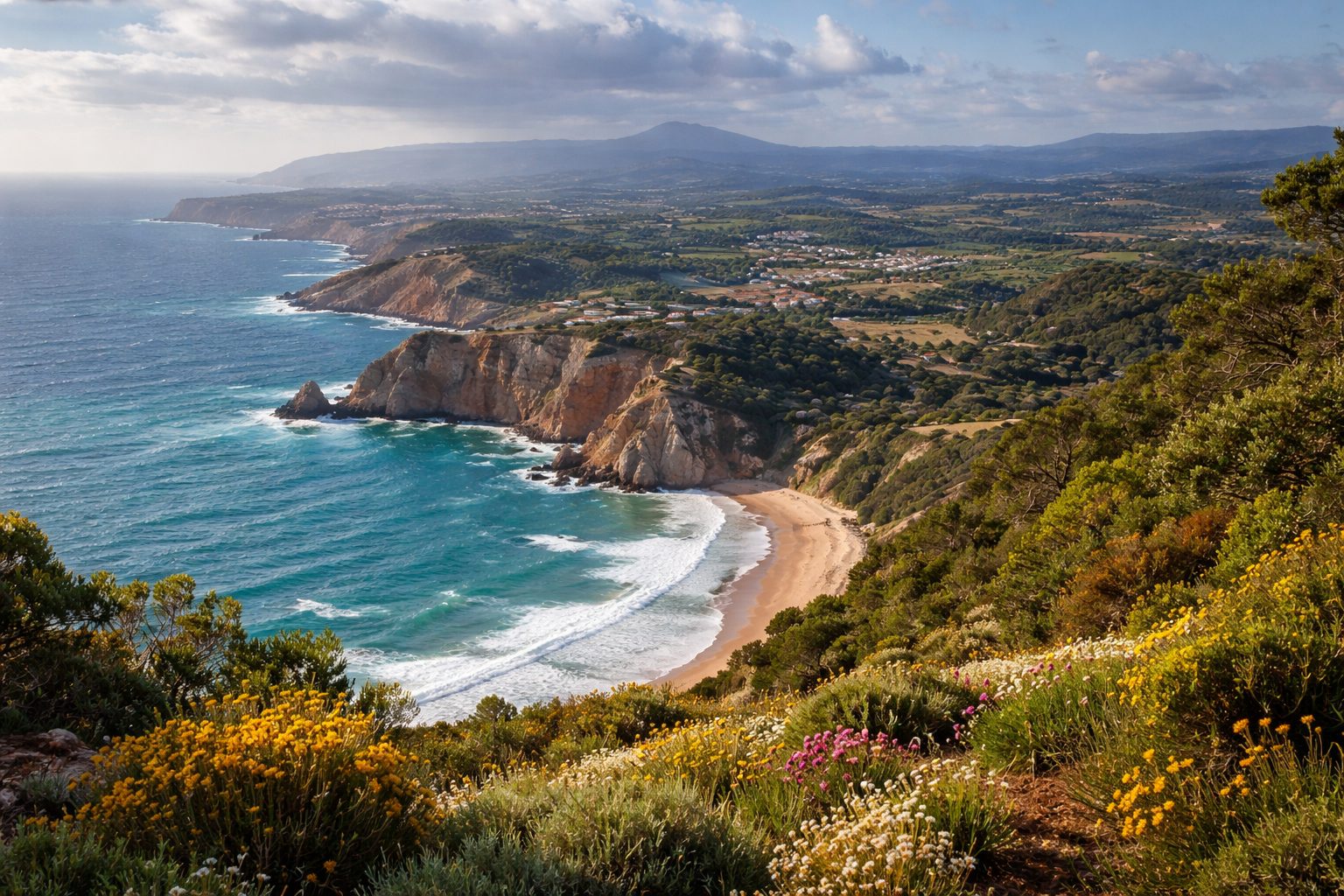
Geographic Diversity
The north is green, wet, and mountainous. The Minho and Trás-os-Montes regions contain some of the most rugged terrain in western Europe, with granite plateaus, deep river gorges, and dense native forest. Moving south, the landscape opens up through the Douro Valley into the rolling plateaus of the Alentejo, where cork oaks, olive groves, and broad wheat fields define the character of the land.
The Algarve in the far south has its own distinct geography: golden limestone cliffs, sea caves, and sheltered beaches backed by scrubland. And then there’s Madeira and the Azores, the island groups that sit out in the Atlantic and represent some of the most remarkable volcanic and oceanic landscapes in the world. Portugal’s geographic range, from continental plateau to mid-ocean archipelago, is genuinely hard to match in a country this size.
Climate Influence on Flora and Fauna
Climate is the engine behind all of this. The north receives heavy Atlantic rainfall and experiences cool winters, supporting deciduous and mixed forests. The interior and south are hotter and drier, with a Mediterranean climate that shapes scrubland, grassland, and semi-arid habitats during summer.
The Azores has its own subtropical microclimate, with high rainfall year-round and temperatures that barely fluctuate. Madeira combines altitude with oceanic position to produce a range of climate zones within a single island. Each of these climatic zones supports distinct communities of plants and animals, which is why portugal nature remains interesting for specialists and general visitors alike across every season.
Major Natural Parks in Portugal
Portugal has invested seriously in protected areas. The country manages one national park, several natural parks, and dozens of classified natural reserves and protected landscape areas. The three I’d prioritize are genuinely among the best natural areas in southern Europe.
Peneda-Gerês National Park
Peneda-Gerês is Portugal’s only national park and it sits in the far northwest, bordering Spain’s Galicia region. This is wild country by any standard: granite mountains rising above 1,500 meters, waterfalls cutting through ancient oak and birch forests, and wolves still roaming the high ground.
The park covers around 700 square kilometers and contains several distinct habitats. The valley bottoms hold old farming villages where people have lived for centuries alongside the landscape rather than fighting it. Higher up, the terrain becomes harsher, with exposed moorland and rock formations that look like something from a northern saga. The best time to visit is late spring or early autumn, when the crowds are manageable and the conditions ideal for long walks.
Wildlife here includes the Iberian wolf, wild boar, roe deer, and golden eagle. The rivers run clean enough to support otter populations, which is always a good sign. And the botanical diversity is serious: the park contains plants that survived the last glaciation in refugia within its valleys, making it a place of real scientific significance.
Arrábida Natural Park
Arrábida is a completely different experience from Gerês. Located about 40 kilometers south of Lisbon on the Setúbal Peninsula, it’s a compact park defined by limestone mountains dropping steeply to the sea. The water here is extraordinarily clear, turquoise in summer, with visibility you’d expect from the Mediterranean rather than the Atlantic.
The vegetation is dense Mediterranean scrub: cistus, rosemary, wild lavender, and scattered umbrella pines. In spring, the hillsides are covered in wildflowers. The sea cliffs support nesting peregrine falcons, and the marine reserve offshore is one of the richest in Portugal’s waters. If you visit only one natural park within day-trip range of Lisbon, make it this one.
Douro International Natural Park
This park runs along the Douro River on the Spanish border in the northeast. The river here cuts through deep schist gorges, and the cliffs host one of the most important breeding populations of raptors in the entire Iberian Peninsula.
Black stork, Egyptian vulture, and Bonelli’s eagle all nest on the cliff faces. The scenery is stark and dramatic in a way that’s quite different from the lush north or the coastal parks. It’s less visited than Gerês or Arrábida, which means you can spend a day here without feeling like you’re sharing the experience with a crowd.
Unique Ecosystems in Portugal
Beyond the parks, Portugal contains several distinct ecosystem types that are worth understanding on their own terms.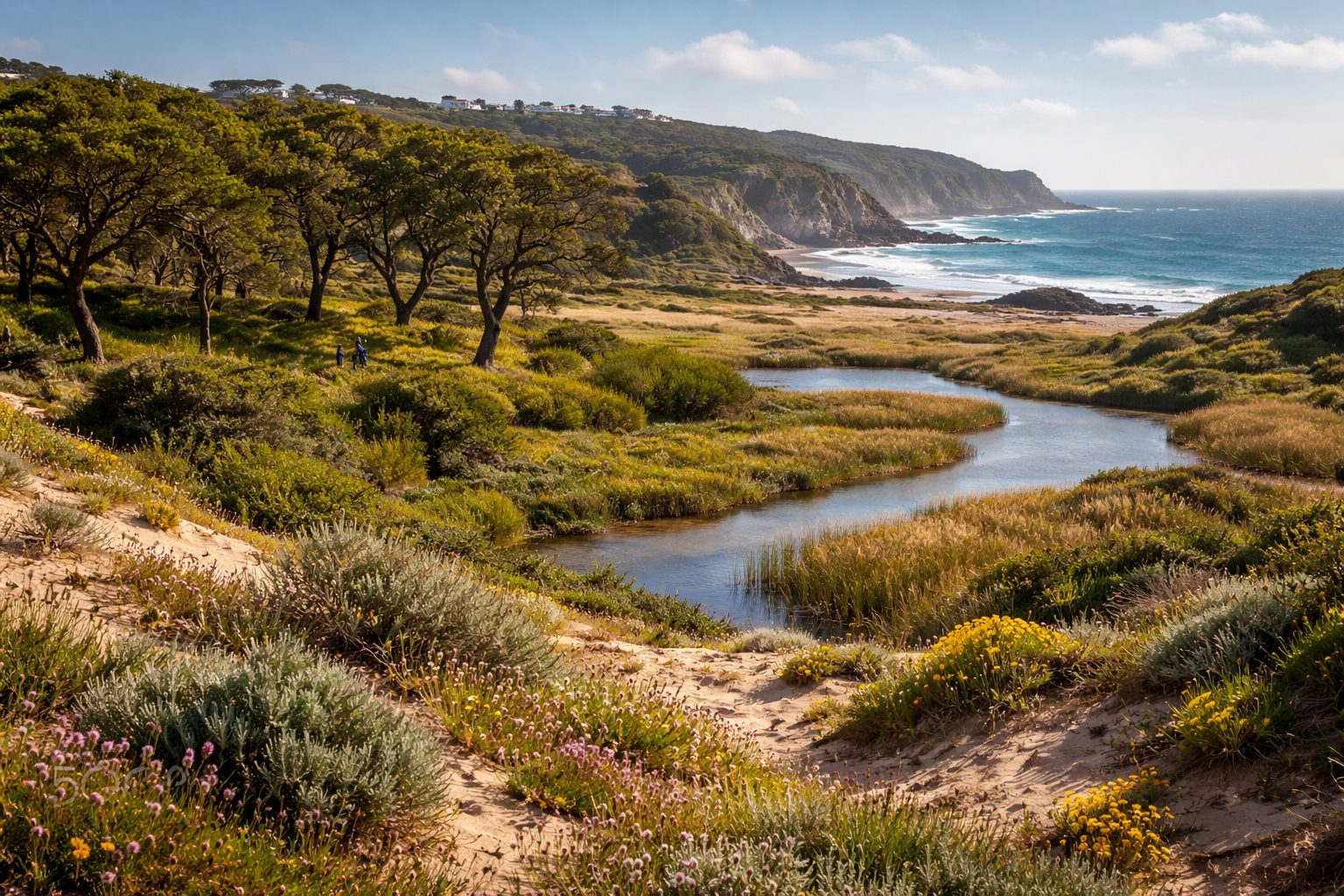
Coastal Ecosystems
Portugal has 2,000 kilometers of coastline if you include the islands, and the range of coastal habitats is remarkable. The Atlantic coast in the north and center is shaped by powerful surf and strong winds, creating dune systems, coastal lagoons, and sea cliff communities adapted to salt spray and exposure.
The Ria Formosa in the Algarve is one of the most important wetland complexes in Europe: a system of barrier islands, lagoons, and salt marshes that supports enormous numbers of waterbirds. Purple gallinule, flamingo, spoonbill, and chameleon all live here. The estuary ecosystems around the Tagus and Sado rivers function similarly, hosting wintering waders and wildfowl in numbers that attract birdwatchers from across the continent.
Forest Ecosystems
Native Portuguese forest is dominated by two trees: cork oak and holm oak. The montado, an open woodland system where cork oaks grow in widely spaced groves over natural grassland, covers large parts of the Alentejo and is one of the most biodiverse habitats in Europe. It’s managed by humans, but in a remarkably light-handed way, and the result is a landscape that holds more species per square meter than many wilderness areas.
The ancient laurisilva forests of Madeira and the Azores are in a different category altogether. These are subtropical forests that existed before the last ice age, relics of a forest type that once covered much of southern Europe. Walking through them is genuinely unusual: tree heather grows to ten meters, mosses cover every surface, and the air has a quality that’s hard to describe except as very old.
Mountain Ecosystems
The high ground in the Serra da Estrela, Portugal’s highest mainland range, supports alpine and sub-alpine habitats. Above the tree line, the landscape is covered in heath and broom, with granite outcrops and small lakes filling glacial hollows.
The mountain ecosystems of Madeira are structured by altitude and rainfall, with distinct vegetation zones stacked on top of each other from sea level to the summit plateaus. The Azores volcanoes have their own high-altitude habitats, including crater lakes and calderas that create local microclimates capable of supporting plants found nowhere else.
Portugal’s Biodiversity
The numbers are genuinely impressive. Portugal is home to over 5,000 plant species, more than 370 bird species, and a significant proportion of Europe’s threatened mammals and reptiles. The country’s position as a bridge between Atlantic and Mediterranean climates, and its geographic isolation at the edge of the continent, has produced high levels of endemism.
Endemic Species of Portugal
The Azores and Madeira drive much of the national endemism count. The Azores bullfinch, one of the world’s rarest birds until intensive conservation efforts began in the 1990s, lives only in the laurisilva forest of São Miguel. The Madeira firecrest, Zino’s petrel, and the Madeiran wall lizard are all found nowhere else on Earth.
On the mainland, the Iberian lynx was critically endangered but is now recovering in parts of the Alentejo following one of the most successful wildlife restoration projects in European history. Savi’s pine vole, the Iberian desman, and several endemic plant species round out a mainland endemic list that’s more significant than most people expect.
Threatened Species and Conservation Efforts
Portugal has had real conservation successes. The Iberian lynx population was under 100 animals in 2002 and is now over 1,000 across the peninsula. The Bonelli’s eagle, golden eagle, and black stork have all benefited from habitat protection and reduced persecution.
Marine conservation has lagged behind terrestrial work but is improving. The whale-watching industry in the Azores has transitioned from hunting to ecotourism in a single generation, and the archipelago’s marine park network is now significant in global terms. Dolphin and whale populations are recovering, and the sperm whale population that makes the Azores a global cetacean hotspot is one of the most studied in the world.
Outdoor Activities to Experience Portugal’s Nature
Getting out into portugal nature doesn’t require special equipment or unusual fitness levels for most activities. The infrastructure is generally good, and the variety of options means there’s something appropriate for almost any visitor.
Hiking Trails
The Rota Vicentina is probably the best long-distance coastal trail in southern Europe. It runs 450 kilometers along the western Algarve and Alentejo coast, combining a fishermen’s trail along cliff tops with an inland historical route through countryside. The coastal sections are extraordinary, with almost no development visible for long stretches.
In the north, Peneda-Gerês has an extensive network of marked trails ranging from short walks to multi-day routes crossing into Spain. The GR50 traverses the park over several days and takes in some of its most dramatic scenery. The Via Algarviana crosses the Algarve from west to east through the interior, away from the coastal tourist zone, and is considerably less known than it deserves to be.
- Rota Vicentina: 450 km coastal and inland trail, split between fishermen’s trail and historical route
- GR50 Gerês: multi-day traverse of Portugal’s only national park
- Via Algarviana: 300 km east-west trail through the Algarve interior
- Levada walks in Madeira: irrigation channel paths through laurisilva forest
- Faial-Pico Channel trail in the Azores: inter-island walking route with ocean views
Birdwatching Locations
Portugal is one of Europe’s premier birdwatching destinations, particularly during migration. The western coast acts as a funnel for soaring birds moving between Africa and Europe, and the lagoon systems hold resident populations of species rarely seen elsewhere.
- Ria Formosa: year-round waders, flamingos, and purple gallinule
- Castro Verde: great bustard, little bustard, and steppe birds in the Alentejo
- Douro International: raptors including eagle owl, black stork, and Egyptian vulture
- Cabo de São Vicente: migration watchpoint for raptors and passerines in autumn
- Azores (São Miguel, Terceira): vagrant American species blown off course during autumn
The best birding months for variety are October for migration and April for breeding species and spring migrants combined.
Surfing Spots
Portugal has some of the best surf in Europe, and the waves shape the coastal ecology as much as they shape the sport. The Atlantic swell hits the western coast with consistent power, producing breaks from mellow beach waves suitable for beginners to heavy reef breaks that attract professionals from around the world.
Nazaré is world-famous for the giant waves produced by an underwater canyon that amplifies Atlantic swells to record heights. But for most visitors, the beaches around Sagres, Ericeira, and the Alentejo coast offer more accessible and equally beautiful experiences. The surf zones here are also where you’re most likely to spot grey seals, dolphins, and occasionally basking sharks working the rich inshore waters.
Regional Highlights of Nature in Portugal
Each region of portugal nature tells a different story about landscape, ecology, and the relationship between people and place.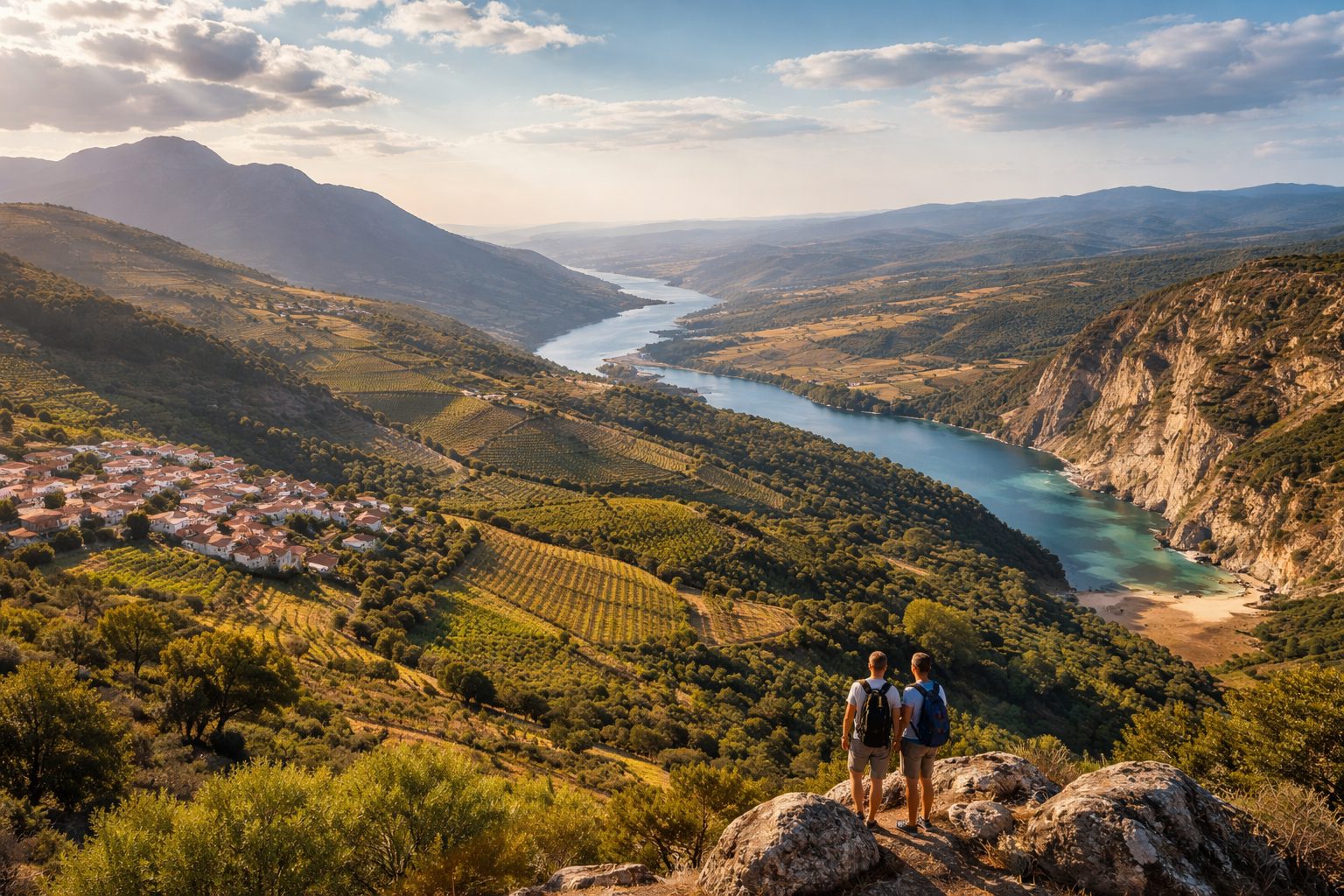
The Algarve Coast
The Algarve is better known for its beach resorts than for its natural areas, but the coastline west of Lagos is something different. Sagres and the Costa Vicentina remain largely undeveloped, with sea cliffs covered in endemic plants and beaches accessible only on foot or by boat.
The Ria Formosa east of Faro is one of the most significant wetlands in Portugal and a Ramsar site of international importance. The salt pans, lagoons, and tidal channels support resident flamingos, chameleon populations, and nesting populations of little tern and Kentish plover. It’s accessible by ferry from Faro or by hiking the barrier island system.
The Douro Valley
The Douro Valley is primarily known for wine, and the terraced vineyards carved into schist hillsides are undeniably dramatic. But the natural environment around and beneath the cultivation is equally worth attention.
The river itself holds otters, kingfishers, and significant fish populations. The margins of the valley away from the intensively farmed terraces support dense Mediterranean scrub and woodland with boar, genet, and various raptor species. The light in the valley is extraordinary in early morning and evening, which is why photographers return here repeatedly.
The Azores Islands
The Azores are a different category of portugal nature experience. These volcanic islands sit in the middle of the Atlantic, and their ecology is oceanic in a way that continental Portugal simply isn’t. The islands are young in geological terms, and the species that colonized them, mostly birds, bats, and wind-dispersed plants, have evolved in relative isolation for less than a million years.
The whale watching here is exceptional. The Azores are one of the few places in the world where sperm whales are reliably present year-round, and blue whale, sei whale, and fin whale all pass through on seasonal migrations. Dolphin watching involves species including common dolphin, bottlenose dolphin, and the rarer striped and Risso’s dolphins.
The calderas and crater lakes of São Miguel, the lava fields of Pico, and the ancient forest remnants of Flores are landscapes that exist almost nowhere else in the world. The Azores rewards extended exploration more than most places I’ve been.
Sustainable Tourism in Portugal
Portugal’s natural areas are under increasing pressure from tourism. Visitor numbers have grown dramatically since 2015, and the coastal areas especially are experiencing the effects of popularity. But the country is also developing a serious sustainable tourism sector that’s worth supporting.
Eco-Friendly Practices
Several regions have implemented genuinely effective sustainable tourism frameworks. The Douro International Natural Park has an ecotourism network of certified accommodation providers and local guides. The Rota Vicentina operates a lodging network committed to local food sourcing, low-impact construction, and community benefit.
Practical choices that make a difference:
- Stay in family-run guesthouses and rural tourism properties rather than large resorts
- Book local guides for wildlife watching and hiking trips
- Use regional public transport where it exists, especially in the Alentejo and Algarve
- Visit protected areas in shoulder season (April-June and September-October) rather than peak summer
- Follow marked trails and established paths, particularly in dune and cliff habitats
Responsible Wildlife Viewing
Whale watching in the Azores is a model case study. The islands transitioned from commercial whaling to whale watching tourism between the 1980s and early 2000s, and the industry is now regulated by guidelines developed with scientific input. Most operators maintain meaningful distances, limit time spent with animals, and contribute to research programs.
On land, the same principles apply. Iberian lynx, wolf, and eagle observation requires patience and distance. Several specialist operators in the Alentejo and Gerês offer guided wildlife watching trips with experienced naturalists who know the animals and habitats well. These trips are almost always better value than going alone, both for the observer and for the wildlife.
Seasonal Changes in Portugal’s Nature
One of the reasons portugal nature rewards repeat visits is that the landscape genuinely transforms through the year. There’s a version of this place for every season, and each one is worth experiencing.
Spring Blossoms
March through May is my preferred time in most of Portugal. The landscape after winter rains is intensely green, the wildflowers are extraordinary across the Alentejo and Algarve, and migrant birds are moving through or arriving to breed. Almond blossom peaks in February in the Algarve, but the more diverse wildflower show runs through March and April.
The Serra da Estrela still holds snow patches in March, and the contrast between snow-covered peaks and blooming hillsides lower down is one of the most photogenic things Portugal produces. Bird song is at its peak in April and May, and the general impression of the landscape is one of almost overwhelming abundance after the comparative quiet of winter.
Summer Adventures
Summer is hot and dry, especially inland. The Alentejo reaches temperatures over 40 degrees Celsius regularly in July and August, and most wildlife is less active during the heat of the day. But the coast remains accessible and beautiful, and the islands (both Madeira and the Azores) are cooler and less affected by the summer heat.
The coastal hiking trails are at their best in June before the main tourist influx. The sea water is warm enough for swimming from June onwards, and the clear conditions make this the best season for snorkeling in Arrábida or diving in the Azores marine parks.
Autumn Colors
October is genuinely special. The light changes from the harsh white of summer to something golden and more complex. The Douro Valley turns amber and red as the vine leaves change. Migratory birds are moving south in numbers, and the raptor watchpoints at Cabo de São Vicente and Sagres become genuinely exciting during the first two weeks of October.
The forests of Gerês have their own autumn color, and the mountain heathlands pick up a reddish-brown tone that works beautifully in low angle light. Rainfall begins again after the summer drought, and the landscape starts to recover its green in the north from October onwards.
Winter Landscapes
Winter in Portugal is not severe on the coast, but it’s genuinely cold in the interior and mountains. The Serra da Estrela has a ski area that operates when snowfall allows, and the surrounding landscape becomes a clean white world that feels very different from summer.
The wetlands are at their most productive in winter: the Ria Formosa, Tagus estuary, and Sado estuary hold tens of thousands of wintering waders and wildfowl from October through February. Great white egret, spoonbill, and various duck species fill the lagoons. The Alentejo in winter holds wintering cranes and large flocks of lapwing over the broad grain fields.
Photography Spots for Nature Lovers
Photography is one of the best ways to engage seriously with portugal nature, and the country offers an exceptional range of subjects and locations.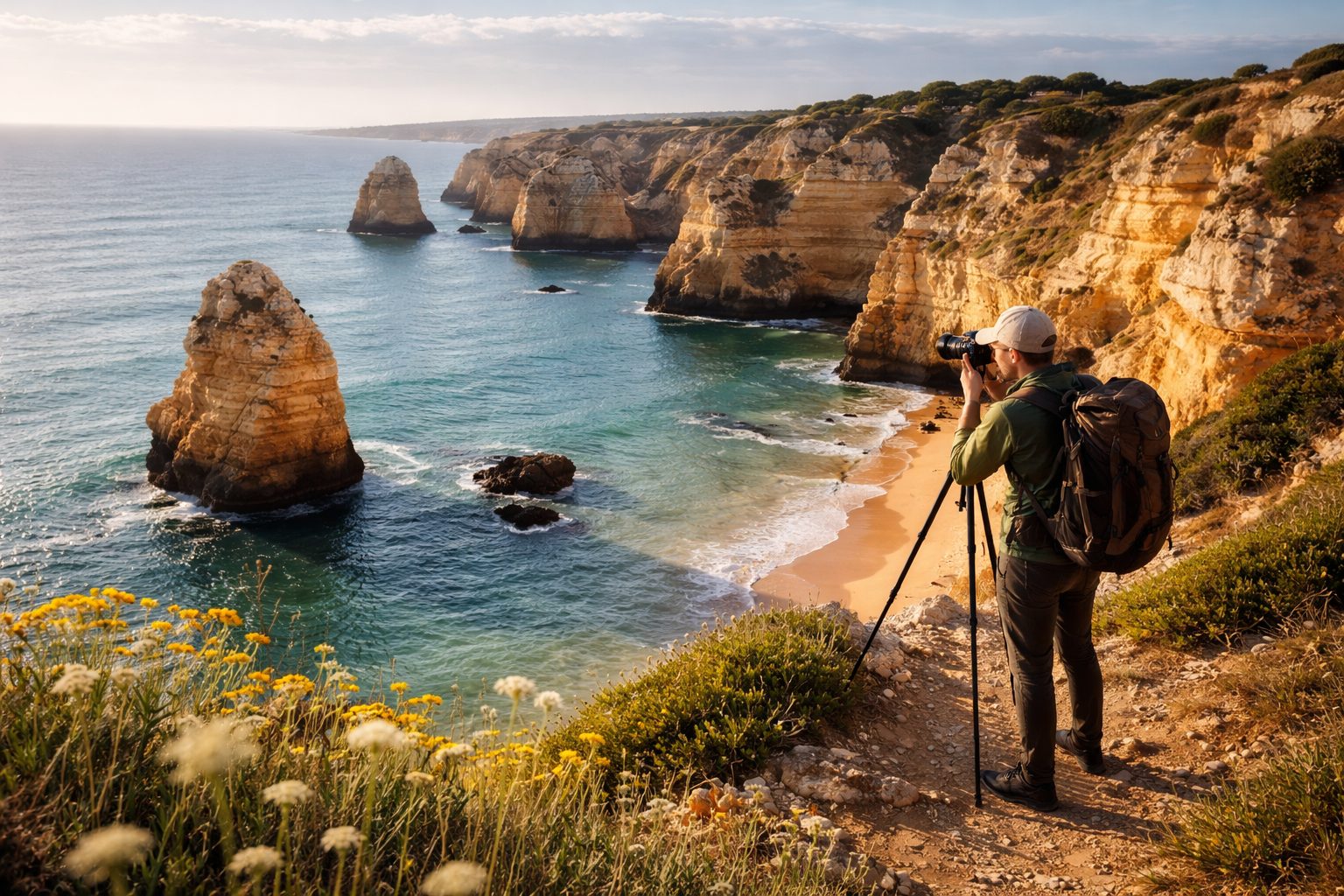
Best Locations for Landscape Photography
| Location | Best Season | Main Subject | Best Light Time |
|---|---|---|---|
| Douro Valley vineyards | October | Terraced landscape and autumn color | Sunrise, late afternoon |
| Cabo de São Vicente | Year-round | Sea cliffs and lighthouse | Sunset |
| Peneda-Gerês waterfalls | Spring | Forest and cascades | Overcast days |
| Ria Formosa | Winter | Waterbirds and lagoon systems | Sunrise |
| Pico Island (Azores) | Summer | Volcano and vineyard landscape | Morning, evening |
| Arrábida limestone cliffs | Spring | Cliffs and clear sea | Midday to afternoon |
| Serra da Estrela | Winter | Snow-covered mountain landscape | Morning |
The Douro Valley rewards patience. The terraced slopes photograph best in early morning mist or the low afternoon light of October. Getting to the valley rim viewpoints before sunrise is effortful but consistently produces extraordinary images.
The Azores present a different challenge: the weather is unpredictable, and the volcanic landscapes are often partially obscured by cloud. But when conditions clear, usually briefly and dramatically, the shots of calderas and coastlines against Atlantic blue are genuinely unusual.
Wildlife Photography Tips
Wildlife photography in Portugal rewards local knowledge more than expensive equipment. Knowing where animals are and when they’re active matters more than having the longest lens.
A few practical suggestions:
- For raptors in the Douro International park, position yourself at the cliff edge observation points early morning before the thermals develop and birds begin soaring
- For otters, work the rivers in the north at dawn, moving quietly along the bank upstream of likely resting spots
- For wading birds in the Ria Formosa, low tide is when feeding concentrates birds in predictable locations
- For whales in the Azores, book an operator who uses traditional vigia (shore-based spotter) networks rather than relying solely on sonar, as the traditional approach tends to find animals faster
- The Iberian lynx monitoring stations in the Alentejo occasionally offer photography access through licensed operators, and the chance to photograph this species in the wild is remarkable
Light in Portugal can be very harsh in summer midday, so most serious wildlife photography happens in the first two hours after sunrise and the last two before sunset.
Frequently Asked Questions (FAQ)
What are the best times to visit Portugal for nature?
April to June and September to October are the best periods for most nature activities. Spring brings wildflowers, migratory birds, and comfortable temperatures, while autumn offers migration again along with harvest season color in the wine regions. The Azores is good year-round for whale watching, with peak season running April through October.
How to get to Portugal’s national parks?
Peneda-Gerês is accessible by car from Braga or Viana do Castelo in roughly an hour. Public transport to the park’s interior is limited, so renting a car is practical. Arrábida is reachable by bus from Setúbal or by car from Lisbon in 45 minutes. The Douro International Natural Park requires a car, with Miranda do Douro as the main access point.
What wildlife can be spotted in Portugal?
Common sightings include Iberian wolf in Gerês, golden eagle and Egyptian vulture in the northeast, purple gallinule and flamingo in the Algarve wetlands, and dolphin pods off almost any coastline. The Azores offers sperm whales, blue whales, and loggerhead sea turtles. Patient observers in the Alentejo may encounter great bustard, little bustard, and with specialist guidance, Iberian lynx.
Are there guided tours for nature exploration?
Yes, and they’re generally worth using. Specialist natural history tour operators run birdwatching and wildlife programs in Gerês, the Douro International, and the Alentejo. Whale watching in the Azores is almost entirely guided. Several operators specialize in multi-day walking tours along the Rota Vicentina and other long-distance trails with accommodation included.
What are the top eco-tourism experiences in Portugal?
The Rota Vicentina coastal trail, staying in certified eco-accommodation along the way, is one of Europe’s better long-distance walking experiences. Whale watching from Pico or Faial in the Azores combines genuine wildlife significance with a strong ecotourism framework. The Aldeia de Pedralva near Sagres is a thoughtfully restored stone village offering sustainable accommodation in an extraordinary location. And the montado farms of the Alentejo, some of which now offer guided visits, give a real understanding of how traditional land management and high biodiversity can coexist productively.
Portugal repays the traveler who goes looking for its natural side. The parks, the coasts, the islands, the river valleys: each one holds more than it promises at first glance, and collectively they make portugal nature one of the genuinely underrated outdoor destinations in Europe. The best advice I can give is to slow down, get off the main roads, and follow the trails where they lead.