If you’re putting together a portugal travel guide for yourself or someone you know, you’ve picked a destination that genuinely rewards the effort. Portugal is one of those places that surprises people. They arrive expecting nice weather and good wine, and leave talking about the light, the food, the people, and the way the whole country feels unhurried without being dull. It’s a small country packed with distinct regions, each worth your time in different ways. This guide covers everything from the cities to the coastlines, the practicalities to the cultural nuances, so you can plan a trip that actually fits what you want from it.
Introduction to Portugal
Portugal sits on the southwestern edge of Europe, bordered by Spain to the north and east and the Atlantic Ocean everywhere else. That Atlantic influence shapes the country in almost every way, from the cuisine to the character of the people. It’s been a seafaring nation for centuries, and that history shows up in the architecture, the azulejo tiles on building facades, and a certain openness to outsiders that makes travel here comfortable even when you don’t speak the language.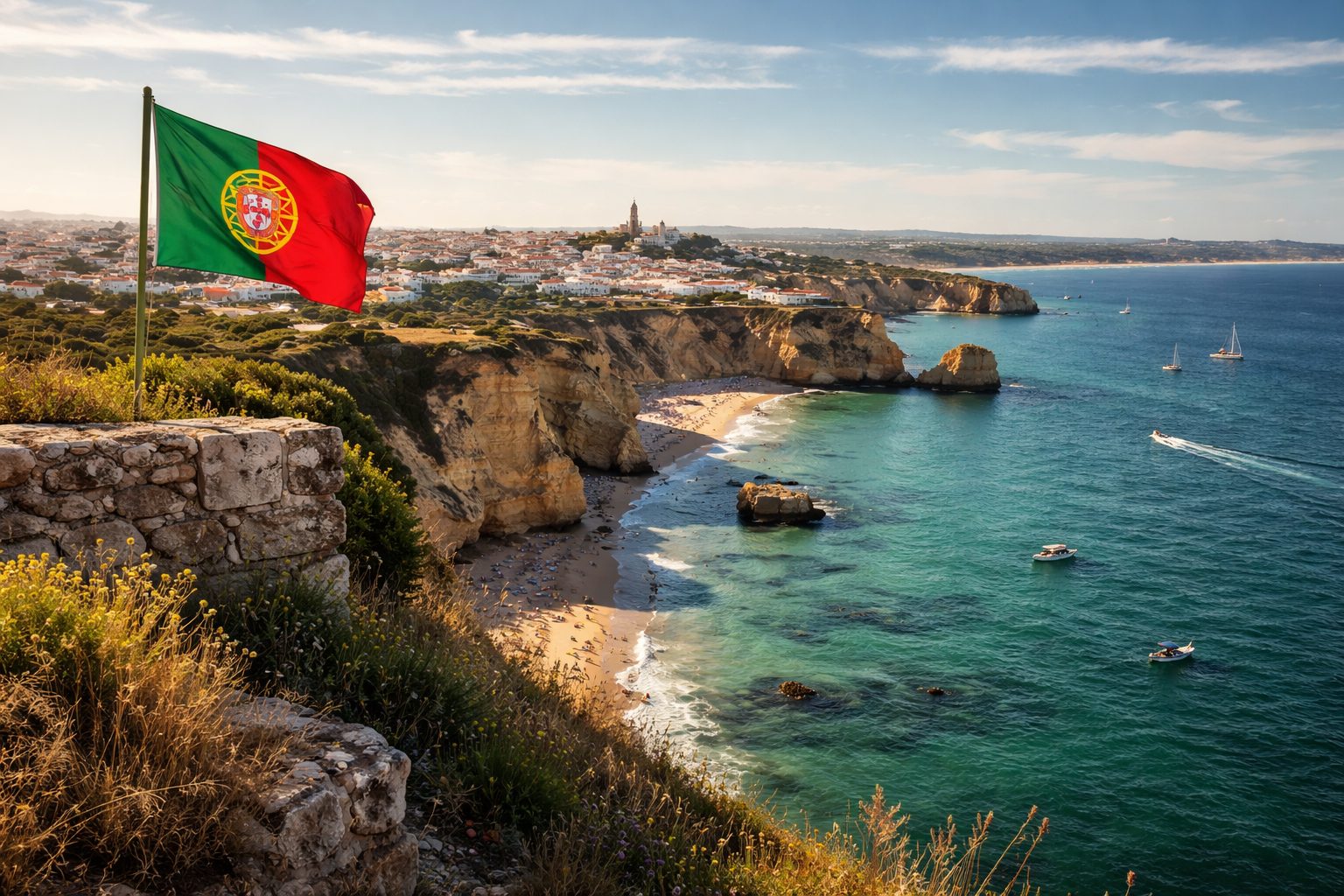
Why Visit Portugal?
The honest answer is that Portugal offers a lot for relatively little effort and expense. Compared to France, Italy, or Spain, it remains less crowded in most places and more affordable across the board. But value alone isn’t the draw.
The country has genuine diversity packed into a small geographic area. You can walk through medieval castles in the morning, swim in clear Atlantic water by afternoon, and eat a long dinner at a family restaurant that evening. The cities feel lived-in, not staged. And the food is some of the most satisfying in Europe, built on fresh seafood, excellent olive oil, and simple techniques done well.
Portugal also has a quieter, more contemplative side that you don’t always find in more heavily touristed countries. Fado music, the national song form, captures something of that mood. It’s worth experiencing at least once.
Best Time to Visit Portugal
The mainland has a Mediterranean climate with Atlantic influence, which means warm, dry summers and mild, wetter winters. The Algarve in the south is warmer and sunnier than the north throughout the year.
- Spring (March to May): The best overall window for most travelers. Temperatures are comfortable, crowds are manageable, and the countryside is green and flowering. Good for hiking, cities, and coastal towns.
- Summer (June to August): Peak season. Hot in the interior and south, cooler on the coast. Expect crowds in Lisbon, Porto, and the Algarve. Book accommodation well in advance.
- Autumn (September to October): My personal preference. The summer crowds have thinned, temperatures are still warm, and the Douro Valley vineyards are harvesting. An excellent time to visit.
- Winter (November to February): Quiet and affordable. The south stays mild enough for beach walks. The north is cool and rainy. Good for city tourism without the crowds.
Avoid August in Lisbon if you dislike extreme heat and tourism at its peak density. September genuinely is the sweet spot.
Top Destinations in Portugal
A thorough portugal travel guide needs to cover the major destinations honestly, because each one serves a different type of traveler. Here’s what you need to know.
Lisbon: The Vibrant Capital
Lisbon is one of Europe’s genuinely great capitals. It’s hilly, which takes some getting used to on foot, but the views from the miradouros (viewpoints) make the climbs worth it. The city has a real neighborhood character that holds up even as tourism has increased significantly over the past decade.
The historic neighborhoods of Alfama and Mouraria are the oldest parts of the city, built before the 1755 earthquake that destroyed much of Lisbon. The streets are narrow and steep, the tiles are everywhere, and fado music drifts out of restaurants in the evenings. Belém is worth a half-day for the Tower of Belém and the Jerónimos Monastery, both extraordinary examples of Manueline architecture. LX Factory, a converted industrial complex, is good for independent shops, restaurants, and a Sunday market.
Practical tips for Lisbon:
- Get an on-foot walking tour in Alfama on your first day to get oriented
- The yellow trams are iconic but extremely crowded; use them once for the experience, then take Uber or walk
- Pastéis de nata (custard tarts) at Pastéis de Belém are worth the queue
Porto: Wine and History
Porto is Lisbon’s northern counterpart, and the two cities have a long-running rivalry that’s mostly friendly and mostly about football. Porto is smaller, grittier in places, and architecturally dense in a way that rewards slow walking. The riverside Ribeira district is a UNESCO World Heritage Site, and for good reason.
The wine trade is the other reason to come. Port wine has been produced in the Douro Valley and aged in cellars across the river in Vila Nova de Gaia for centuries. Most of the major Port houses offer tours and tastings, and it’s an easy way to understand something about Portuguese history and economy in an afternoon.
Porto also has some of the best contemporary food in Portugal right now. The restaurant scene has matured considerably, with chefs doing modern work rooted in traditional ingredients. The municipal market, Mercado do Bolhão, reopened after renovation and is a good starting point for local produce and regional products.
Algarve: Beaches and Sunshine
The Algarve is the southern coastal strip, and it’s what most people picture when they think of a Portuguese beach holiday. The cliffs and rock formations along the western Algarve are among the most photographed coastlines in Europe, and they deserve the attention. Praia da Marinha, Praia de Benagil, and Praia do Camilo are all exceptional.
The region does get very crowded in July and August, particularly around Lagos and Albufeira. If you’re after a quieter experience, aim for the western stretch toward Sagres or the protected area around Ria Formosa in the east.
The food here leans heavily on grilled fish, cataplana (a traditional copper cooking vessel used for seafood stews), and fresh shellfish. Eating well in the Algarve is not difficult as long as you avoid the tourist-facing restaurants on the main strips.
Sintra: Fairytale Castle Town
Sintra is about 40 minutes from Lisbon by train and is almost universally recommended as a day trip. It’s easy to see why: the town sits in forested hills, and its hillsides are dotted with extraordinary palaces and castles built by Portuguese royalty and Romantic-era aristocrats.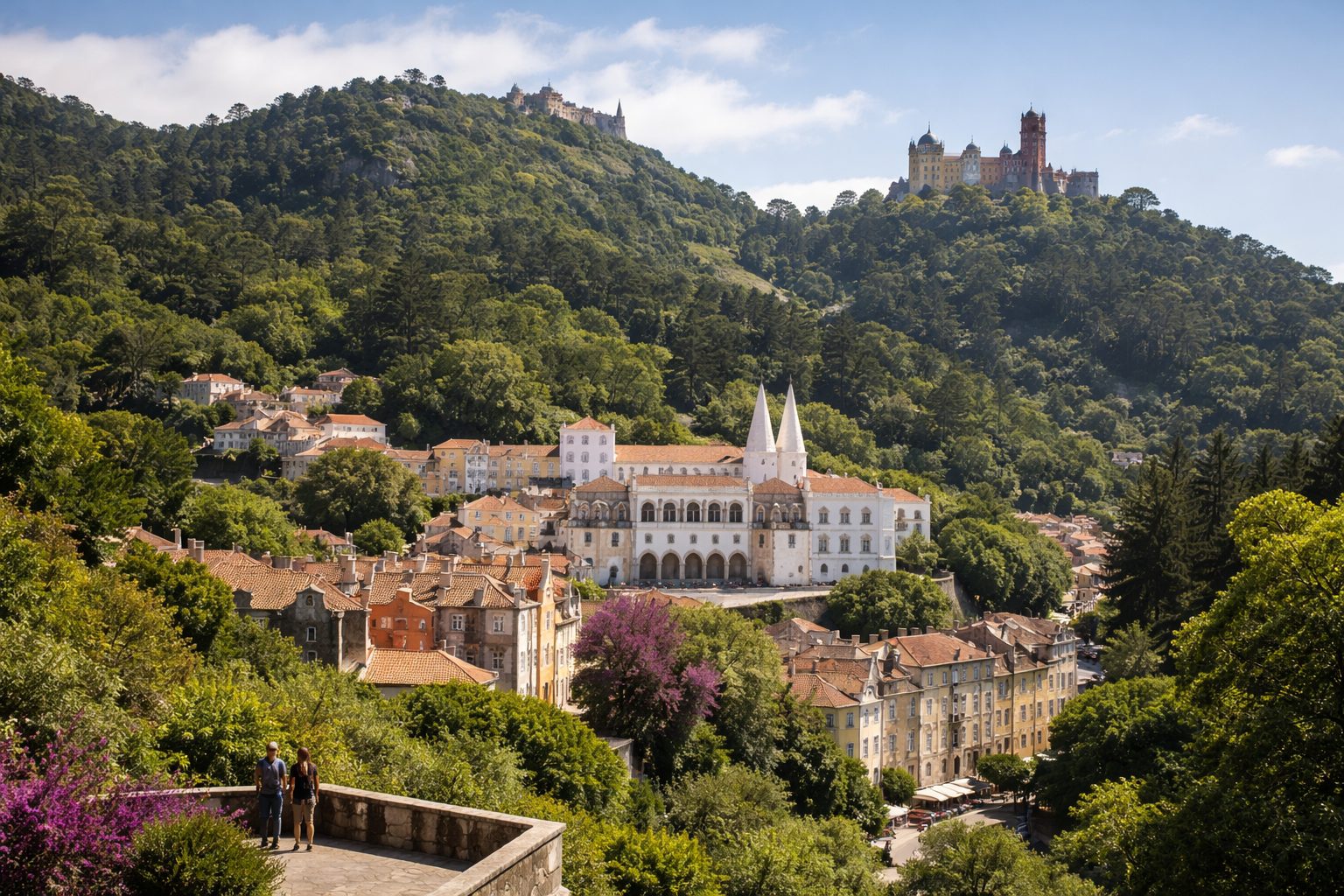
The Palácio Nacional da Pena is the main attraction, a 19th-century palace painted in yellow and red that looks genuinely improbable perched above the fog. The Moorish Castle above the town offers wide views over the region. Quinta da Regaleira is a more unusual property, built by an eccentric millionaire and full of initiatory wells and esoteric symbolism.
Sintra gets extremely crowded. Arrive early, and ideally visit on a weekday. The town itself is small, and the sites are spread across steep terrain, so comfortable shoes matter more here than almost anywhere else in Portugal.
Madeira: The Island Paradise
Madeira is a Portuguese island in the Atlantic, about 1,000 kilometers southwest of Lisbon. It’s not a beach destination in the traditional sense. The coastline is mostly volcanic cliffs, and the few beaches are small. But for hiking, dramatic landscapes, and a specific kind of unhurried island life, it’s remarkable.
The levadas are the defining feature: a network of irrigation channels that cross the island’s mountains and valleys, with walking paths alongside them. They let you hike through laurel forests and along cliff edges without technical difficulty. The levada walks are genuinely among the best hiking experiences in Europe.
Funchal, the capital, has a lively market, good restaurants, and a cable car up to the village of Monte, from which you can ride a traditional wicker toboggan back down. It’s touristy, yes, but also genuinely fun. Madeira wine, made in a process that’s unique to the island, is worth drinking seriously while you’re there.
Cultural Experiences
Portuguese Cuisine: Must-Try Dishes
Portuguese food is one of the underrated pleasures of European travel. It’s not flashy. It doesn’t require explanation. It relies on quality ingredients prepared with confidence, and it’s almost always good.
Core dishes and ingredients to try:
- Bacalhau (salt cod): The national ingredient, said to have 365 recipes, one for every day of the year. Bacalhau com natas (with cream and potatoes) is rich and deeply satisfying.
- Pastéis de nata: Custard tarts with a flaky pastry shell and a slightly charred, creamy filling. They’re made elsewhere but originated in Lisbon.
- Francesinha: A Porto specialty. A layered sandwich with cured meats and melted cheese, covered in a beer-tomato sauce. Heavy, intense, and excellent.
- Caldo verde: A simple kale and potato soup with slices of chouriço. Common everywhere, and when done well it’s completely satisfying.
- Grilled sardines: Especially in summer, especially at the June festivals in Lisbon. Salt, charcoal, bread. Nothing else needed.
- Piri-piri chicken: Spicy grilled chicken that became popular through Portugal’s colonial connections with Mozambique and Angola. The best versions are simple and properly spicy.
Wine is also central to the culture. Vinho verde (young, slightly sparkling white wine from the north) is excellent in warm weather. Alentejo reds are among the most interesting wines Portugal produces right now.
Festivals and Events in Portugal
Portugal’s calendar is full of local celebrations that give you real access to how communities actually mark time together.
The most famous are the festas dos Santos Populares in June, particularly Festa de Santo António in Lisbon on June 12-13. The city fills with grilled sardines, cheap wine, paper decorations, and street dancing. It’s chaotic, joyful, and absolutely worth being in Lisbon for if your dates line up.
Porto’s São João festival happens the same week and is arguably even more exuberant. The tradition involves hitting strangers on the head with soft plastic hammers, which is exactly as fun as it sounds.
The Festa dos Tabuleiros in Tomar happens every four years and involves women carrying elaborate trays of bread and flowers on their heads in a procession. It’s one of the most visually distinctive events in the country.
Traditional Music and Dance
Fado is the musical form most closely associated with Portugal. It’s a vocal tradition, usually accompanied by a Portuguese guitar (a twelve-string instrument different from a Spanish guitar) and a viola baixo. The lyrics deal with themes of longing, fate, love, and loss. The Portuguese word saudade, which roughly translates as a bittersweet longing for something absent, is often invoked to describe the emotional core of fado.
In Lisbon, fado is associated with the Alfama and Mouraria neighborhoods. You can hear it at dedicated fado houses (casas de fado), where dinner is served alongside performances. Quality varies considerably. Ask locals for recommendations rather than choosing from tourist signage.
Porto has its own distinct fado tradition, different in style from Lisbon’s. Coimbra, the university city, has yet another variation associated with students and academic tradition.
Vira and corridinho are traditional dance forms from northern Portugal and the Algarve respectively. You’re less likely to encounter these in cities, but regional festivals are good opportunities.
Outdoor Activities
Hiking in Portugal’s National Parks
Portugal has a relatively small national park network by European standards, but the quality is high.
Peneda-Gerês in the northwest is the country’s only national park in the strict sense. It’s a largely wild area of granite mountains, oak and pine forests, and traditional villages. The walking trails range from short riverside routes to multi-day traverses. The park is remote enough that wildlife including wolves still survives there.
Serra da Estrela is the highest range on the Portuguese mainland, and it offers different terrain: high moorland, glaciated valleys, and the source of the Mondego river. In winter there’s occasionally enough snow for basic skiing. In summer it’s good hiking country with excellent views.
The Rota Vicentina is not a national park but a network of walking trails along the southwest coast, including the Fishermen’s Trail (Trilho dos Pescadores), which follows the cliff tops along some of Europe’s most dramatic Atlantic coastline. It’s well-marked, well-maintained, and the quality is consistently high.
Surfing the Waves of Nazaré
Nazaré is a small fishing town north of Lisbon that has become famous internationally for the biggest waves ever surfed. The underwater canyon that extends from the town’s bay focuses oceanic energy in a way that produces winter swells of extraordinary size. In October and November, when the conditions align, you can watch tow-in surfers ride walls of water exceeding 20 meters.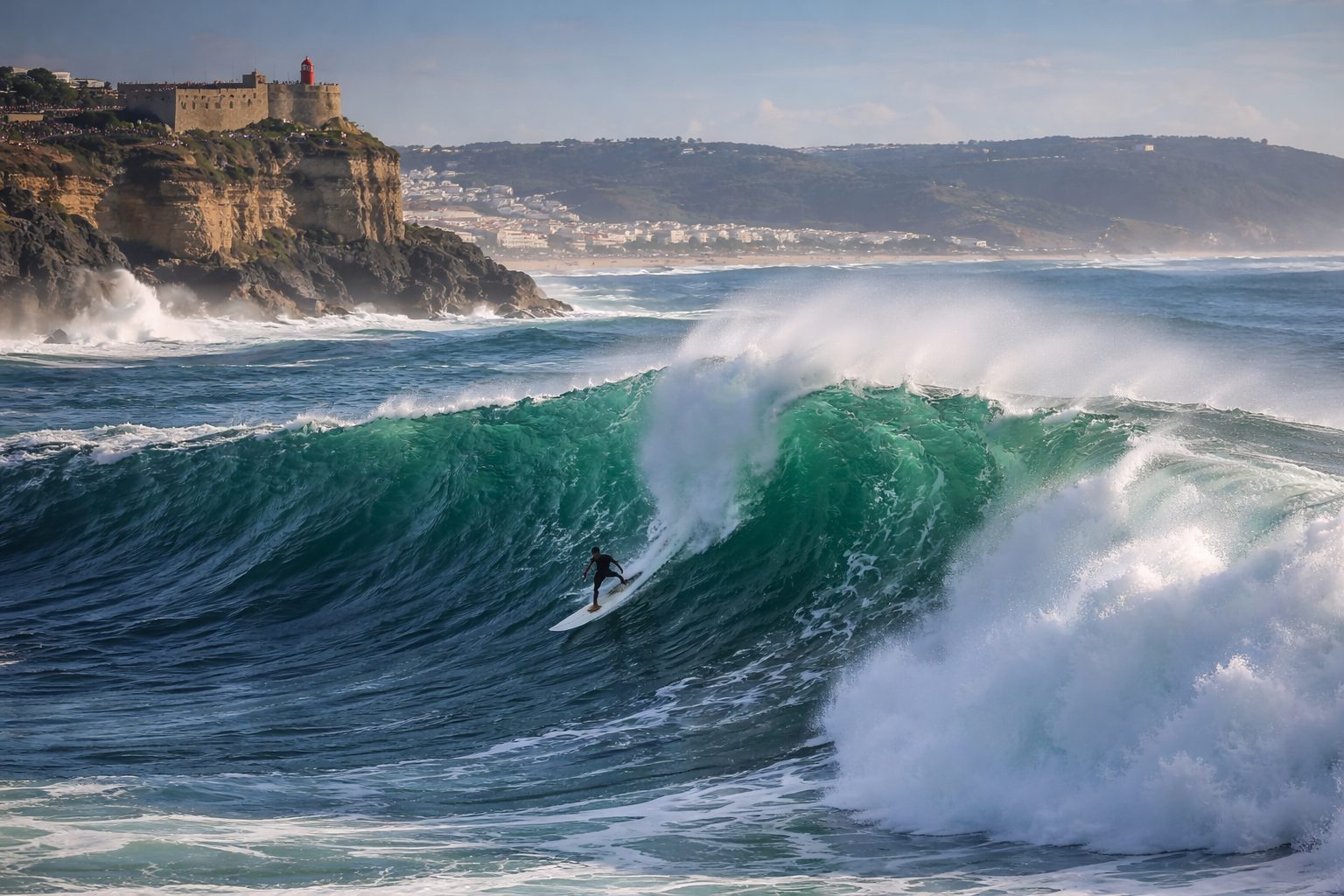
For regular surfers, the main beach at Nazaré is good but not exceptional. The real interest is in watching the big-wave events from the clifftop fort at Praia do Norte. The town itself retains some of its fishing character, with drying racks for salted fish on the beach promenade.
The Algarve coast and the areas around Ericeira north of Lisbon are better for surfers of most skill levels. Ericeira is a World Surfing Reserve and has a range of breaks suitable for beginners through to advanced surfers.
Wine Tours in the Douro Valley
The Douro Valley is one of the oldest demarcated wine regions in the world, established in 1756. The terraced vineyards cut into the valley’s steep schist slopes are a UNESCO World Heritage Site, and in September and October during harvest they’re particularly spectacular.
Most wine tours start from Porto, which is about two hours from the heart of the valley by road or train. The Douro line train journey from Porto to Pinhão is one of the more scenic rail routes in Europe. From Pinhão, you can visit quintas (wine estates) for tours and tastings, take boat trips on the river, or rent a car to explore the back roads.
The wines produced here include Port (fortified wine), but also increasingly well-regarded dry table wines, both red and white. Visiting in September gives you the chance to see the harvest in progress, which remains partly manual given the difficulty of the terrain.
Practical Travel Information
A solid portugal travel guide needs to cover the logistics, because even great destinations become frustrating when you don’t know how things work.
Getting Around Portugal: Transportation Options
Portugal is a small country, and getting around it is genuinely manageable.
Train: The national rail network (CP) connects Lisbon and Porto frequently and reliably. The Alfa Pendular express service takes about three hours. Regional trains serve smaller towns. The network is good but not comprehensive; some areas require a car.
Bus: Rede Expressos and Flixbus cover many routes not served by train. For the Algarve, buses connect the main towns along the coast. Reliable but slower than trains.
Car rental: Recommended if you want to explore the Alentejo, Douro Valley back roads, Serra da Estrela, or rural areas generally. Roads are in good condition, driving is straightforward, and parking outside cities is easy. In Lisbon and Porto, a car is more trouble than it’s worth.
Flights: TAP Portugal and Ryanair connect Lisbon, Porto, Faro (for the Algarve), and Madeira. Domestic flights make sense for reaching Madeira from the mainland but are overkill for mainland-to-mainland travel given the distances.
Within cities: Lisbon has an efficient metro, buses, and the famous trams. Porto has a metro, buses, and the riverside area is very walkable. Uber works well in both cities and is often the most practical option for getting across town quickly.
Accommodations: Where to Stay in Portugal
Portugal has a strong accommodation culture at every price point.
- Pousadas: Government-managed properties in historic buildings, often castles, monasteries, and palaces. More expensive, but the properties themselves are the attraction. Worth it for at least one night if budget allows.
- Boutique hotels: Cities and the Algarve have a growing number of design-focused independent hotels. Quality has improved substantially over the past decade.
- Guesthouses (pensões and alojamentos locais): The backbone of budget travel in Portugal. Standards vary but are generally reliable. Family-run places often include breakfast and always include local knowledge.
- Rural tourism (Turismo em Espaço Rural): Farmhouses, manor houses, and rural properties converted for guests. A great option for the Alentejo, Minho, and Douro regions.
- Hostels: Strong network in Lisbon and Porto, including some very well-run design hostels that attract mixed ages, not just backpackers.
Book well ahead for Lisbon and Porto in June, July, and August, and for the Algarve coast throughout summer. Shoulder season accommodation is easier to find and considerably cheaper.
Currency and Budgeting Tips
Portugal uses the Euro. Card payments are widely accepted, even in small restaurants and markets in most areas. ATMs are plentiful. Keeping some cash for rural areas and traditional markets is sensible.
Budget expectations as of the mid-2020s:
- Budget traveler: Around 60-80 euros per day, staying in hostels or cheap guesthouses, eating at tascas (local taverns) and markets.
- Mid-range: 120-180 euros per day, boutique guesthouses, sit-down restaurants with wine.
- Comfortable: 200 euros and up, without trying hard.
Lisbon has become noticeably more expensive over the past five years due to tourism growth and cost-of-living increases. Porto remains slightly cheaper. The Alentejo and rural areas are significantly more affordable than either city.
Tipping is not obligatory but is appreciated. Rounding up or leaving 5-10% at restaurants is standard. Service in Portugal can seem unhurried by northern European standards; this is deliberate and culturally normal, not poor service.
Travel Tips for First-Time Visitors
Language and Communication
Portuguese is the national language, and it’s harder for English speakers to pick up quickly than Spanish. The pronunciation is particularly tricky, with nasal vowels and sounds that have no direct English equivalent.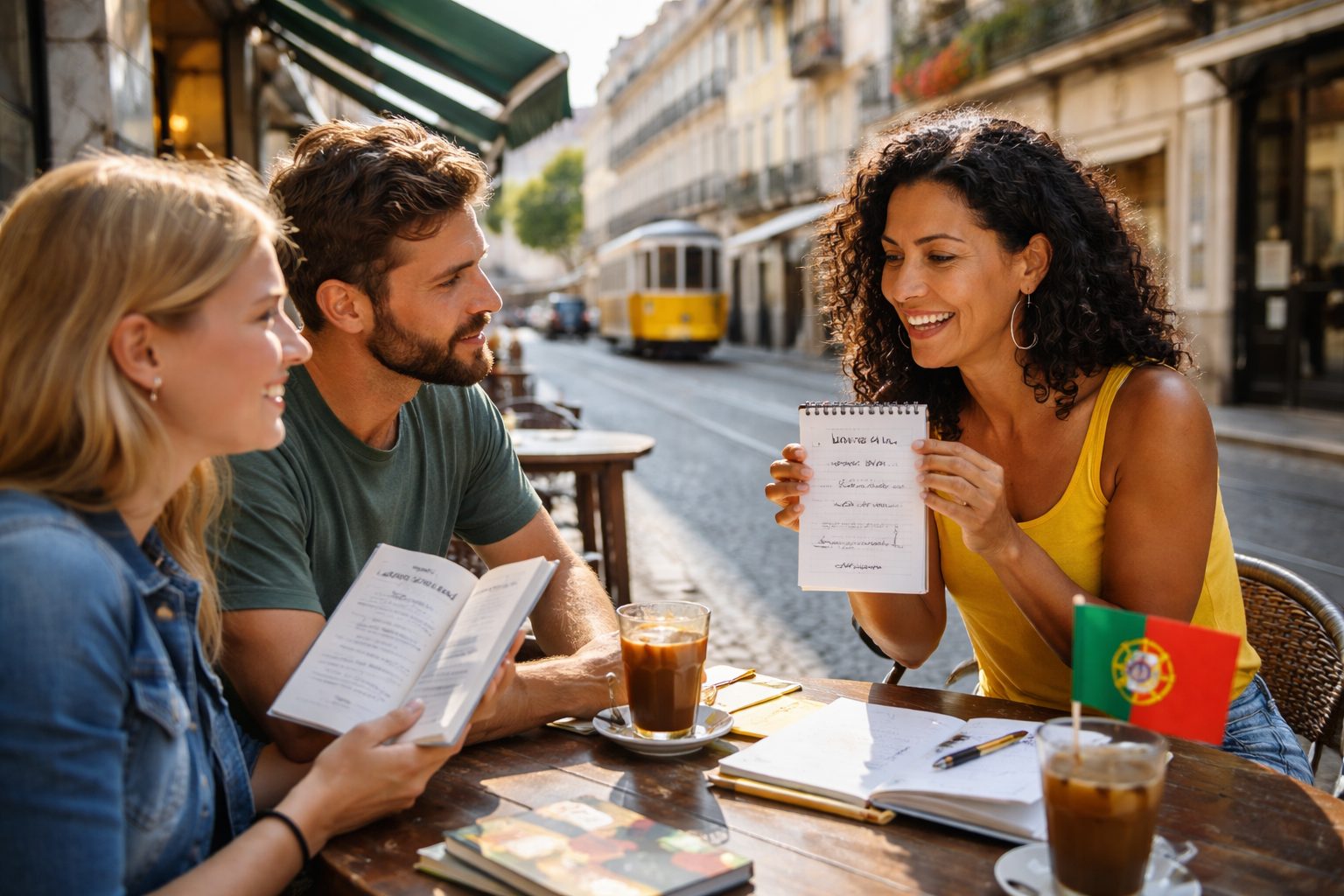
The practical news is that English is widely spoken in tourist areas, hotels, and by younger generations in cities. In rural areas and with older residents, you’ll often need some Portuguese phrases or a translation app.
A few phrases that go a long way:
- Obrigado/Obrigada (thank you, for male/female speaker)
- Por favor (please)
- Com licença (excuse me)
- Fala inglês? (Do you speak English?)
- Uma cerveja, por favor (A beer, please — genuinely useful)
Attempting even basic Portuguese is always appreciated. The Portuguese tend to be more reserved than their Spanish neighbors, and making an effort with the language breaks the ice quickly.
Safety Tips for Traveling in Portugal
Portugal is one of the safer countries in Europe for travelers. Violent crime affecting tourists is rare. The main concerns are petty theft and pickpocketing, concentrated in tourist-heavy areas.
Practical safety points:
- Be alert in Lisbon’s Alfama district, on the trams, and in crowded areas like Praça do Comércio
- Don’t leave valuables visible in rental cars, particularly in parking areas near beaches and hiking trailheads
- The beaches along the Atlantic coast have strong rip currents; swim only at monitored beaches marked with green flags
- Driving in Porto’s old city and Lisbon’s narrow streets requires patience; know your route before entering
- Tap water is safe to drink throughout Portugal
Emergency number is 112, the same as the rest of the EU.
Etiquette and Customs in Portugal
The Portuguese are polite, somewhat formal in initial encounters, and value courtesy and restraint. Being loud, rushing service, or treating historical sites carelessly are all noticed and create poor impressions.
Key points of etiquette:
- Greet shop owners and restaurant staff when entering (a simple “bom dia” goes far)
- Dress modestly when visiting churches; shorts and sleeveless tops are often not permitted
- Don’t rush through meals; dining is unhurried and social, not transactional
- Bargaining is not a cultural norm; fixed prices are standard
- Photography in restaurants and local neighborhoods is fine, but always ask before photographing people
The Portuguese tend toward understatement and are not effusive with strangers. This can read as coldness at first, but it gives way to genuine warmth once a connection is made.
Comparison of Popular Cities
Lisbon vs. Porto: Which City to Choose?
This is the most common question in any portugal travel guide for first-time visitors, and it doesn’t have a single right answer. Both cities are worth visiting. But they have distinct characters.
| Feature | Lisbon | Porto |
|---|---|---|
| Size | Larger, more spread out | Smaller, more walkable |
| Atmosphere | Cosmopolitan, diverse | Grittier, more traditional feel |
| Architecture | Baroque, Manueline, Art Nouveau | Gothic, Baroque, Art Nouveau |
| Food scene | Strong, wide variety | Excellent, particularly seafood and contemporary |
| Wine | Good wine bars, Alentejo wines | Port wine, Douro access |
| Day trips | Sintra, Setúbal, Évora | Douro Valley, Braga, Guimarães |
| Nightlife | Extensive and varied | Lively, student-influenced |
| Tourist density | Higher | Growing but lower |
| Cost | Higher than Porto | Slightly lower |
My honest read: Lisbon is the more immediately impressive city and the more varied. Porto rewards slower exploration and feels more authentically connected to its own history. If you have a week, do both; if you have three days, your choice should depend on whether you want grand-capital energy or a more intimate city experience.
Algarve vs. Madeira: A Beach Destination Showdown
These two are often considered against each other as Portuguese sunshine destinations, but they offer genuinely different things.
| Feature | Algarve | Madeira |
|---|---|---|
| Beach type | Sandy beaches, dramatic cliffs | Volcanic, mostly pebble or lava pools |
| Landscape | Flat to gently hilly | Mountainous, steep, highly varied |
| Hiking | Limited compared to Madeira | Exceptional; levada network is world-class |
| Climate | Hot Mediterranean summers | Year-round mild; subtropical |
| Crowds | High in summer | Lower, spread through the year |
| Nightlife | Active, resort-oriented | Limited outside Funchal |
| Food and wine | Good seafood, regional dishes | Good seafood, Madeira wine |
| Access | Faro airport from many European cities | Funchal airport from Lisbon and select EU cities |
| Best for | Sun, sea, beach holidays | Nature, hiking, quiet travel |
If you want classic beach holiday weather and good swimming, the Algarve wins straightforwardly. If you want landscape, hiking, and something more unusual, Madeira is in a different league. I’d suggest most travelers who’ve already done the Algarve consider Madeira as the more interesting follow-up trip.
Frequently Asked Questions (FAQs)
What is the best way to travel between cities in Portugal?
Train is the most comfortable option for Lisbon-Porto and Lisbon-Faro (for the Algarve). The Alfa Pendular is fast and reliable on the main corridor. For smaller towns and rural regions, a rental car gives you significantly more flexibility and is worth the cost if you’re spending more than a few days in one area.
Do I need a visa to travel to Portugal?
Portugal is part of the Schengen Area. EU and EEA citizens can enter freely. Citizens of the US, Canada, Australia, the UK, and many other countries can visit visa-free for up to 90 days in any 180-day period. If you’re from a country that requires a Schengen visa, apply through the Portuguese consulate in your home country well in advance of travel.
What are the top attractions in Portugal?
The Jerónimos Monastery and Tower of Belém in Lisbon, the Palace of Pena and Moorish Castle in Sintra, the Ribeira waterfront in Porto, the wine lodges of Vila Nova de Gaia, the Algarve coastal cliffs and beaches, the Douro Valley terraced vineyards, and the levada walks in Madeira are consistently the most visited sites. But Portugal’s real appeal is as much in the neighborhoods, markets, and restaurants as in any single monument.
Portugal rewards travelers who move at a reasonable pace, eat well, and take time to sit in a café or walk a neighborhood without an agenda. Any solid portugal travel guide will tell you the logistics, but the experience itself comes from letting the country work on you over a few days rather than trying to check everything off a list. It’s a small country, and that’s its advantage. You can see a lot of it without the exhaustion of covering vast distances, and still feel like you’ve barely scratched the surface.