
Turkey is a big country. When you look at a map and start drawing a line from Istanbul to Cappadocia to Ephesus to Antalya, you start to understand why getting around turkey requires some actual planning rather than improvisation. The good news is that Turkey has a genuinely well-developed transport infrastructure for its size: a growing domestic aviation network, expanding high-speed rail lines, reliable long-distance buses, and good urban transport systems in its major cities. The challenge is choosing the right combination for your specific itinerary.
I’ve crossed Turkey in a lot of different ways, from overnight buses between Istanbul and Cappadocia to domestic flights that compress a 12-hour journey into 75 minutes, to rental cars along the Turquoise Coast where having your own vehicle is genuinely transformative. Each mode suits different purposes, and getting around turkey well means being strategic about which tool you use where.
Overview of Transportation in Turkey
Importance of Efficient Travel in Turkey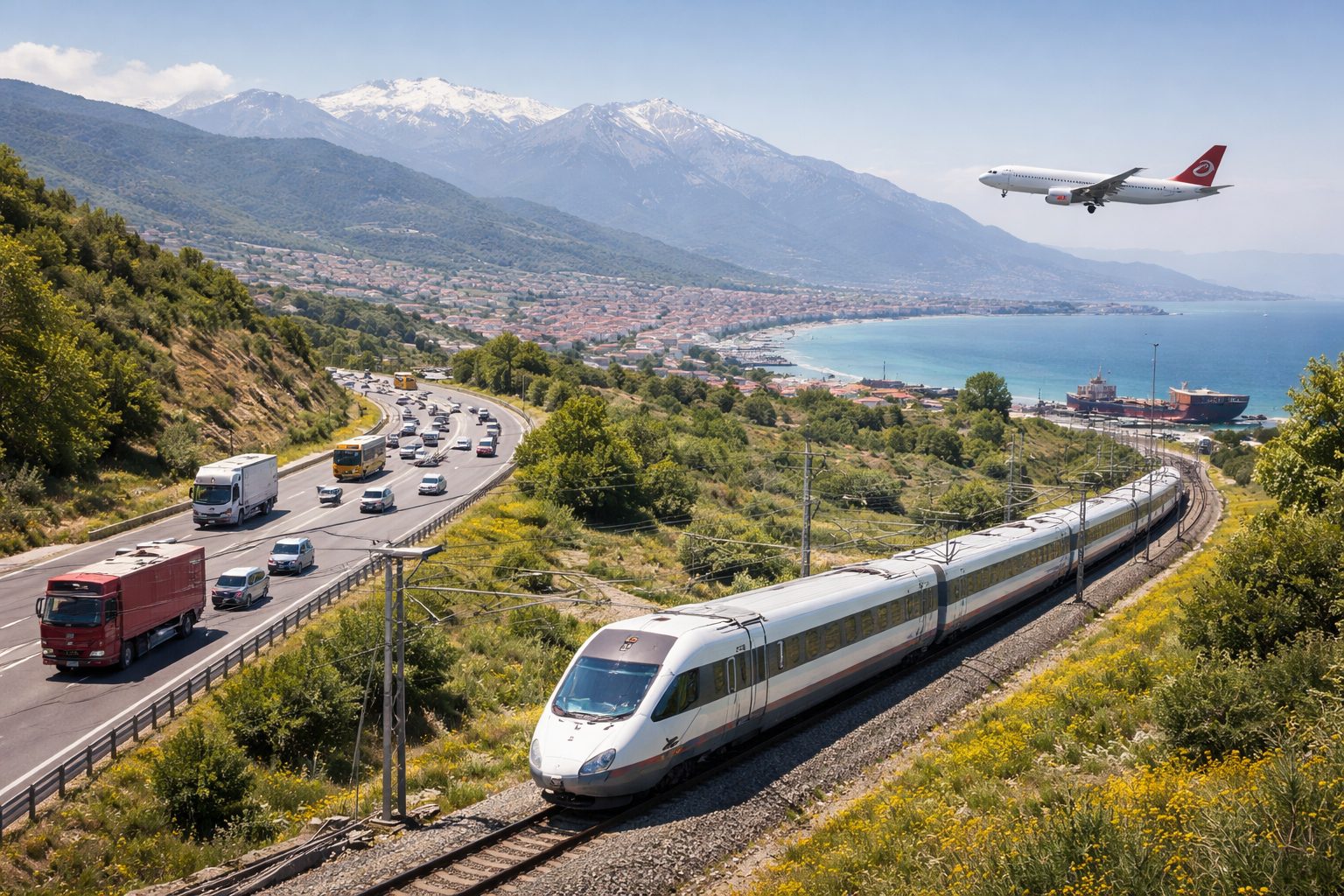
Turkey’s dimensions demand respect: it’s roughly 1,600 kilometers from the Greek border in the west to the Iranian border in the east, and 600 kilometers from the Black Sea in the north to the Mediterranean in the south. Istanbul alone has a greater population than many European countries. Navigating this scale efficiently makes the difference between an itinerary that flows well and one that spends more time in transit than at destinations.
The key strategic decisions are:
- Whether to fly domestically for long distances (Istanbul to Cappadocia, for example)
- Whether to rent a car for coastal and rural exploration
- Whether to use trains, buses, or a mix for medium distances
- How to approach urban transport in Istanbul and other cities
Types of Transportation Available
Turkey offers:
- Domestic flights (extensive network, increasingly affordable)
- High-speed trains (İstanbul to Ankara, İzmir, Konya and expanding)
- Long-distance buses (the backbone of intercity travel for most Turks)
- Rental cars and private transfers
- Taxis and ride-hailing
- Urban metros, trams, and ferries in major cities
- Minibus (dolmuş) for local and semi-rural connections
Public Transportation Options
Buses
The intercity bus network in Turkey is exceptionally developed and for decades was the dominant way that Turks traveled between cities. Even as domestic aviation and high-speed rail have expanded, long-distance buses remain widely used for their cost-effectiveness and the sheer coverage of the network.
Companies like Metro Turizm, Kamil Koç, Ulusoy, and Pamukkale operate extensive networks connecting virtually every city and town in the country. The quality of these coaches is generally high: reclining seats, onboard entertainment, air conditioning, periodic refreshment service, and clean conditions. For overnight journeys, the seats recline substantially and the experience is reasonable.
The main bus terminal in Istanbul (Esenler Otogar for European side, Harem for Asian side) is vast and busy, though navigation is manageable. Most cities have central otogar (bus terminals) that consolidate services from multiple companies.
Key advantages:
* Coverage: reaches places trains and flights don’t
* Night buses eliminate accommodation costs for certain routes
* Generally reliable and punctual on major routes
* Cost: significantly cheaper than flying for most routes
Key disadvantages:
* Time: Turkey’s distances mean long journey times. Istanbul to Cappadocia is 10-12 hours by bus.
* Less comfortable than flying for long distances
* Terminal locations are often outside city centers
Getting around turkey for longer journeys (say, Bodrum to Cappadocia, or Istanbul to the eastern Black Sea) by bus requires accepting that you’ll spend a significant portion of your day in transit. For these distances, flying is worth serious consideration.
Trains
Turkey’s train network is undergoing significant modernization, with high-speed rail (YHT: Yüksek Hızlı Tren) now connecting several major corridors.
Currently operating high-speed routes:
* Istanbul (Pendik) to Ankara: Around 4 hours, competitive with flying when you factor in airport time
* Istanbul to Konya: 5 hours direct
* Ankara to İzmir: 3.5 hours, excellent option for the Aegean
* Ankara to Konya: Around 1.5 hours
Conventional rail still connects many destinations not yet served by high-speed rail, including scenic routes like Istanbul-Kars in the northeast.
The intercity train experience at the high-speed level is genuinely pleasant: modern trains, reserved seating, café car, WiFi, and arrival in city-center stations that are more convenient than airports. The Istanbul-Ankara route specifically is a compelling alternative to flying when you factor in the time to get to and from airports on both ends.
TCDD (Turkish State Railways) tickets can be booked online at the official website or through various booking platforms. Reserve seats in advance on popular high-speed routes, particularly for weekends and holidays.
Metro Systems
Turkey’s major cities have invested significantly in metro infrastructure over the past two decades.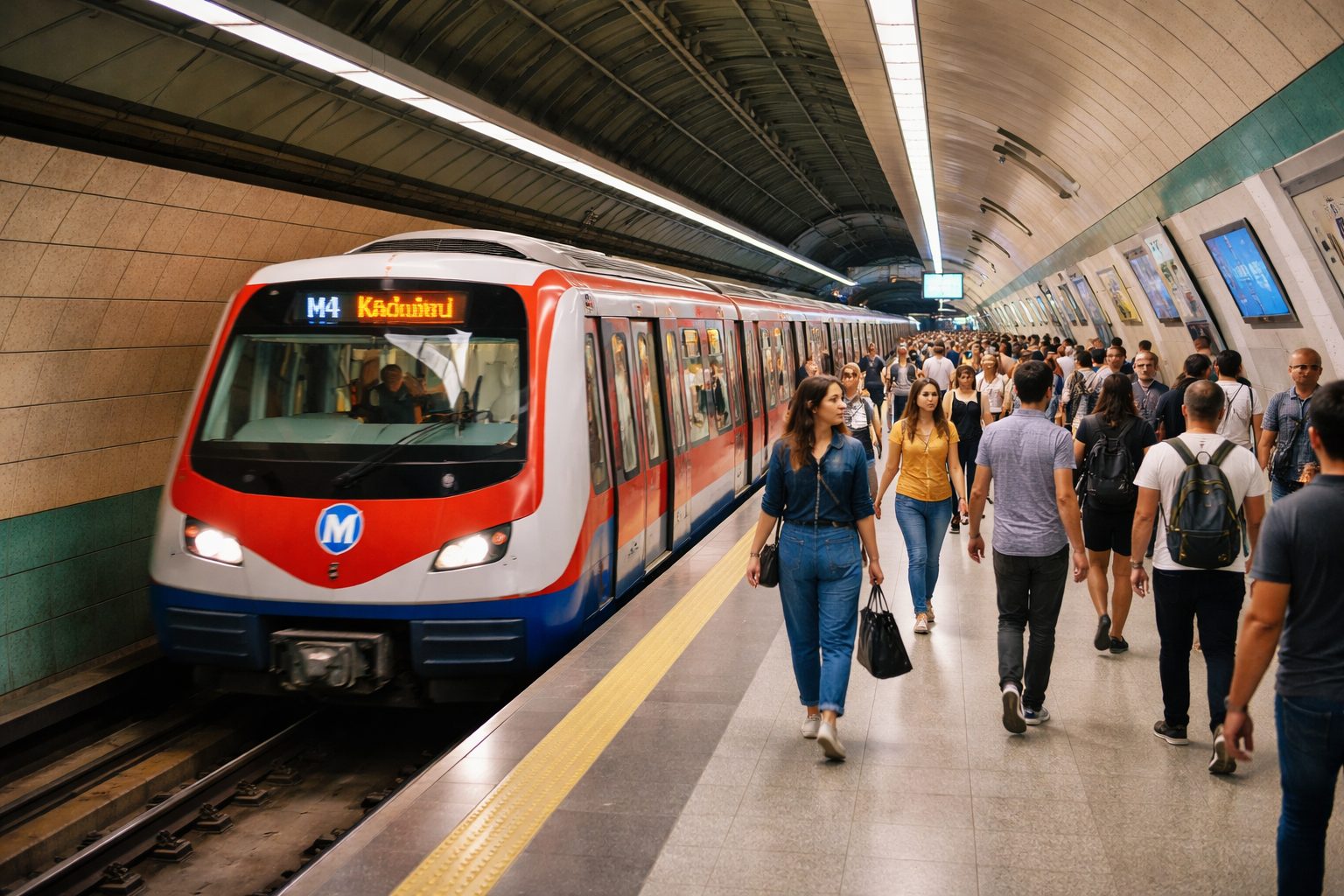
Istanbul’s metro and rail system is extensive and continually expanding. Key lines:
- M1, M2, M3, M4 metro lines covering different parts of the city
- T1 tram line running through the historic peninsula (Sultanahmet, Grand Bazaar area) to Kabataş
- F1 funicular connecting Kabataş to Taksim Square
- F2 historic funicular (Tünel) from Karaköy to Beyoğlu
- Marmaray cross-Bosphorus rail tunnel connecting European and Asian sides
- Ferries across the Bosphorus, technically not metro but integral to Istanbul transit
The Istanbulkart is a rechargeable travel card that works on all Istanbul transit modes (metro, tram, bus, ferry) and provides a discounted fare. Getting one at the airport or any Istanbulkart machine on arrival is the first thing to do in Istanbul.
Ankara has a clean, modern metro system serving the main city districts.
İzmir has a metro, commuter rail, and ferries across the bay.
For getting around turkey within cities, these metro systems are efficient, cheap, and avoid the terrible traffic that affects all road-based transport in Turkish cities.
Car Travel in Turkey
Renting a Car
For certain parts of Turkey, particularly the Turquoise Coast, the Aegean Coast, Cappadocia, and the eastern regions, having a rental car fundamentally changes the experience. The flexibility to stop at unmarked viewpoints, visit archaeological sites without tour schedules, and reach villages without regular bus service opens up a completely different Turkey.
Car rental is available at all major airports and in city centers. International agencies (Hertz, Avis, Europcar) operate alongside local companies, and the local companies are often significantly cheaper.
Key considerations:
* Traffic drives on the right in Turkey
* Roads are generally good quality on major routes (E-roads, intercity motorways)
* Toll roads (otoyol) require a HGS electronic tag or manual payment at booths; rental companies can arrange tags
* GPS or offline maps are essential; Google Maps works well throughout Turkey
* An international driving permit is not strictly required for most nationalities with a recognized license, but it’s worth having for clarity
* Insurance options: standard CDW covers most scenarios; check what your credit card covers before paying for duplicate coverage
Rental costs vary significantly by season and vehicle type. Expect higher prices in summer on the Aegean coast, and look for smaller local agencies for better rates.
Driving Tips and Regulations
Turkey has European-standard traffic laws. A few things specific to Turkey worth knowing:
- Speed limits: 120 km/h on motorways, 90 km/h on main roads, 50 km/h in urban areas
- Mobile phone use while driving: illegal without hands-free
- Speed cameras are common on intercity roads
- Emergency number: 112
- Traffic in Istanbul is genuinely challenging; avoid driving in Istanbul if at all possible and use public transit there
- Mountain roads in the east and northeast can be narrow, winding, and require careful attention
Driving on the Turquoise Coast between Marmaris and Antalya is some of the most scenic road travel in Turkey, with the route following clifftops above the Mediterranean, passing through small towns and ancient sites. This is where having a car pays dividends.
Road Conditions
Road quality in Turkey varies considerably by location:
- Intercity motorways (otoyol): Excellent, well-maintained, tolled
- National roads between cities: Generally good, some variation
- Mountain roads in eastern Anatolia: Highly variable, some excellent, some very challenging
- Rural roads: Unpaved sections exist in remote areas
Getting around turkey by car is practical and comfortable on the main tourist circuits (Aegean coast, Mediterranean coast, Cappadocia, central Anatolia). For more adventurous routes in the east, a higher-clearance vehicle is an advantage.
Domestic Flights
Major Airlines Operating in Turkey
Turkey has a well-developed domestic aviation network, dominated by:
- Turkish Airlines: The flag carrier with the most extensive domestic network. Flies to almost every domestic destination.
- Pegasus Airlines: The main budget carrier, often significantly cheaper than Turkish Airlines. Strong network, good safety record.
- SunExpress: Joint venture focusing on Aegean and Mediterranean holiday destinations.
Istanbul has two airports: Istanbul Airport (IST) on the European side, which is the main hub for Turkish Airlines, and Sabiha Gökçen Airport (SAW) on the Asian side, primarily used by Pegasus and budget carriers. Note that the two airports are substantial drives apart; always check which airport your flight uses.
Popular Domestic Routes
The domestic routes most useful for tourists:
- Istanbul to Cappadocia (Kayseri or Nevsehir airports): ~1.5 hours, compared to 10-12 hours by bus. This is the one domestic flight I’d call genuinely essential for any itinerary that includes both Istanbul and Cappadocia.
- Istanbul to Bodrum: ~1.5 hours
- Istanbul to Antalya: ~1.5 hours
- Istanbul to Trabzon (Black Sea): ~2 hours
- Istanbul to Van (eastern Anatolia): ~2.5 hours
- Ankara to Trabzon: ~2 hours
On a two-week itinerary covering Istanbul, Cappadocia, and the coast, two or three domestic flights make sense and save enormous amounts of time.
Booking Tips for Domestic Flights
- Turkish domestic flights are cheapest when booked 4-8 weeks in advance
- Pegasus often has significantly lower prices than Turkish Airlines on the same route; check both
- Baggage allowances are strict on budget carriers; pack light or pay for hold luggage
- Summer flights between Istanbul and Aegean resorts fill quickly; book ahead
- Sabiha Gökçen airport is 50-60km from central Istanbul; factor in transfer time
Taxis and Ridesharing
Using Taxis in Turkish Cities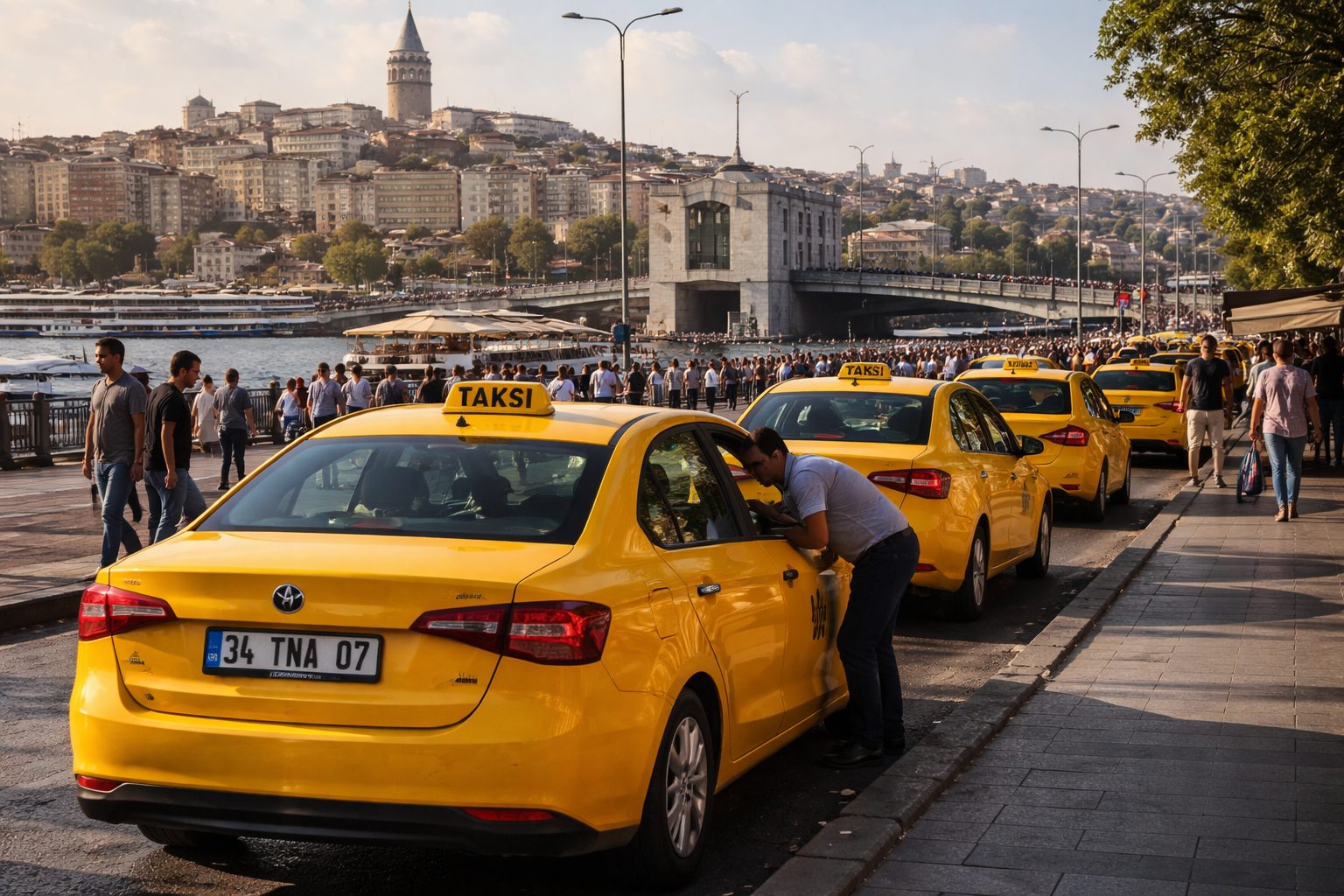
Yellow taxis are ubiquitous in Turkish cities and operate on meters. In Istanbul, taxis are one of the most convenient options for shorter journeys where public transit doesn’t serve directly, but be aware of a few realities:
- All legitimate taxis have meters; insist it’s turned on at the start of every journey
- Rush hour taxi journeys in Istanbul can be painfully slow due to traffic
- Overcharging tourists is not common but does occur, particularly at tourist sites and airports
- The “longer route” problem: some drivers take indirect routes with tourists, though this is less common than it used to be
Popular Ridesharing Apps
BiTaksi and InDrive operate in Turkish cities and provide an app-based alternative to street taxis, with upfront price estimates and driver accountability. For Istanbul particularly, these are strongly recommended over hailing random street taxis.
Uber operates in a limited form in Turkey.
Cost Considerations
Taxi costs in Turkey are moderate by Western European standards. A typical 5-10km urban journey in Istanbul might cost 50-100 TL (rates vary with lira fluctuation). Airport transfers are more expensive. Tipping taxi drivers is not obligatory but rounding up to the nearest 10 TL is normal.
For tourist areas outside cities, negotiated rates with local drivers are common. For things like an all-day driver around Cappadocia, Ephesus, or Pamukkale, a negotiated day rate with a local driver is often the most practical option.
Exploring Tourist Destinations
Getting Around Istanbul
Istanbul’s scale (15+ million people, spanning two continents) is such that getting around efficiently requires using multiple transport modes.
For tourists, the core experience happens primarily in a few main areas:
- Historic Peninsula (Sultanahmet): Tram T1 from Kabataş, walk between Hagia Sophia, Blue Mosque, Grand Bazaar, Spice Bazaar
- Beyoğlu and Taksim: Metro M2 or T1 to Kabataş then F1 funicular to Taksim; walk İstiklal Avenue
- Bosphorus and Asian side: Ferries from Eminönü/Kabataş for Bosphorus cruises; Marmaray for crossing to Asia
- Prince’s Islands: Ferries from Kabataş
The Istanbulkart covers all of these. Buy one on arrival, load credit, and use it for everything.
Avoid taxis in Istanbul during rush hours (7-9 AM, 5-7 PM) unless you have no choice. The traffic is extraordinary and a 10-minute transit journey can become a 45-minute taxi ride.
Transportation in Cappadocia
Cappadocia is centered around the towns of Göreme, Uçhisar, Avanos, and Ürgüp in the Nevşehir province. The area is compact enough that much of it is navigable by rental car or on a tour.
From the airports (Kayseri ~1 hour away, Nevşehir Kapadokya Airport ~50 minutes), transfers are by shuttle or taxi rather than public transit.
Within Cappadocia:
* Rental car: Ideal for accessing the more remote valleys and less-visited sites at your own pace
* Guided tours: Very common and practical for the main highlights (Göreme Open Air Museum, Underground Cities, Valley walks)
* Dolmuş (minibus): Budget connections between the main towns; less convenient but cheap
* Walking: The valleys between Göreme and neighboring villages are walkable and genuinely rewarding on foot
Hot air balloon flights are a completely separate experience from transport; they launch from fields near Göreme in the early morning and are booked through specialized operators.
Navigating Pamukkale
Pamukkale is a small village in the Denizli province and the site of the famous white travertine terraces. It’s served by dolmuş connections from Denizli, which is connected to both İzmir and Istanbul by train.
From Denizli city center or train station, dolmuş minibuses to Pamukkale village take about 30-40 minutes and run regularly. This is the most practical public transport approach.
Alternatively, many travelers visit Pamukkale on a day trip from Bodrum or Marmaris by bus tour, though these tours are rushed. Staying overnight in Pamukkale village allows a more relaxed visit to the terraces and the ancient city of Hierapolis.
Cultural Considerations When Traveling
Local Etiquette in Transportation
Getting around turkey involves sharing transport with local people, and a few cultural norms apply:
- On buses and metro, offer your seat to the elderly, pregnant women, women with children, and religious figures (particularly imams in traditional dress)
- Eating on public transport is generally accepted
- Loud phone conversations are normal; noise standards are different from many Western countries
- On overnight buses, some passengers will sleep; respect this by keeping noise down and lights off
- If a driver or fellow passenger offers tea or small snacks, accepting graciously is polite (this happens more often on long bus journeys)
Language Tips for Travelers
Turkish is the sole official language, and while English is widely spoken in tourist areas and transit hubs, you’ll have a better experience if you know a few key phrases.
Essential transport words:
* Otogar: Bus terminal
* İstasyon: Train station
* Havalimanı: Airport
* Durak: Bus/tram stop
* Nereye?: Where are you going?
* Kaç lira?: How much? (lira)
The Google Translate app’s camera function is useful for reading signs and menus. Most signage in transit hubs has English translation alongside Turkish.
Safety Tips for Travelers
General Safety Advice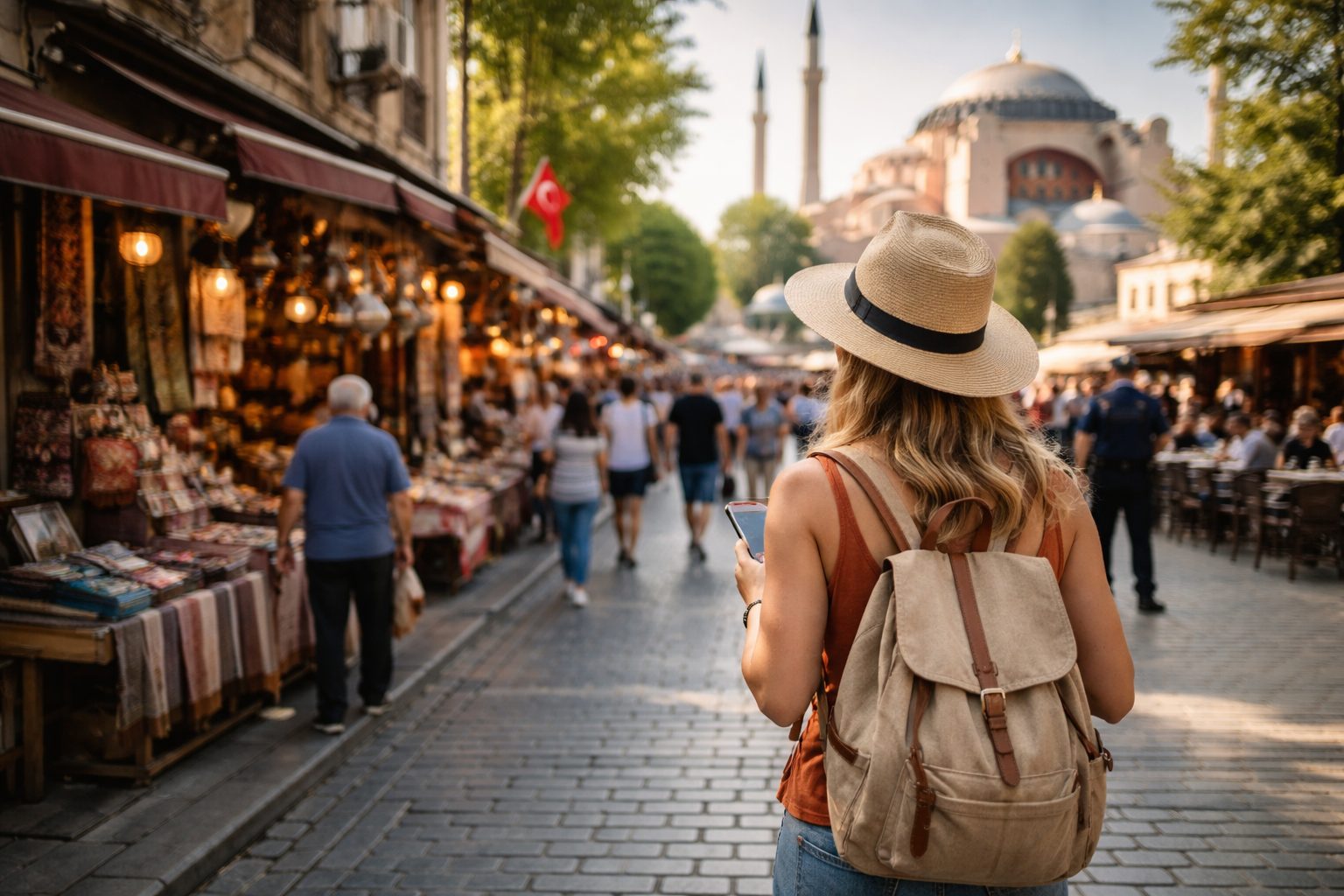
Turkey is generally safe for tourists, including solo travelers. Normal urban precautions apply:
- Keep valuables secure in crowded transit areas, particularly the Grand Bazaar and ferry terminals
- Be alert to bag snatching on motorbikes in Istanbul’s tourist areas
- The fake taxi overcharge is the most common scam; always use metered taxis or app-based services
- Keep a copy of your passport separate from the original
- At bus stations, only use licensed taxis waiting in designated areas rather than unlicensed drivers who approach you inside the terminal
Transportation Safety Tips
- Road safety in Turkey is a genuine concern; accident rates are higher than most Western European countries. Drive defensively.
- Avoid driving at night in rural and mountainous areas where roads are unmarked and livestock may wander onto roads
- Use seatbelts; they’re legally required and genuinely protective
- If using a motorcycle or scooter rental (common in coastal towns), wear a helmet and drive carefully; road surfaces can be unpredictable
Cost of Getting Around Turkey
Budgeting for Transportation
Budget expectations for getting around turkey (in general terms; prices fluctuate with the lira):
- Urban metro/tram journey: Very cheap (single journeys, deeply discounted with Istanbulkart)
- Domestic flight: Can range from budget prices on Pegasus to moderate on Turkish Airlines; varies enormously by booking time and route
- Long-distance bus: Moderate cost, particularly good value for overnight journeys
- Taxi: Moderate in cities, negotiable in tourist areas
- Car rental: Seasonal and vehicle dependent; from cheap to moderate depending on timing
- High-speed train: Moderate, competitive with flying on Istanbul-Ankara when you factor in airport transfer time
Comparison of Travel Costs
| Route | Bus | Train | Flight |
|---|---|---|---|
| Istanbul to Ankara (450km) | Moderate (8-9h) | Moderate (4h, competitive) | Moderate to cheap (+airport time) |
| Istanbul to Cappadocia (740km) | Cheap (11-12h) | No direct rail | Worth it for time savings |
| Istanbul to Bodrum (1000km) | Moderate (12-14h) | Indirect, impractical | Worth it |
| Ankara to İzmir (590km) | Cheap-moderate (7-8h) | Fast, competitive (3.5h) | Similar total time with airports |
For a two-week itinerary, budget a reasonable amount for domestic flights for the longest legs, and buses or trains for medium distances. Car rental for the Aegean or Mediterranean coast section adds immensely to the experience.
Eco-Friendly Transportation Options
Bicycle Rentals
Cycling is a niche but rewarding option for parts of Turkey. Dedicated cyclists tackle routes like the Lycian Way or the Cappadocia valleys, and bike rentals are available in Göreme, Bodrum, Antalya, and some coastal towns.
Urban cycling is genuinely practical in İzmir, which has invested in cycling infrastructure along its waterfront. Istanbul has cycling lanes in some areas but the traffic makes city cycling stressful.
For sustainable getting around turkey on day excursions, cycling in Cappadocia between the fairy chimney valleys is particularly enjoyable.
Walking Tours in Major Cities
Walking is the best way to experience Istanbul’s historic peninsula, Bodrum’s town center, the streets of Kapadokya villages, and most of the coastal towns. The human scale of these places rewards pedestrian exploration in ways that transit can’t deliver.
Organized walking tours operate in Istanbul (historical peninsula tours are 2-3 hours and cover the main sites coherently) and in cities with significant tourist infrastructure. For independent walking, the free apps available for Istanbul and Ephesus are genuinely good.
Frequently Asked Questions (FAQs)
What is the best way to get around Turkey?
It depends on your destinations, but the most practical combination for most tourist itineraries is: domestic flights for the longest legs (particularly Istanbul-Cappadocia), rental car for the Turquoise or Aegean coast, public transit within Istanbul, and long-distance buses for medium distances. High-speed rail is worth considering for the Istanbul-Ankara and Ankara-Izmir routes.
Are public transportation systems reliable?
Within cities, yes. Istanbul’s metro and tram are reliable and well-maintained. For intercity buses, major companies on main routes are very reliable. Train reliability has improved with the high-speed network. Remote bus routes are less predictable. Always build buffer time into any schedule involving connections.
How much does it cost to rent a car in Turkey?
Rates vary significantly by season, vehicle type, and rental company. As a rough guide, a basic economy car from a local company in low season might cost $25-40 per day; in high summer on the Aegean coast, similar vehicles from international agencies can run $60-100. Booking in advance and checking local Turkish rental companies typically yields the best rates.
Is it safe to use taxis in Turkey?
Yes, with standard precautions. Use metered taxis (all legitimate cabs have meters), insist the meter is turned on, or use BiTaksi or InDrive apps which provide upfront pricing and accountability. Avoid accepting taxi offers from unlicensed drivers who approach you at tourist sites or transport terminals.
What are the best transportation apps for travelers?
- Istanbulkart app: For managing your Istanbul transit card balance
- TCDD e-Bilet: For Turkish Railways bookings
- BiTaksi: For taxi booking in Turkish cities
- Pegasus and Turkish Airlines apps: For domestic flight booking and check-in
- Google Maps: For navigation and transit route planning; works well throughout Turkey
- 12Go Asia: For cross-searching bus, train, and ferry options across routes