There’s something almost impossible to describe about standing in a forest when the leaves are turning. The air has that particular crispness, the light filters differently through canopies of red and gold, and the whole landscape feels like it’s performing one last, brilliant show before winter settles in. I’ve spent years chasing autumn color across continents, and I can tell you that finding the best places to see fall foliage is both an art and a science. It takes timing, a bit of luck with the weather, and knowing where to look. This guide covers everything from classic New England drives to the cultural ritual of leaf viewing in Japan, with practical advice woven throughout.
Introduction to Fall Foliage
What is Fall Foliage?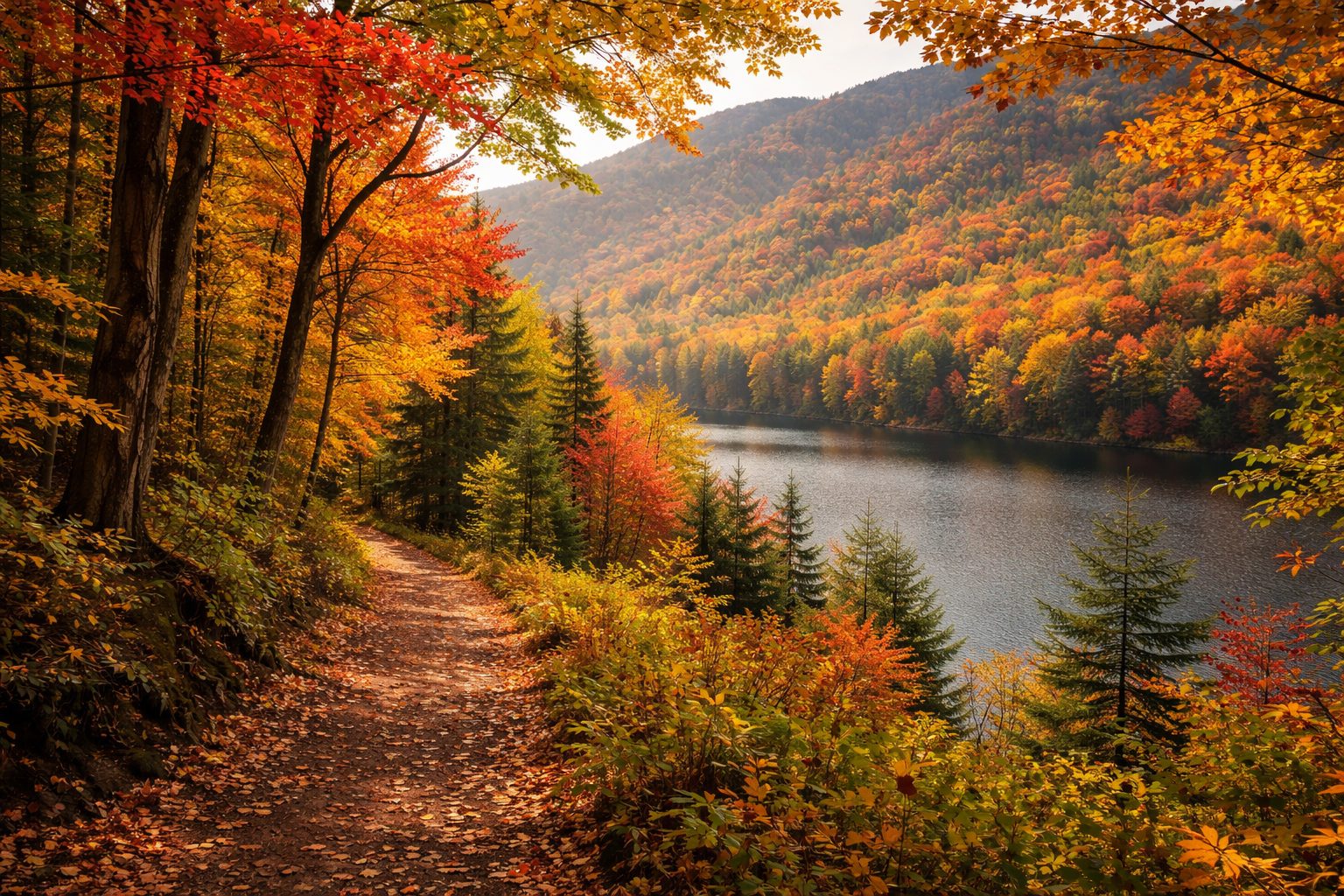
Fall foliage refers to the seasonal change in leaf color that deciduous trees undergo as daylight hours shorten and temperatures drop in autumn. What you’re seeing isn’t the leaves dying so much as the tree reclaiming nutrients. Chlorophyll breaks down, the green fades, and the underlying pigments come forward. Yellows and oranges were there all along, masked by the dominant green of summer. Reds and purples are actually produced fresh as the tree processes sugars trapped in the leaves.
The mix of colors you see depends on the tree species, the local climate, and the specific conditions of that year. Sugar maples give you those iconic deep reds and oranges. Aspens shake out brilliant gold. Birches go yellow. Some oaks hold to bronze well into late autumn. Each region has its own cast of characters, which is why the palette looks so different from New England to the Pacific Northwest.
Importance of Fall Foliage in Nature
Beyond aesthetics, the leaf color change is a critical part of deciduous forest ecology. As trees reabsorb chlorophyll and other nutrients, they’re essentially banking energy for the cold months ahead. The fallen leaves become the foundation of the forest floor ecosystem, feeding fungi, insects, and ultimately the soil that sustains the next generation of growth.
For wildlife, the transition signals urgency. Migratory birds move through. Squirrels intensify their caching. Bears eat heavily before denning. So when you’re out watching the colors, you’re witnessing a whole system shifting gears at once, not just trees putting on a show.
Best Places to See Fall Foliage in the United States
The United States has some of the most spectacular autumn landscapes in the world, partly because of its diverse geography and partly because of the sheer variety of hardwood species across the country. Knowing which regions offer what kind of experience helps you choose the trip that matches your style.
New England: The Heart of Fall Colors
If you ask most people where to find the best places to see fall foliage in America, New England comes up first, and with good reason. Vermont, New Hampshire, and Maine offer dense hardwood forests with a heavy sugar maple presence, which means you get that full spectrum of red, orange, and gold that defines the classic autumn image.
Vermont’s Northeast Kingdom is particularly stunning, with rolling farmland and forested hills creating a layered landscape. The Kancamagus Highway in New Hampshire is one of the best scenic drives on the East Coast during peak season. Maine’s Acadia National Park combines coastal scenery with dramatic foliage, which is a combination you don’t find many other places.
Peak color in New England typically runs from late September in the north to mid-October further south. Towns like Stowe and Woodstock in Vermont fill up fast, so booking accommodation weeks or even months in advance is the norm. Don’t overlook western Massachusetts, either. The Pioneer Valley and the Berkshires offer excellent color with slightly smaller crowds.
Key spots in New England:
- Stowe, Vermont
- Franconia Notch State Park, New Hampshire
- Acadia National Park, Maine
- Berkshires, Massachusetts
- Litchfield Hills, Connecticut
The Great Smoky Mountains: A Colorful Escape
The Smokies offer a different kind of fall foliage experience than New England. The mountains are lower in elevation overall, which means peak color tends to come later, usually mid-October through early November. The color palette here leans more toward warm yellows and oranges, with tulip poplars and hickories dominating large areas.
What makes the Smokies compelling is the combination of elevation bands. Drive from the valleys up to the ridgelines and you move through different stages of color simultaneously. Newfound Gap Road and the Blue Ridge Parkway (which extends into North Carolina and Virginia) are classic routes. Clingmans Dome and Laurel Falls add hiking options if you want to get off the road.
The park also sees enormous crowds during peak fall weekends. Arriving early in the morning, weekdays over weekends, and exploring less-traveled areas like Cataloochee Valley will give you a better experience than the main corridors on a Saturday afternoon.
The Pacific Northwest: Unique Foliage Experiences
The Pacific Northwest doesn’t compete with New England on maple reds, but it offers something genuinely different. Larch trees in the Cascade Range and the Okanagan Highlands turn a vivid gold in early October, and the combination of rocky alpine terrain, clear lakes, and golden larch stands is dramatic in its own way.
The Enchantments in Washington state and the North Cascades are spectacular larch destinations. Oregon’s Columbia River Gorge shows off bigleaf maples and cottonwoods with golden tones against dramatic basalt cliffs. The Willamette Valley and the area around the Columbia River have their own quieter appeal.
One advantage here is that the crowds are generally smaller than in New England, especially if you get into the backcountry. And the combination of fall color with volcanic peaks, rivers, and dramatic gorges creates landscape compositions you simply won’t find elsewhere.
Midwest Marvels: Iconic Locations for Fall Colors
The Midwest doesn’t always get credit as a fall foliage destination, but there are genuinely excellent spots throughout the region. The Upper Peninsula of Michigan is among the best kept secrets for autumn color in the country. Dense mixed forests, remote roads, and Great Lakes shorelines create a setting that rivals more famous destinations.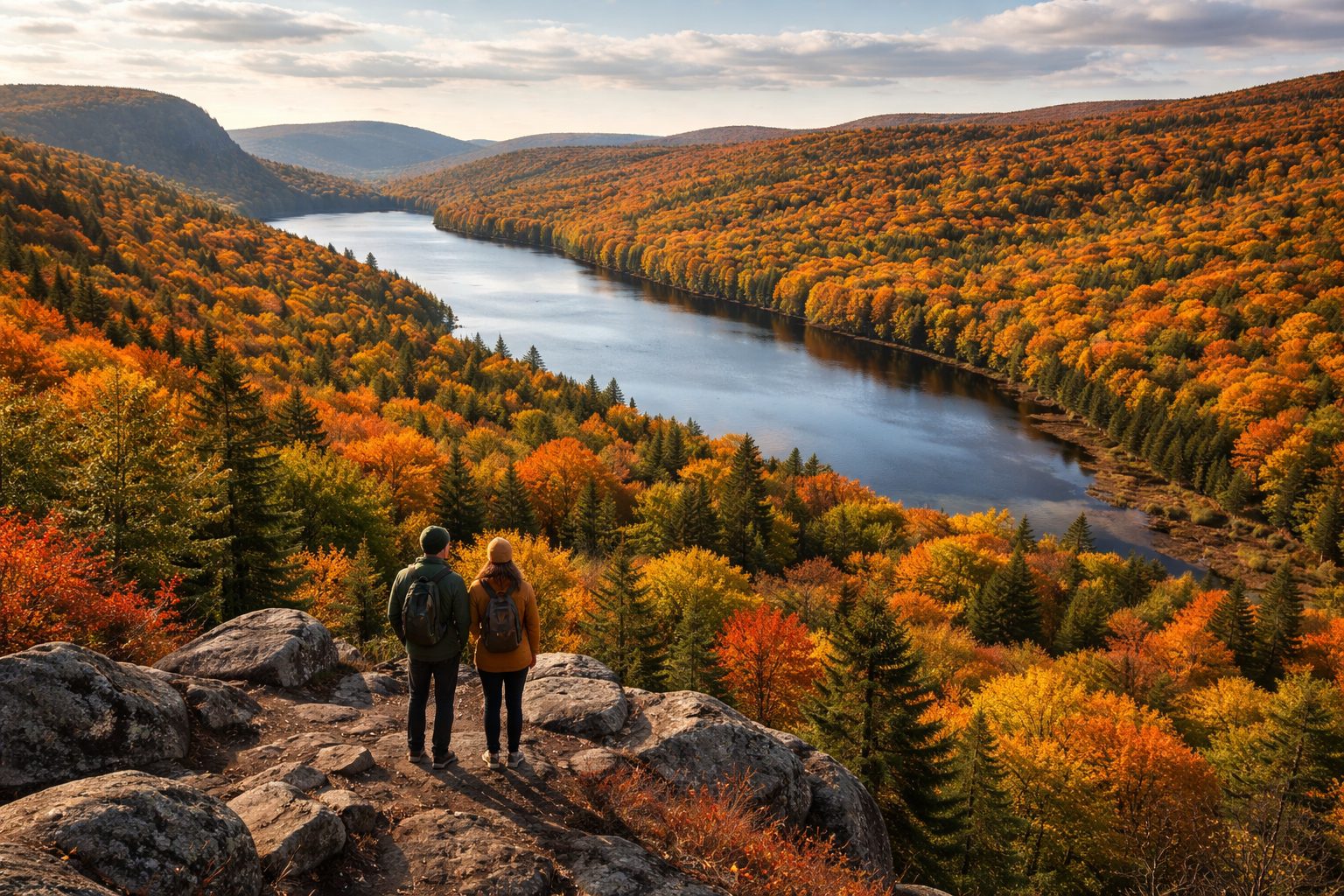
Wisconsin’s Door Peninsula and the Kettle Moraine State Forest offer accessible viewing close to Milwaukee and Chicago. Minnesota’s North Shore along Lake Superior is another standout, with aspen and birch forests turning gold against the steel blue of the lake.
Missouri’s Ozarks have rolling hills with a mix of oak and hickory that turn deep bronze and amber. The Hill Country in northern Arkansas also deserves a mention. These are destinations where you can often find peak color without fighting traffic and overbooked lodges.
The Southwest: Stunning Fall Landscapes
The Southwest is not the first place people think of for fall foliage, but it has its moments. Aspen groves in the mountains of Colorado, New Mexico, and Arizona can be stunning. The Maroon Bells area near Aspen, Colorado is probably the most photographed fall landscape in the American West. The combination of golden aspen stands reflected in Maroon Lake with the peaks behind is genuinely extraordinary.
New Mexico’s Jemez Mountains and the area around Taos have significant aspen coverage. The contrast of gold against red rock and blue sky creates a color palette you won’t see anywhere else. Southern Utah’s higher elevation areas like Cedar Breaks and the Markagunt Plateau also show color later in the season.
The window for aspen color in the Southwest is usually narrower than hardwood color in the East, often just two to three weeks in late September and early October. Weather can cut it even shorter. But when conditions line up, it’s worth the trip.
International Destinations for Fall Foliage
Some of the best places to see fall foliage are outside the United States entirely. Several countries offer autumn color experiences that are culturally rich and visually distinct.
Canada: A Tapestry of Colors
Canada’s autumn foliage is closely related to what you find in New England, geographically and botanically. Quebec and Ontario share many of the same tree species as Vermont and New York, so the color palette is similar. The Laurentian Mountains north of Montreal are a classic destination, with peak color typically arriving a week or two earlier than southern New England.
The Cabot Trail on Cape Breton Island in Nova Scotia is one of the most scenic fall drives in North America. The route loops around the highlands, with forest on one side and ocean on the other. It’s a longer drive and requires more planning, but the combination of color and coastal scenery is worth it.
Ontario’s Algonquin Provincial Park is another excellent option, with extensive backcountry canoe routes that let you experience the color from the water. The park is well managed, with good camping infrastructure, and it’s genuinely wild in a way that’s hard to find close to a major city.
Japan: Cultural Significance of Autumn Leaves
Japan takes fall foliage to a level that feels almost ceremonial. The tradition of koyo, or autumn leaf viewing, is as culturally embedded as hanami (cherry blossom viewing) in spring. Temples, gardens, and parks are specifically designed to showcase the color, and the experience of sitting in a historic garden as the maple leaves turn red is unlike anything in the Western world.
Kyoto is the most famous destination for koyo, with hundreds of temples and gardens that frame the leaves against traditional architecture. Tofuku-ji and Eikan-do are two of the most celebrated spots. Nikko, north of Tokyo, has elaborate shrine complexes set among dense forests that turn spectacular in late October. Hokkaido in the far north sees color first, usually in September.
The timing of peak koyo varies by region and year, and there are detailed forecast maps published each season. The crowds in Kyoto during peak weekends can be overwhelming, so timing your visit to slightly before or after the absolute peak, or focusing on lesser-known sites, makes a significant difference in the quality of the experience.
Europe: Best Spots for Autumn Colors
Europe has excellent fall foliage, though it’s less celebrated as a destination for leaf peeping specifically. The Black Forest in Germany turns rich gold and amber in October. The Dolomites in northern Italy combine dramatic rocky peaks with larch and beech forests in autumn color. Scotland’s Highlands show off bracken turning rust and gold against heather moorland in a palette that’s distinctly its own.
The Trossachs National Park in Scotland and the Cairngorms offer excellent autumn walking. The Ardennes in Belgium and Luxembourg have dense beech and oak forests that peak in mid to late October. The Plitvice Lakes National Park in Croatia combines waterfalls with autumn forest color in a setting that photographs extraordinarily well.
What makes European fall foliage experiences distinct is usually the integration with history and architecture. Walking through a medieval village in Alsace with the vineyards turning gold, or hiking above a lake in the Bavarian Alps as the beech forest blazes, adds layers to the experience that purely natural settings don’t have.
Tips for Planning Your Fall Foliage Trip
Timing Your Visit for Peak Colors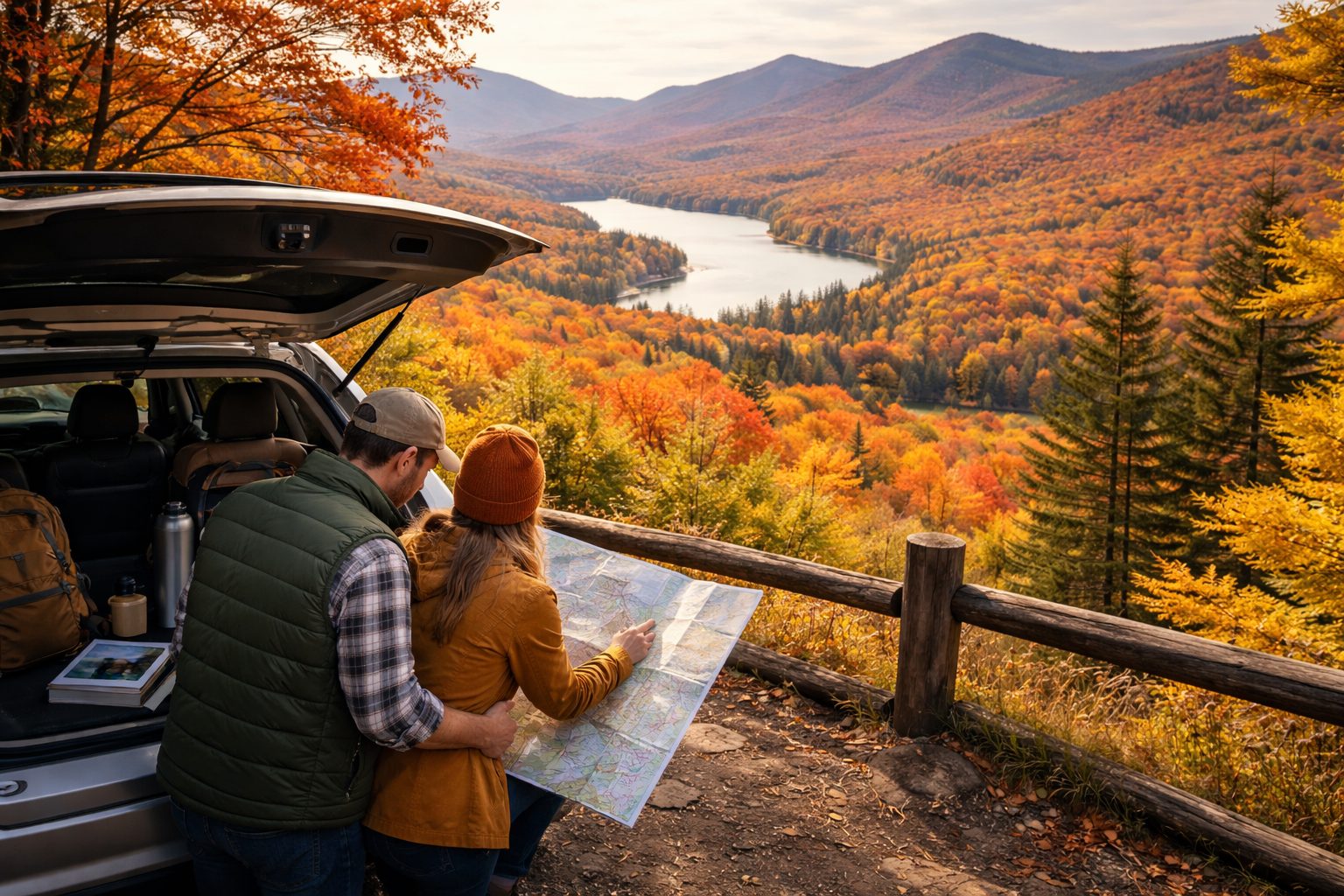
Timing is everything when it comes to fall foliage, and it’s genuinely unpredictable from year to year. The general pattern is driven by latitude and elevation: northern and high-elevation areas peak first, and color moves south and downslope through the season. But the specific timing within that pattern depends heavily on summer temperatures, precipitation, and how quickly fall temperatures drop.
A warm, dry summer tends to produce less vibrant color. A summer with good rainfall followed by cool nights and warm days in September produces the best reds. Early hard frosts can kill the color early. So you’re always working with some uncertainty.
General peak timing guidelines:
- Northern Maine and Vermont: late September to early October
- Central New England and New York: first two weeks of October
- Appalachians and Midwest: mid to late October
- Southern Appalachians: late October to early November
- Colorado and New Mexico aspens: late September to early October
- Pacific Northwest larches: first two weeks of October
- Kyoto, Japan: mid to late November
- Canada (Quebec, Ontario): late September to early October
Best Viewing Methods: Hiking vs. Scenic Drives
Both hiking and scenic drives have real merit, and the best trips often combine both. Scenic drives give you coverage and variety in a short time. You can move through different elevations and exposure types, see a wide range of tree species, and stop at multiple viewpoints. For someone with limited time or mobility constraints, drives are the practical choice.
Hiking gets you into the color. When you’re walking through a forest in peak color, the experience is immersive in a way that a car window can’t replicate. You hear the leaves, smell the leaf litter, see the light differently. Ridgeline hikes with views over colored valleys are particularly satisfying.
If you’re driving, pull over more than you think you need to. The best moments are often not at the designated viewpoints but at a random spot where the light happens to be perfect at that moment. If you’re hiking, choose trails that offer both forest immersion and elevated views rather than trails that stay purely in the valley.
Recommended Gear for Fall Foliage Viewing
Dressing for fall weather is more nuanced than it looks. Mornings can be genuinely cold, especially at elevation or in northern regions, while afternoons warm up considerably. Layering is the standard approach, and it works well.
Essential gear list:
- Waterproof jacket: fall weather is unpredictable and rain is common
- Warm mid-layer: fleece or down for mornings and evenings
- Comfortable, waterproof hiking boots if you plan to be on trails
- Trekking poles for steep or wet terrain
- Camera or smartphone with a good camera: manual mode helps with exposure in bright foliage
- Polarizing filter if you shoot with a dedicated camera
- Binoculars: useful for identifying tree species at a distance and spotting wildlife
- Physical map or downloaded offline maps: cell coverage is unreliable in many foliage areas
Comparing Different Regions for Fall Foliage
East Coast vs. West Coast: A Color Showdown
The East Coast and West Coast offer very different fall foliage experiences, and the comparison is less about which is better and more about what kind of experience you’re after.
| Factor | East Coast | West Coast |
|---|---|---|
| Peak tree species | Sugar maple, red maple, oak, birch | Larch, aspen, bigleaf maple, cottonwood |
| Color palette | Full spectrum: red, orange, yellow, gold | Primarily gold and yellow, less red |
| Peak timing | Late September to early November (varies by region) | Late September to mid-October |
| Crowd levels | High, especially in New England | Moderate to low, especially in backcountry |
| Landscape context | Rolling hills, farms, historic towns | Mountain ranges, volcanic peaks, gorges |
| Best for | Classic fall experience, road trips, town hopping | Dramatic landscapes, photography, hiking |
| Accessibility | Excellent road networks, many accommodations | More remote in places, requires more planning |
Neither is objectively superior. If you want the postcard image of fall in America, New England delivers it reliably. If you want something more dramatic and less crowded, the West has real advantages.
Urban vs. Rural Areas: Where to Find the Best Views
Urban parks and arboretums offer fall color that’s accessible and often overlooked. Central Park in New York, Rock Creek Park in Washington D.C., and the Boston Public Garden all put on a legitimate display in October. These are genuinely enjoyable fall foliage experiences that don’t require a long drive or advance planning.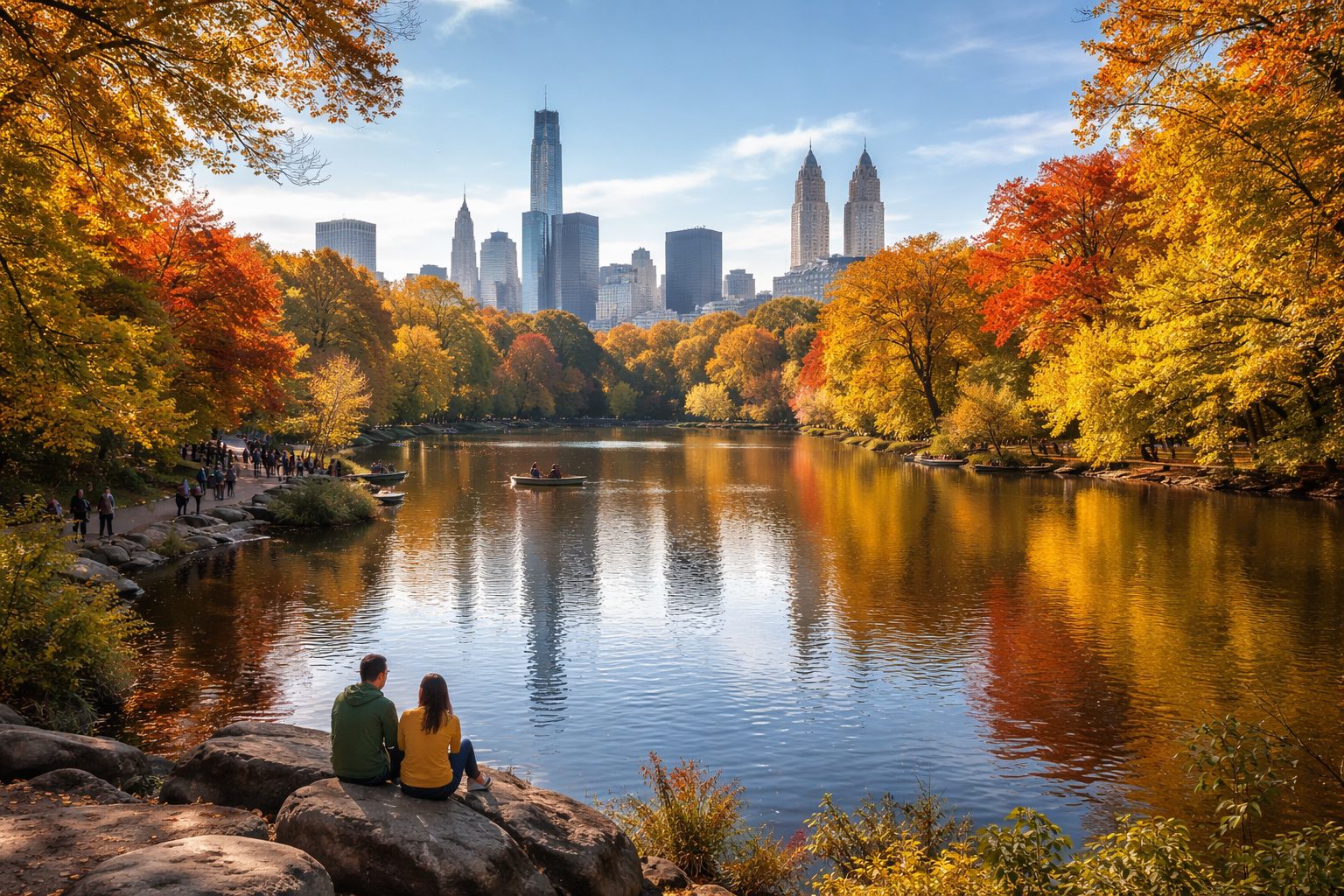
Rural areas deliver the immersive experience. There’s no comparison in terms of scale and intensity when you’re in a forested valley with nothing but trees in every direction. But rural areas require more logistics: lodging books out early, some roads get congested on peak weekends, and you need to plan fuel and food stops in advance.
A practical approach for many people is to anchor in a small city or large town and do day trips into the rural areas. This gives you comfortable accommodations with reasonable availability while still accessing the best natural color within an hour or two of driving.
Practical Information for Fall Foliage Enthusiasts
Photography Tips for Capturing Fall Foliage
Fall foliage photography is genuinely challenging because the subject is so bright and colorful that cameras tend to underexpose to compensate. A few adjustments make a significant difference.
Shoot in the golden hour, the first and last hour of daylight. The warm, low-angle light enhances the reds and oranges in a way that midday light simply can’t. Overcast days are often better than bright sun for even, saturated color without harsh shadows.
Practical photography tips:
- Expose for the highlights: dial exposure compensation down slightly to avoid blown-out leaves
- Use a polarizing filter to reduce glare on leaves and deepen the blue of the sky
- Look for reflections in water: rivers, ponds, and lakes double the color
- Include foreground elements: a path, a stone wall, or a fallen log creates depth
- Shoot in RAW format if your camera supports it for more editing flexibility
- Consider vertical compositions for tall forests and portrait-format shots
Safety Tips for Fall Foliage Viewing
Fall foliage areas can present real safety considerations, especially if you’re hiking or driving on unfamiliar mountain roads.
- Trail conditions change in fall: wet leaves are slippery, and trails that are dry in summer can be muddy or icy at elevation in October
- Sunset comes earlier: carry a headlamp and know your turnaround time
- Mountain weather changes fast: afternoon thunderstorms are common in the Rockies and Appalachians, and temperatures can drop sharply
- Wildlife activity increases in fall: be bear-aware in appropriate regions and store food properly
- Mountain driving requires caution: fall visitor traffic creates congestion on narrow roads, and the combination of curves, foliage distraction, and slick leaves can be hazardous
- Cell service is unreliable in many rural and wilderness areas: download offline maps, carry a paper map, and let someone know your itinerary
Local Festivals and Events Celebrating Fall Foliage
Fall foliage season generates a significant festival culture in many regions. These events can add real character to a trip, though they also concentrate crowds.
Vermont’s Northeast Kingdom Foliage Festival runs for a week in late September and early October, rotating among small towns with local food, crafts, and organized foliage tours. The Letchworth State Park in New York hosts events throughout October. New Hampshire’s Conway area has long been a fall tourism hub with organized activities.
In Japan, many temples and gardens hold special evening illuminations during koyo season where the lit leaves reflecting in dark ponds create a genuinely magical atmosphere. Booking in advance is essential for the most popular events.
In the American West, Aspen Leaf season brings events and activities to mountain towns in Colorado and New Mexico. The combination of altitude, cooler temperatures, and a festive atmosphere in towns like Aspen and Santa Fe makes for an enjoyable trip even beyond the foliage itself.
Frequently Asked Questions (FAQ)
When is the Best Time to See Fall Foliage?
It depends heavily on your location. Northern regions like Vermont and Quebec peak in late September to early October, while more southern areas like the Smoky Mountains don’t hit full color until late October or even early November. Altitude matters too, as high-elevation spots always peak before valley areas.
What Causes the Leaves to Change Color?
As days shorten and temperatures drop, trees stop producing chlorophyll, the green pigment that dominates summer leaves. As chlorophyll breaks down, underlying yellow and orange pigments become visible, while red and purple pigments are produced when sugars become trapped in the leaf tissue. The intensity of color depends on weather conditions, with cool nights and warm days producing the most vivid results.
How to Find the Best Fall Foliage Locations?
Start with elevation and latitude: higher and more northern areas peak first. State forestry websites and national park services often publish foliage forecasts and live reports during the season. Local tourism boards in foliage regions post regular updates. Community forums and photography groups on social platforms can give you real-time ground-level reports more specific than any official forecast.
Are There Any Apps for Tracking Fall Foliage?
Several weather and nature apps include foliage tracking features. The Smoky Mountains National Park publishes its own foliage map online. Many state tourism sites in New England provide weekly foliage reports with regional breakdowns. Some dedicated apps offer crowdsourced reports where visitors can post current conditions from specific locations, which can be more accurate than model-based forecasts close to peak timing.
Can You See Fall Foliage in Tropical Areas?
True deciduous fall foliage as seen in temperate regions doesn’t occur in tropical climates, where trees don’t have a cold-triggered dormancy cycle. However, some subtropical and highland tropical areas do have seasonal dry periods where trees drop leaves, and some of those transitions involve color changes. In general, if you’re after the classic fall foliage experience, you need a temperate climate with cold winters and a mix of deciduous hardwood tree species.
The best places to see fall foliage are ultimately wherever you can be present to experience it fully. A perfect afternoon in a local park with sugar maples turning above you has its own worth, even if it doesn’t make any famous list. But if you’re planning a dedicated trip, the regions and destinations covered here represent genuinely exceptional experiences, each with its own character and its own reasons to go. Start somewhere that fits your travel style and budget, go when the timing is right, and the rest tends to take care of itself.