India is home to some of the most biodiverse ecosystems on the planet, and the country’s national parks are the clearest proof of that. With over 100 protected reserves spread across deserts, grasslands, wetlands, and dense forests, choosing the best national park in India is genuinely difficult. I’ve spent time researching and visiting several of these parks, and what strikes me most is how different each one feels. They’re not interchangeable. Each park has its own personality, its own pace, and its own way of surprising you.
If you’re planning a wildlife trip and trying to figure out where to go first, this guide will walk you through the top contenders, compare them honestly, and give you the practical information you need to make a smart decision.
Introduction to National Parks in India
India established its first national park in 1936 with Hailey National Park, now known as Jim Corbett. Since then, the network has expanded significantly, covering nearly 40,000 square kilometers across the country. These parks protect a staggering variety of habitats: from the mangroves of the Sundarbans in West Bengal to the alpine meadows of Hemis in Ladakh.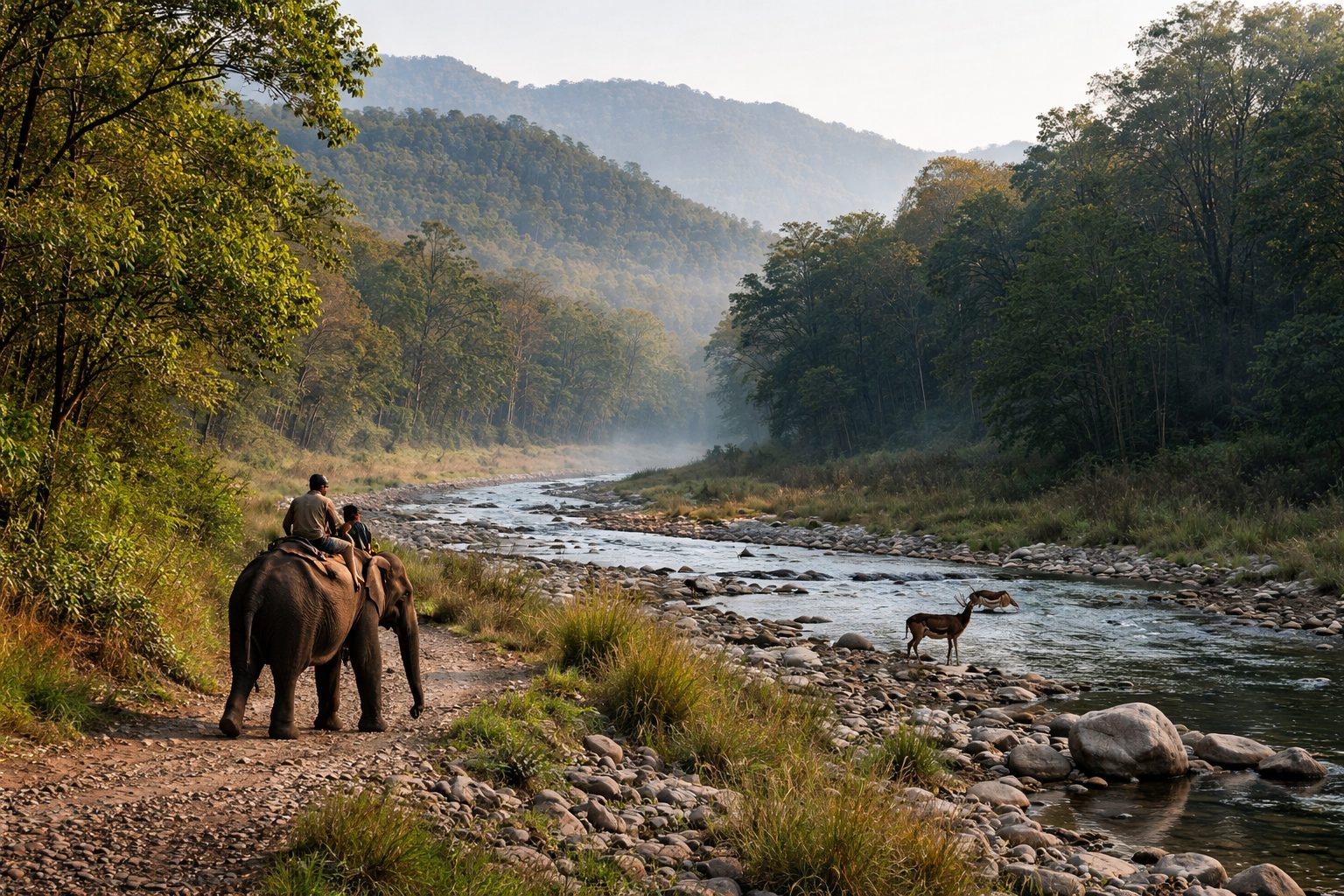
What makes India’s parks stand out globally is the sheer density of large mammals. Tigers, elephants, rhinos, leopards, sloth bears, and wild dogs all coexist in protected habitats that are still largely functional ecosystems. That’s increasingly rare in the world. Most countries have lost their apex predators. India still has them, and in some places they’re thriving.
The parks are managed under the Wildlife Protection Act of 1972, which gave the government authority to designate protected areas and regulate human activity within them. Project Tiger, launched in 1973, became one of the most successful wildlife conservation programs in history, pulling tigers back from the edge of extinction within just a few decades.
Importance of National Parks for Conservation
Conservation in India isn’t just a government project. It’s an ongoing negotiation between wildlife, habitat, local communities, and tourism. National parks sit at the center of that tension. When they work well, they protect biodiversity, support eco-tourism economies, and preserve genetic diversity for species that have no viable future outside these boundaries.
The best national park in India for conservation impact is debatable, but the results speak broadly across the system. Tiger populations have rebounded from roughly 1,400 in 2006 to over 3,100 as of the most recent census. One-horned rhinoceros numbers in Kaziranga have recovered from near extinction to over 2,600 individuals. These aren’t minor wins. They represent sustained, serious work.
Parks also protect watersheds and regulate local climates. Forests inside protected areas often anchor river systems that millions of people downstream depend on. So the value extends well beyond wildlife viewing.
Overview of the Best National Parks in India
There are four parks that consistently come up when experienced wildlife travelers and conservationists talk about the best national park in India: Jim Corbett, Ranthambore, Kaziranga, and Bandhavgarh. Each has earned its reputation differently.
Top Features of Each National Park
- Jim Corbett is India’s oldest national park, located in Uttarakhand. It’s known for dense sal forests, river valleys, and a healthy tiger population. The park covers about 520 square kilometers in its core zone.
- Ranthambore sits in Rajasthan and is famous for tigers that have grown unusually comfortable with vehicles, making sightings more reliable than almost anywhere else in India.
- Kaziranga in Assam holds the world’s largest population of Indian one-horned rhinoceros and is a UNESCO World Heritage Site. It’s on the floodplains of the Brahmaputra River.
- Bandhavgarh in Madhya Pradesh has one of the highest tiger densities in India and a dramatic landscape that includes ancient ruins, open meadows, and thick forests.
Unique Wildlife Experiences
Each park offers something that the others can’t quite replicate. Corbett gives you the experience of spotting a tiger in riverine jungle, which feels genuinely wild. Ranthambore has tigers that have been photographed hundreds of times each and move through the terrain with complete confidence around jeeps. Kaziranga lets you watch rhinos from elephant-back, which is a different kind of close encounter entirely. And Bandhavgarh has a density of predators that makes almost every safari feel eventful.
Beyond the flagship species, each park has its own cast of supporting characters. Corbett has gharials in the river and leopards in the hills. Ranthambore has sloth bears, hyenas, and massive crocodiles in its lakes. Kaziranga has wild water buffalo, swamp deer, and over 480 bird species. Bandhavgarh has leopards that are often more visible than the tigers.
Flora and Fauna Diversity
India’s parks don’t just protect animals. The plant life inside them is equally complex and often medically or ecologically significant. Corbett’s forests are dominated by sal trees and mixed broadleaf species. Ranthambore has dry deciduous forest and scrub, which makes visibility easier but the landscape more austere. Kaziranga’s tall elephant grass and wetlands support an entirely different set of species. Bandhavgarh has mixed forest with bamboo thickets, open meadows, and rocky escarpments.
The diversity of habitats across these four parks means that together they protect an enormous range of India’s biodiversity. A naturalist could spend a week in each and still be finding new species to observe.
Detailed Review of the Best National Parks
Jim Corbett National Park
Jim Corbett National Park is where India’s modern conservation story begins. Named after the legendary hunter-turned-conservationist Jim Corbett, the park sits in the Nainital district of Uttarakhand, bordered by the Himalayas to the north and the Ramganga River running through its core. It was the first park in Asia to come under the protection of Project Tiger.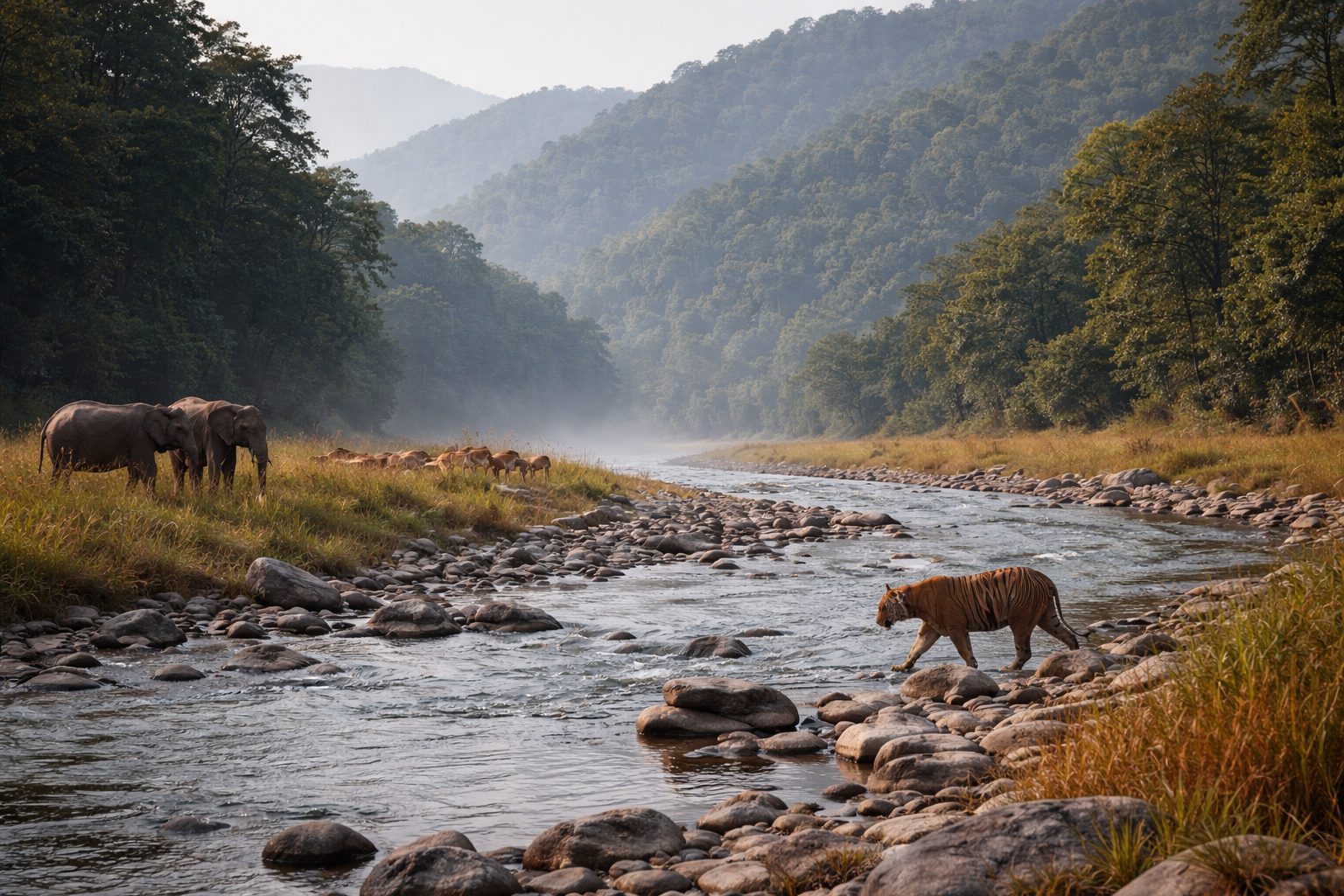
The atmosphere in Corbett is different from other parks. The forest is dense and layered. Sounds carry differently here. You hear the alarm calls of cheetal deer, the chatter of hornbills, the distant sound of the river. It takes patience, but the experience of spotting a tiger in that environment feels earned.
Key Attractions
- Tiger sightings in the Dhikala and Bijrani zones
- Gharial and mugger crocodiles along the Ramganga River
- Himalayan foothill birdwatching (over 600 species recorded)
- Elephant herds moving through the river valleys
- The historic Dhikala Forest Lodge, one of the oldest forest rest houses in India
The Dhikala zone is generally considered the best for wildlife sightings and is the largest open area in the park. Access is restricted and requires prior booking, which keeps the experience less crowded.
Best Time to Visit
November to June is the ideal window. The park core area, including Dhikala, closes during the monsoon from mid-June to mid-November. February through April is particularly good for tiger sightings as the undergrowth thins and water sources concentrate animals. May and June can be hot, but that heat drives more animals to the remaining water points, which actually improves sightings.
Safari Options
- Jeep safaris: The standard option, available in morning and afternoon slots. You’ll share the zone with a limited number of vehicles.
- Elephant safaris: Available in certain zones and occasionally used for tracking tigers that have been located by park staff.
- Canter safaris: Larger open vehicles, usually used for the Dhikala zone. Cheaper than private jeeps but you’re with more people.
Booking through the official Uttarakhand forest department website is the safest route. Demand for Dhikala slots is high, so book at least 45 to 60 days in advance.
Ranthambore National Park
Ranthambore is the park that made tigers into superstars. Located in Rajasthan near the town of Sawai Madhopur, it covers about 1,334 square kilometers including its buffer zones. The park’s tigers have become so accustomed to safari vehicles that some of them barely acknowledge you when they walk past. It can feel almost surreal.
The landscape itself is worth the trip. Ancient ruins of the Ranthambore Fort sit inside the park. The lakes, especially Padam Talao, are stunning. Crocodiles bask at the edges while painted storks wade through the shallows. It’s a genuinely photogenic environment.
Key Attractions
- Tigers around the park lakes, especially Padam Talao and Malik Talao
- The 10th-century Ranthambore Fort, a UNESCO World Heritage Site
- Sloth bears in the rocky terrain
- Mugger crocodiles and rich birdlife around the lakes
- Leopards, hyenas, and Indian wild dogs
Ranthambore’s tigers are individually known and tracked. Many of them have been photographed thousands of times and are recognized by their stripe patterns. When you spot a tiger here, the naturalists and drivers often know exactly which individual it is.
Best Time to Visit
October to June is when the park is open. The best months for tiger sightings are March to May, when heat pushes the animals toward water sources. October to February is more comfortable climatically and excellent for birdwatching. The park closes from July to September for the monsoon.
Safari Options
- Jeep safaris: Private jeeps holding up to six passengers plus a driver and guide. The standard choice for serious wildlife watchers.
- Canter safaris: Open trucks that hold twenty passengers. Less flexible but significantly cheaper. Good for budget travelers.
The park is divided into ten zones. Zones 1 to 5 cover the older, core section of the park including the lakes and are considered the best for tiger sightings. Zones 6 to 10 are in the buffer area. Booking opens 90 days in advance online, and the popular zones fill up quickly.
Kaziranga National Park
Kaziranga is unlike anywhere else I’ve read about or experienced in India. It sits on the southern bank of the Brahmaputra River in Assam and looks nothing like the dry forests of Rajasthan or Madhya Pradesh. The landscape is all tall elephant grass, swamps, shallow lakes, and dense woodland. And the wildlife density is extraordinary.
This is where you come to see one-horned rhinos. They’re everywhere. You’ll see them grazing in the open grasslands within minutes of entering the park. It almost seems too easy until you realize that a few decades ago, there were fewer than 100 of them left.
Key Attractions
- The world’s largest population of Indian one-horned rhinoceros
- Wild Asiatic water buffalo, one of the most impressive mammals in Asia
- Swamp deer, also called barasingha, in significant numbers
- Eastern swamp deer and hog deer
- Over 480 bird species, including the endangered Bengal florican
- Tigers, though less frequently seen than in central Indian parks
- One of the highest bird densities in the world during migration season
The park also has healthy populations of elephants, which roam freely through both the grasslands and forests. And the birding is exceptional by any standard, not just Indian standards.
Best Time to Visit
November to April is the prime season. The park closes during the monsoon from May to October because the Brahmaputra floods large portions of it annually. This annual flooding is actually ecologically important and helps replenish the grasslands, but it makes access impossible. February and March tend to have the best visibility and most comfortable temperatures.
Safari Options
- Jeep safaris: Cover the main zones including Kohora, Bagori, and Burapahar. Morning slots are generally better.
- Elephant safaris: One of the few parks where government-run elephant rides are still available for wildlife viewing. You move through tall grass in a way that’s impossible in a jeep. This is often the best way to get close to rhinos.
Kohora is the most visited range and has the highest rhino density. Bagori is excellent for birds and water buffalo. Burapahar is hillier and better for leopards and elephants. If you have multiple days, cover more than one range.
Bandhavgarh National Park
Bandhavgarh sits in the Umaria district of Madhya Pradesh and has one of the highest concentrations of tigers of any park in India. The landscape is dramatic. The ancient Bandhavgarh Fort rises above the forest on a cliff, and the park spreads out below in a mixture of dense sal and mixed forest, open meadows, and bamboo-covered hillsides.
The tigers here are numerous enough that sightings are almost guaranteed over a two or three day visit. But what impresses most experienced visitors is the consistency of the experience. You don’t just see tigers occasionally. You often see them doing things: hunting, interacting with each other, raising cubs.
Key Attractions
- Very high tiger density, consistently among the highest in India
- Leopards, often spotted in trees or rocky outcrops
- Ancient Bandhavgarh Fort with wildlife moving around its ruins
- White tigers were historically spotted here, though wild white tigers no longer exist
- Significant population of Indian bison, also called gaur
- Good vulture populations, including the rare white-backed and long-billed vultures
The park has three main ranges: Tala, Magdhi, and Khitauli. Tala is the most popular and has the highest tiger activity. It’s where most of the famous sightings happen.
Best Time to Visit
October to June. The park closes from July through September for the monsoon. April and May are the best months for tiger sightings. The heat pushes tigers to water holes, and the vegetation thins enough to see across wider distances. February and March are more comfortable and still excellent for sightings.
Safari Options
- Jeep safaris: The primary option, available in morning and afternoon slots. Private jeeps hold up to six passengers.
- Elephant safaris: Available in the Tala range for tracking tigers. When a tiger is located, an elephant can approach through thick vegetation that a jeep can’t navigate.
The Tala zone has a limited number of jeep permits, which keeps crowding manageable. Book through the Madhya Pradesh online forest booking portal. Tala zone permits are highly competitive, especially in peak season.
Comparing the Best National Parks
Wildlife Species Comparison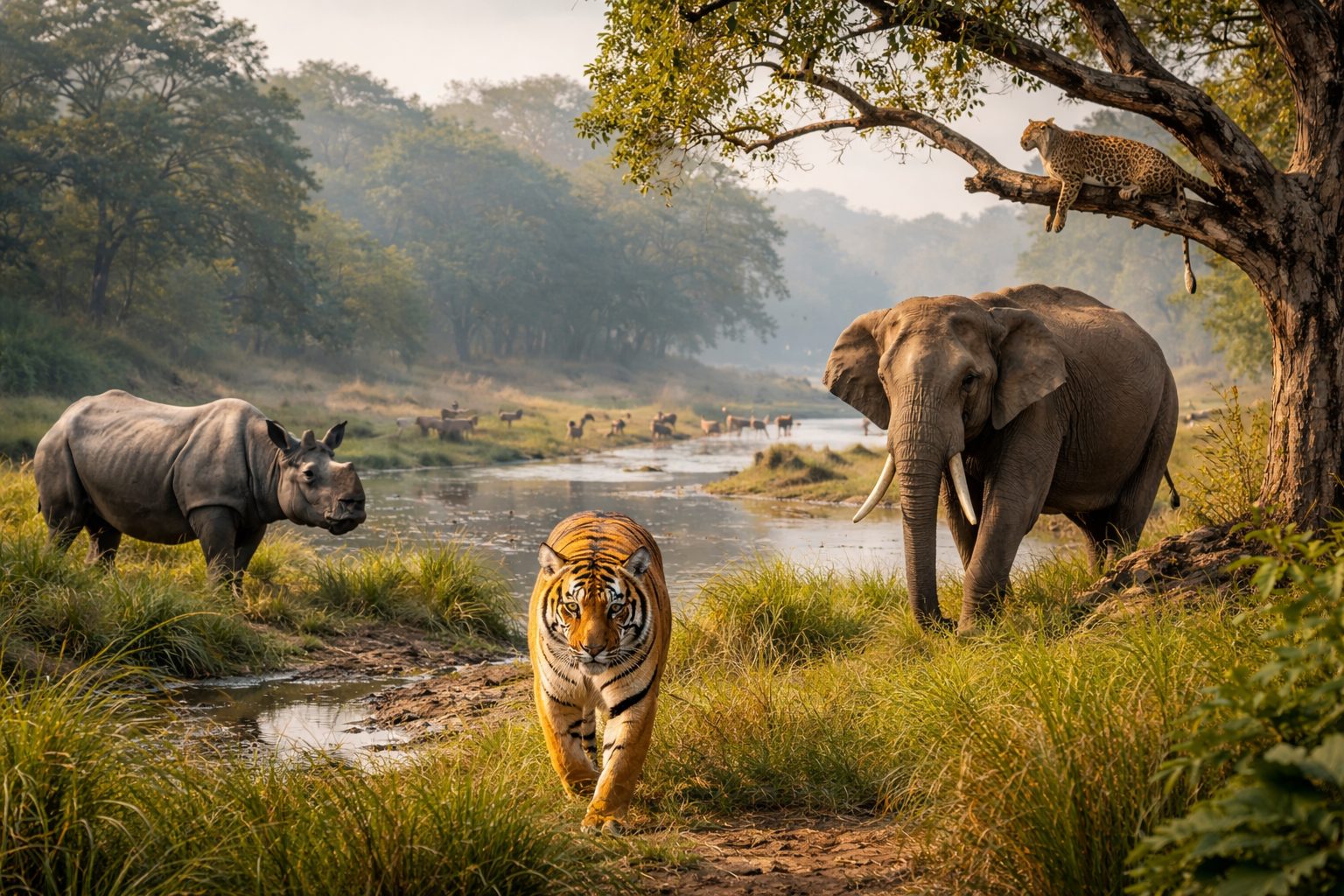
| Park | Tiger | Rhino | Elephant | Leopard | Special Species |
|---|---|---|---|---|---|
| Jim Corbett | High | None | High | Moderate | Gharial, 600+ birds |
| Ranthambore | High | None | Rare | Moderate | Sloth bear, large crocs |
| Kaziranga | Moderate | Very High | High | Low | Water buffalo, swamp deer |
| Bandhavgarh | Very High | None | Rare | High | Gaur, vultures |
This comparison shows why no single park is the best for every traveler. If rhinos are your priority, Kaziranga is the only real answer. If you want the most reliable tiger sightings, Bandhavgarh and Ranthambore are your top options. If you want a broader, more varied wildlife experience with birds and river ecosystems, Corbett is hard to beat.
Visitor Experience Comparison
Ranthambore is the most accessible from major cities and has the widest range of accommodation options from budget guesthouses to luxury tented camps. It’s also the most popular with international tourists, which means more services but occasionally more crowds on safari.
Corbett has a more wilderness feel, especially in the Dhikala zone where you stay inside the park. The experience there is genuinely immersive. You’re inside the forest, not just visiting it from the edge.
Kaziranga requires more travel to reach (Assam is not as well connected as Rajasthan or Uttarakhand) but rewards the effort with wildlife density that’s hard to match. It’s also less tourist-heavy outside of peak season.
Bandhavgarh hits a sweet spot between accessibility and wildlife density. Madhya Pradesh is increasingly well-connected by air, and the parks here are relatively less crowded than Ranthambore despite offering comparable tiger sightings.
Accessibility and Travel Tips
- Ranthambore: Nearest airport is Jaipur (about 3.5 hours by road) or Kota (2 hours). Direct trains to Sawai Madhopur from Delhi and Jaipur.
- Jim Corbett: Nearest airport is Pantnagar (about 80 km away) or Dehradun (around 150 km). Train to Ramnagar, then road transfer.
- Kaziranga: Nearest airport is Jorhat (about 97 km) or Guwahati (about 220 km). Road connections through Assam highway.
- Bandhavgarh: Nearest airport is Jabalpur (about 165 km) or Umaria rail station (about 35 km from the park gate).
Practical Tips for Visiting National Parks
Essential Gear and Preparation
The gear you bring makes a real difference. Safari mornings can be cold even in April, especially in open jeeps. A light jacket or fleece layer is worth carrying regardless of the season. Afternoons get hot, so breathable, neutral-colored clothing works best.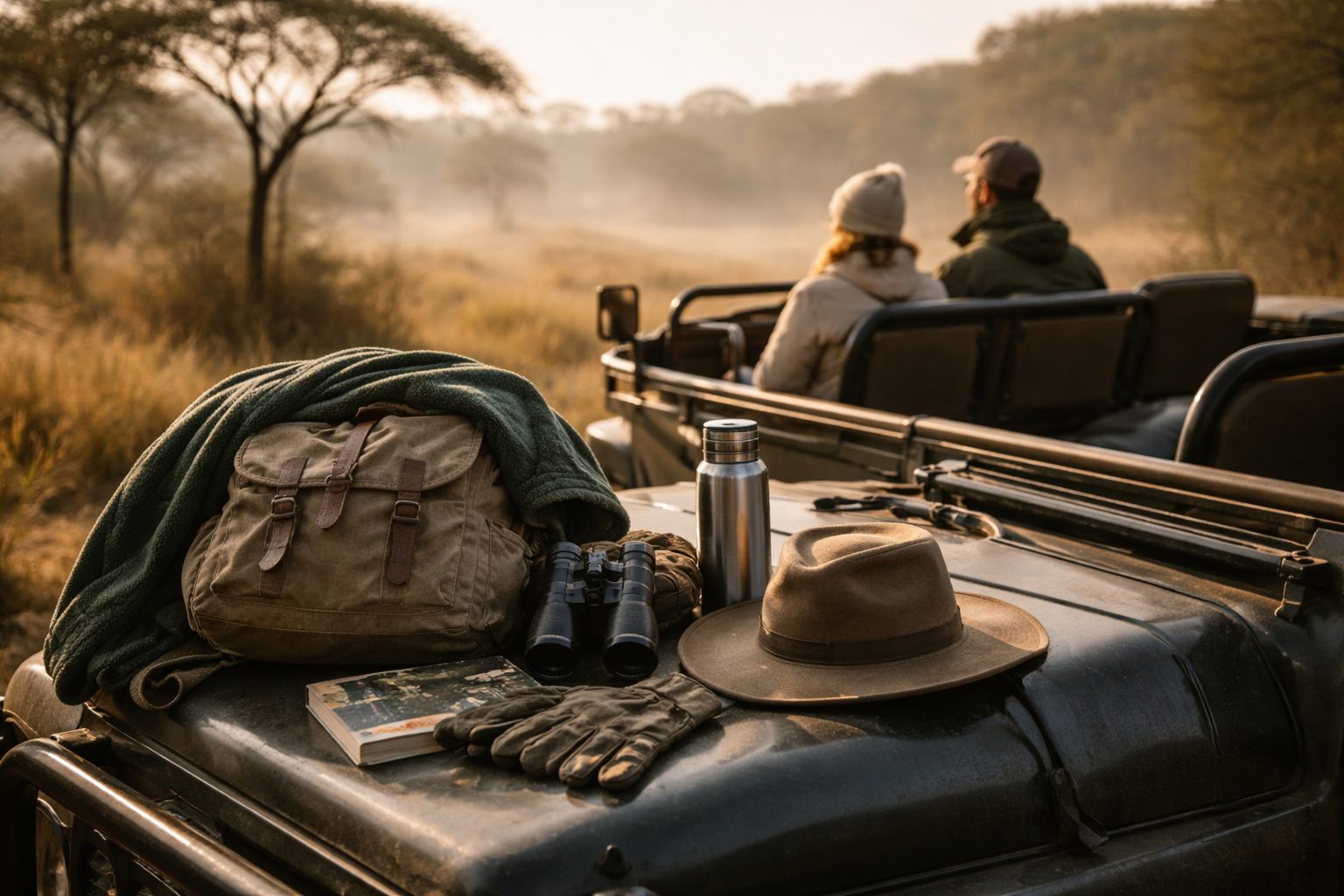
- Binoculars: A quality pair (8×42 is a good all-around spec) makes a significant difference for spotting and identifying birds and distant animals.
- Camera: A telephoto lens of at least 300mm is recommended for wildlife photography. You won’t always get close enough to use a shorter lens well.
- Sun protection: Hat, sunscreen, and sunglasses are essential, especially in open safari vehicles.
- Water and snacks: Bring your own. Many zones don’t have facilities inside the park.
- Neutral clothing: Avoid bright colors and white. Earth tones blend into the environment and don’t distract wildlife.
Safety Guidelines
National parks in India are not zoos. The wildlife is wild and the terrain can be unpredictable. Following safety rules isn’t just bureaucratic compliance. It’s genuinely important.
- Never stand up or lean out of the safari vehicle while in a zone.
- Do not make loud noises or sudden movements.
- Follow the naturalist’s or driver’s instructions without question. They know the terrain and animal behavior far better than any visitor.
- Don’t bring plastic bags or litter into the park.
- Keep mobile phones on silent. Ringtones have a way of ruining both the experience and animal encounters.
- Do not attempt to feed or attract animals.
The parks have strict timing windows for entry and exit. Missing the exit time is not treated lightly. Know the rules before you go in.
Booking Safari and Accommodation
Online booking for most parks opens through state forest department portals. For Madhya Pradesh parks (Bandhavgarh, Kanha, Pench), the MP Forest Department website is the main platform. For Uttarakhand parks including Corbett, it’s the Uttarakhand Forest Department portal. Rajasthan’s Ranthambore uses a dedicated booking system that opens 90 days in advance.
Book as early as possible for peak season slots, particularly in the Tala zone of Bandhavgarh and Dhikala in Corbett. For accommodation, there’s a spectrum from forest department rest houses inside the parks to high-end luxury lodges outside the buffer zones. Staying inside or near the park boundary gives you the best chance at early morning access.
Hiring a naturalist rather than relying only on the driver is worth the extra cost. A good naturalist reads the forest, knows the animals, and can explain what you’re seeing in real time.
Frequently Asked Questions (FAQs)
What is the best time to visit national parks in India?
October to April covers the open season for most parks and offers good wildlife visibility. March and April tend to produce the highest tiger sighting rates because heat concentrates animals near water sources. Avoid the monsoon months (June to September) as many parks are closed and access becomes difficult.
Are national parks in India safe for tourists?
Yes, safari operations are well-regulated and incidents involving tourists are extremely rare. You’re in a vehicle, accompanied by a licensed driver and guide, and the parks have clear protocols. The main risks are sun exposure and dehydration, not wildlife attacks.
What wildlife can be seen in Indian national parks?
The flagship species are Bengal tigers, Indian one-horned rhinoceros, Asian elephants, leopards, sloth bears, and Asiatic wild dogs. Supporting those are hundreds of bird species, ungulates like cheetal, sambhar, and nilgai, primates, reptiles including crocodiles and gharials, and in some parks, wolves and foxes.
How to book a safari in Indian national parks?
Book through the official state forest department websites. Madhya Pradesh, Uttarakhand, and Rajasthan each have their own portals. Permits are released in advance, typically 30 to 90 days before the visit date, depending on the park. Use a reputable local agent if you’re unfamiliar with the systems.
What are the rules for photography in national parks?
Personal cameras and smartphones are generally allowed without additional fees. Video cameras may require a separate permit. Drones are strictly prohibited in all national parks. You must photograph from within the vehicle. Flash photography is not allowed near wildlife. Check specific park rules before entering as they vary slightly.
India’s national parks represent something genuinely rare: functioning ecosystems with apex predators that are accessible to travelers. Whether you define the best national park in India by tiger density, landscape drama, accessibility, or ecological importance, the four parks covered in this guide each make a strong case. My advice is to visit more than one if you can. The differences between them will teach you more about Indian wildlife and conservation than any single park ever could.