If you’ve been considering where to go next, travel to Portugal should be near the top of your list. This small country on the western edge of Europe punches well above its weight. It has ancient history, a coastline that stretches for hundreds of kilometers, food worth flying for, and cities that feel alive without being overwhelming. I’ve spent time across multiple regions here, and every visit has left me with something new to think about. Portugal isn’t flashy or overproduced. It’s genuine, and that’s exactly what makes it memorable.
Why Travel to Portugal?
The Allure of Portuguese Culture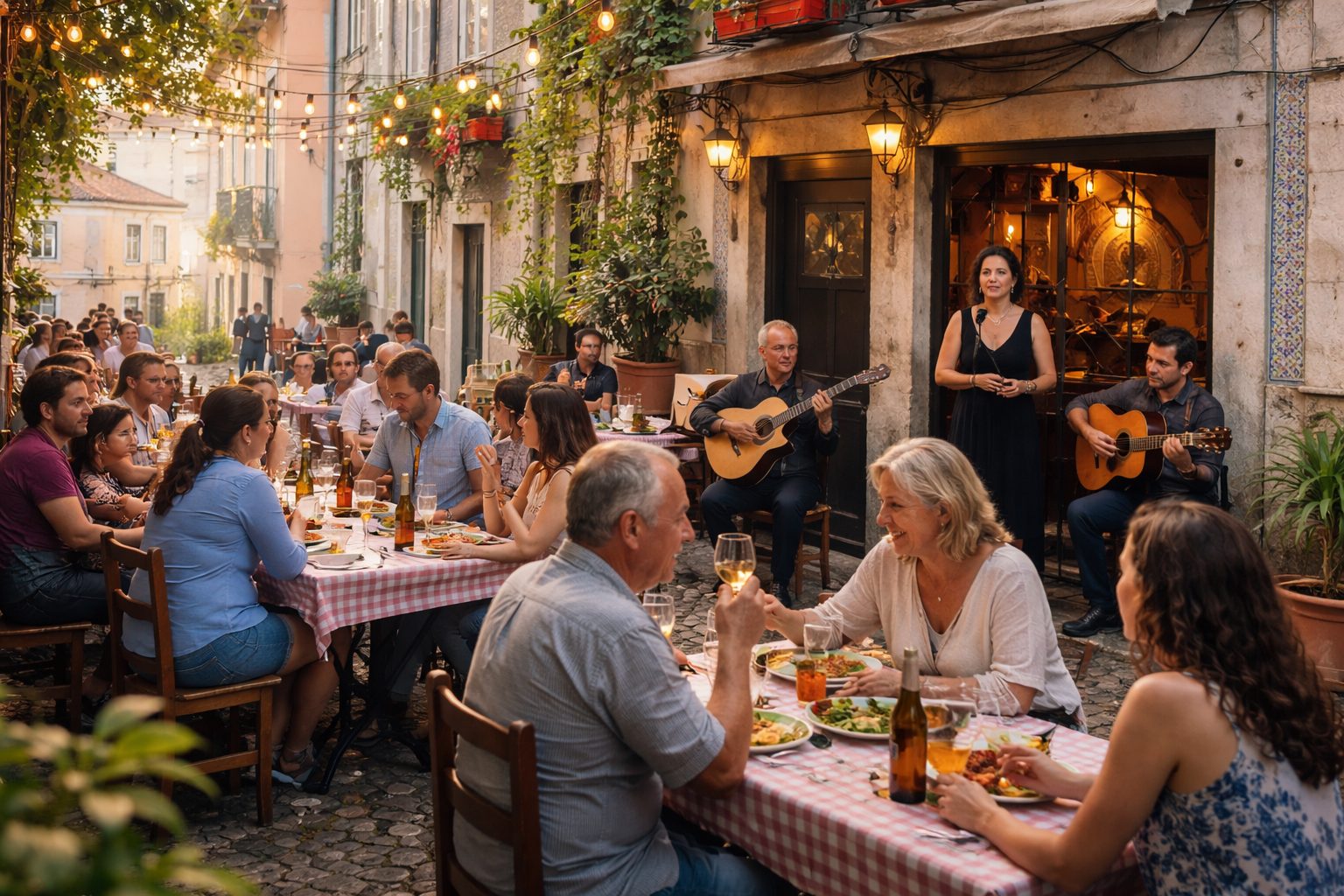
Portuguese culture has a warmth that you notice almost immediately. People aren’t in a rush. Conversations happen over long lunches. Fado music, the country’s most iconic art form, carries a kind of emotional weight that you don’t fully understand until you hear it live in a small Lisbon restaurant. It’s melancholic and beautiful in equal measure, and it tells you a lot about how the Portuguese see the world.
The culture here is shaped by centuries of maritime history. Portugal was once a global empire, and that history shows up in the architecture, the language, and the food. You’ll find traces of Moorish influence in the south, baroque churches in the north, and azulejo tilework almost everywhere. These aren’t tourist displays. They’re just part of daily life.
Family and community matter here. Local festivals, called festas, happen throughout the year and are genuinely for the people who live there. If you happen to arrive during one, you’re welcome to join. Nobody’s putting on a show for visitors. That authenticity is rare, and it’s one of the main reasons people return to Portugal again and again.
Scenic Landscapes and Diverse Regions
The geography here is remarkably varied for such a compact country. In the north, you have the Douro Valley, with its terraced vineyards climbing steep hillsides above the river. In the center, the Serra da Estrela mountain range offers the only ski area on the mainland. Down south, the Alentejo region is all rolling plains, cork oak forests, and whitewashed villages.
And then there’s the coast. Portugal has Atlantic beaches that range from wild and windswept in the northwest to calm, warm, and golden in the Algarve. The contrast between a surf beach in Nazare and a sheltered cove near Lagos is striking. You can also find dramatic cliffs, lagoons, and river estuaries all within a few hours of each other.
The Azores and Madeira, two Atlantic archipelagos that are part of Portugal, add even more variety. Madeira has lush volcanic scenery and year-round mild weather. The Azores feel remote in the best way, with volcanic lakes, hot springs, and whale watching among the draws. If you have time, both are worth the extra flight.
Rich History and Architecture
Portugal’s history is layered and fascinating. The country has been inhabited since prehistoric times, shaped by Romans, Visigoths, and Moors before emerging as one of Europe’s first nation-states in the 12th century. What followed was the Age of Discovery, during which Portuguese explorers mapped much of the world’s coastlines and established trade routes that changed global history.
That past is visible everywhere. Castles sit on hilltops across the country. Monasteries built with gold from Brazil line cobblestone streets. The Manueline architectural style, unique to Portugal and developed during the height of the empire, blends Gothic structure with ornate maritime motifs. Belem Tower in Lisbon is one of the most photographed examples, and it earns every photo taken of it.
Smaller towns are often just as rewarding as the major cities. Places like Evora, with its Roman temple still standing in the main square, or Guimaraes, considered the birthplace of the Portuguese nation, give you history without the crowds. Take the time to explore beyond the obvious stops.
Best Times to Travel to Portugal
Seasonal Overview
The best time to plan your trip depends on what you’re looking for. Spring, from March to May, is my personal favorite. Temperatures are comfortable, the countryside is green, crowds are manageable, and prices haven’t hit their summer peak. Flowers are blooming across the country, and the light is exceptional for photography.
Summer, from June to August, is peak season. The Algarve fills up fast, Lisbon gets hot, and accommodation prices rise sharply. That said, the weather is reliably sunny, beach conditions are at their best, and the festival calendar is packed. If you’re going in summer, book early and plan for crowds in popular spots.
Autumn is another strong option. September and October still bring warm temperatures in the south, the wine harvest in the Douro Valley is underway, and things start to quiet down after August. Winter is mild by northern European standards, especially in Lisbon and the Algarve, though the north and interior can be cold and rainy. December in Lisbon has a low-key charm and far fewer tourists.
Weather by Region
Portugal’s weather varies more than many visitors expect.
| Region | Summer | Winter | Notes |
|---|---|---|---|
| Lisbon | Hot, dry, 30-35°C | Mild, 12-15°C | Occasional rain in winter |
| Porto | Warm, 25-28°C | Cool, 8-12°C | Wetter than the south year-round |
| Algarve | Hot, 30-35°C | Mild, 15-18°C | Sunniest region in Portugal |
| Alentejo | Very hot, 35-40°C | Cold nights, 5-10°C | Extreme temperature swings |
| Azores | Mild, 22-25°C | Mild, 14-17°C | Can be rainy anytime |
| Madeira | Warm, 25-28°C | Mild, 18-20°C | Subtropical, green year-round |
The north, including Porto and the Minho region, gets significantly more rainfall than the south. If you’re sensitive to heat, avoid the Alentejo in July and August. The Algarve is almost guaranteed sun from May through September.
Events and Festivals
Portugal has a packed festival calendar. Some of the most worthwhile events include:
- Carnaval (February or March): Biggest celebrations in Ovar and Torres Vedras, though Lisbon has its own festivities.
- Semana Santa (Holy Week, April): Processions and religious observances across the country, particularly striking in Braga.
- Festas de Lisboa (June): The month-long celebration of Santo Antonio in Lisbon, with street parties, grilled sardines, and dancing throughout the Alfama neighborhood.
- NOS Alive (July): One of Portugal’s biggest music festivals, held near Lisbon, with international headliners.
- Festa de Sao Joao (June 24): Porto’s biggest night of the year, with fireworks, grilled food, and the odd tradition of hitting strangers with plastic hammers.
- Douro Wine Harvest (September): Foot-treading of grapes in the Douro Valley, often open to visitors at participating quintas.
These aren’t manufactured tourist events. They’re part of how Portuguese people actually celebrate, and attending one gives you a different perspective on the country than museums alone ever could.
Top Destinations in Portugal
Lisbon: The Vibrant Capital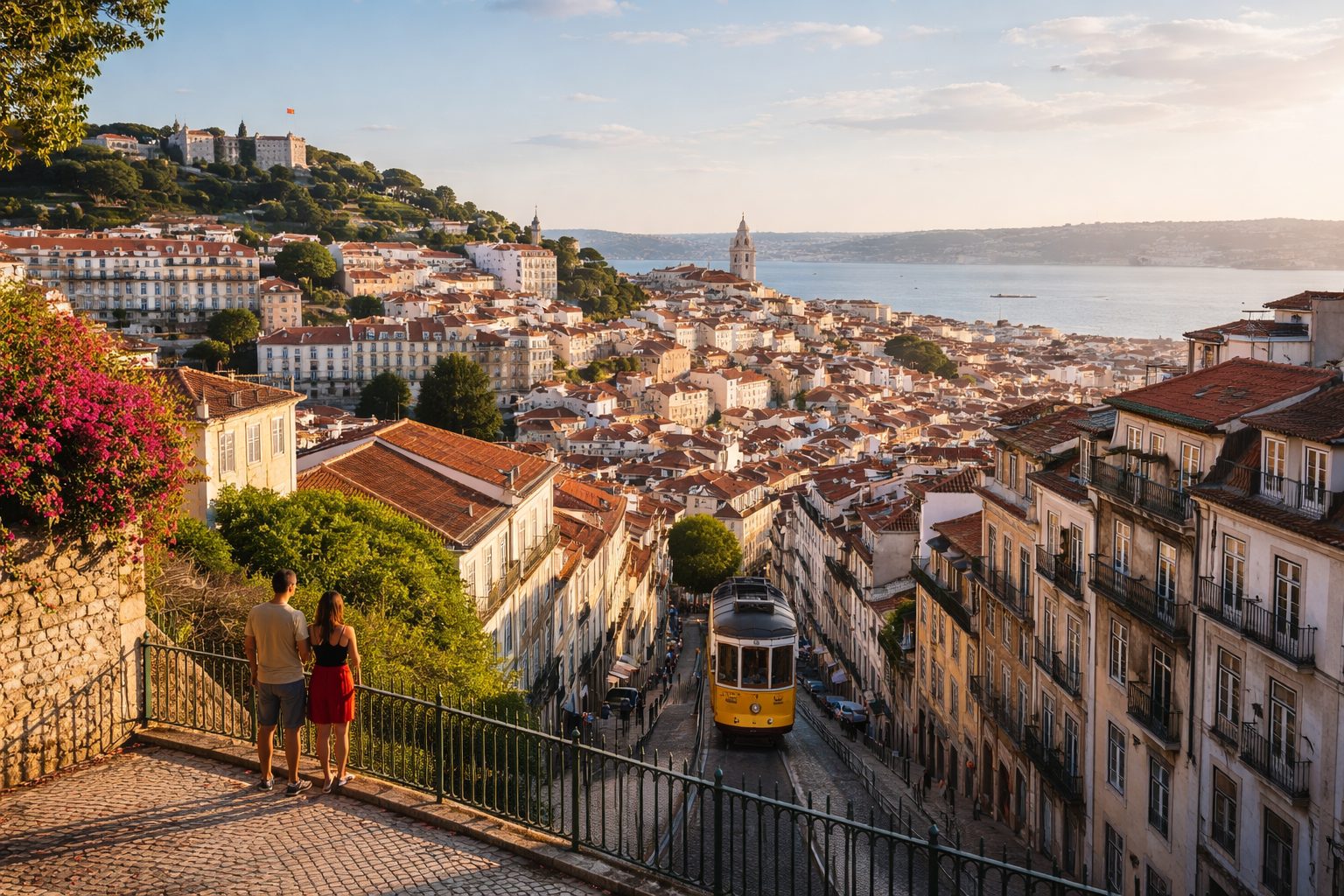
Lisbon is one of those cities that takes you by surprise. I expected something pleasant and found something genuinely magnetic. The city is built on seven hills, which means you’re constantly rewarded with unexpected viewpoints. Miradouros, the scenic overlooks, are everywhere, and the ones in Alfama and Graca are best at sunset.
The trams are iconic but practical. Tram 28, which winds through the old neighborhoods, is a legitimate way to get around even if tourists have discovered it. The yellow funiculars (elevadores) are another old-fashioned way to tackle the steeper streets. On foot is still best for the historic neighborhoods.
Belem, a riverside neighborhood about 6 kilometers from the center, deserves a half day. The Tower of Belem, the Monument to the Discoveries, and the Jeronimos Monastery are all here, and the last one is among the finest examples of Manueline architecture in existence. Get a pasteis de nata from the original Pasteis de Belem nearby. The recipe hasn’t changed since 1837.
For eating and drinking, don’t overlook the Time Out Market, Mercado da Ribeira, or the Mouraria neighborhood. LX Factory, a converted industrial complex in Alcantara, has good independent restaurants and a Sunday market worth browsing.
Porto: The Wine Capital
Porto feels different from Lisbon. It’s grittier, more working class in its bones, and arguably more beautiful in parts. The Ribeira waterfront district, with its crumbling facades and riverside cafes, is a UNESCO World Heritage Site and earns the distinction. Walk across the Dom Luis I bridge at any time of day and look back at the city rising above the river.
Port wine is made across the river in Vila Nova de Gaia, where the main port wine cellars (lodges) are open for tours and tastings. Taylor’s, Sandeman, and Graham’s are well-known options. Across the river in Porto itself, the wine bars in the Cedofeita neighborhood tend to focus more on still Douro wines, which are excellent and still underappreciated internationally.
Porto’s food scene has grown significantly in the last decade. The francesinha, a sandwiched meat and cheese monstrosity smothered in a spiced beer sauce, is the local specialty. It sounds unhinged and tastes exactly as good as that sounds. Majestic Cafe on Rua de Santa Catarina is beautiful but touristy; the livraria Lello bookshop nearby is one of the most ornate in the world and worth the small entry fee.
The Algarve: Beaches and Sunshine
The Algarve is why Portugal became a mainstream tourist destination in the first place. The coastline here is genuinely spectacular, with golden limestone cliffs, hidden sea caves, turquoise water, and long stretches of fine sand. It’s not a secret anymore, but there are still quieter corners if you know where to look.
The western Algarve around Sagres and Carrapateira has a wilder character. Beaches here face the Atlantic more directly, the surf is better, and the towns haven’t been overrun. Sagres sits at the southwestern tip of Europe, and Cabo de Sao Vicente, the most southwesterly point on the European mainland, is close enough for a short detour.
The central Algarve, around Lagos, Portimao, and Carvoeiro, has the most dramatic rock formations and the most popular beaches. Praia da Marinha, Praia da Rocha, and the beaches around Lagos are all stunning. The eastern Algarve, the Sotavento, is flatter and less dramatic but has a quieter, more local feel.
If you’re going to the Algarve in July or August, manage your expectations around crowds. The popular beaches fill up. Go early, stay late, or seek out the less-photographed spots. A car is essential here.
Sintra: Palaces and Nature
Sintra is about 40 minutes by train from Lisbon and is almost obligatory on a first visit to the country. The town sits in a forested mountain range just above the coast, and it’s dotted with palaces, castles, and estates that look like they came out of a fairy tale. The colorful Pena Palace, perched on a rocky peak above the town, is the most photographed building in Portugal after Lisbon’s monuments.
The problem is that everyone knows this. Sintra gets extremely crowded, especially in summer. The town itself is small, and the roads up to the palaces get congested. Go on a weekday if possible, arrive early, and book tickets to the main palaces in advance. The Quinta da Regaleira, with its initiatory wells and mysterious grounds, is often easier to visit and just as interesting.
Beyond the main sites, Sintra has good hiking through the Sintra-Cascais Natural Park. The walk to Cabo da Roca, the westernmost point of mainland Europe, is rewarding and takes you through beautiful coastal landscape. The village of Colares nearby makes its own distinctive wine and is usually uncrowded.
Popular Activities and Experiences
Culinary Adventures: Food and Wine Tours
Portuguese food is honest, ingredient-led, and deeply satisfying. It doesn’t rely on complex technique or theatrical presentation. The fish is exceptional because it comes straight off the boats. The bread is good. The olive oil is some of the best in the world. And the wine, from the Douro, Alentejo, Dao, and Vinho Verde regions, consistently outperforms what most people expect.
Some things you need to eat while here:
- Bacalhau (salt cod): Portugal has over 365 recipes for it. A classic is bacalhau a bras, scrambled with eggs, potatoes, and olives.
- Pasteis de nata: The custard tarts are everywhere, and the best ones have a slightly caramelized top and a flaky, buttery pastry.
- Grilled fish: Dourada (sea bream) and robalo (sea bass) grilled simply with olive oil are hard to beat.
- Caldo verde: A simple kale and potato soup with slices of chourico. Humble and perfect.
- Bifanas: A pork steak sandwich served in a bread roll with mustard. The Lisbon street food staple.
- Francesinha: Porto’s famous layered meat sandwich in spiced sauce. Not for the faint-hearted.
Food tours in Lisbon and Porto are a good investment if you’re only there for a few days. A local guide can show you the spots that look unremarkable from the outside but serve exceptional food. Wine tours in the Douro Valley, often combining boat trips with quinta visits and tastings, are worth planning ahead for.
Outdoor Activities: Hiking and Water Sports
Portugal is an underrated destination for outdoor activity. The Rota Vicentina, a long-distance walking route through the Alentejo and western Algarve coast, is one of Europe’s best coastal walks. The Fishermen’s Trail section runs right along the clifftops and beaches. It’s relatively quiet even in summer.
Surfing is serious business here. Nazare has hosted world record waves, and the break at Praia do Norte draws big wave surfers from around the world. But there are accessible surf schools and gentler breaks up and down the coast for beginners. Cascais, near Lisbon, is a good base. The Algarve has calmer conditions for paddleboarding and kayaking.
In the Douro Valley, cycling along the river on former rail lines has become increasingly popular. Bike rentals are available in most towns along the route. The Serra da Estrela offers hiking in summer and skiing in winter. The Peneda-Geres national park in the far north is Portugal’s only national park and has excellent trails through granite mountains and ancient villages.
Cultural Experiences: Museums and Festivals
Lisbon has a strong museum scene. The Museu Nacional do Azulejo, dedicated to Portuguese tilework, is one of the most distinctive museum experiences in the country. The MAAT contemporary art museum on the riverside in Belem combines good programming with excellent architecture. The Museu Calouste Gulbenkian houses one of Europe’s best private art collections.
Porto’s Serralves Museum, set within a large park, is the main contemporary art venue in the north. The church of Sao Francisco, dripping with gilded baroque wood carvings, is one of the most opulent interiors in the country.
Beyond the museums, live music matters here. Fado is the starting point, but the scene is broader. Cape Verdean morna music has a strong presence in Lisbon’s Mouraria and Mouraria neighborhoods. Jazz clubs are good in both cities. And during festival season, outdoor stages bring everything from folk to electronic music.
Travel Tips for Visiting Portugal
Transportation Options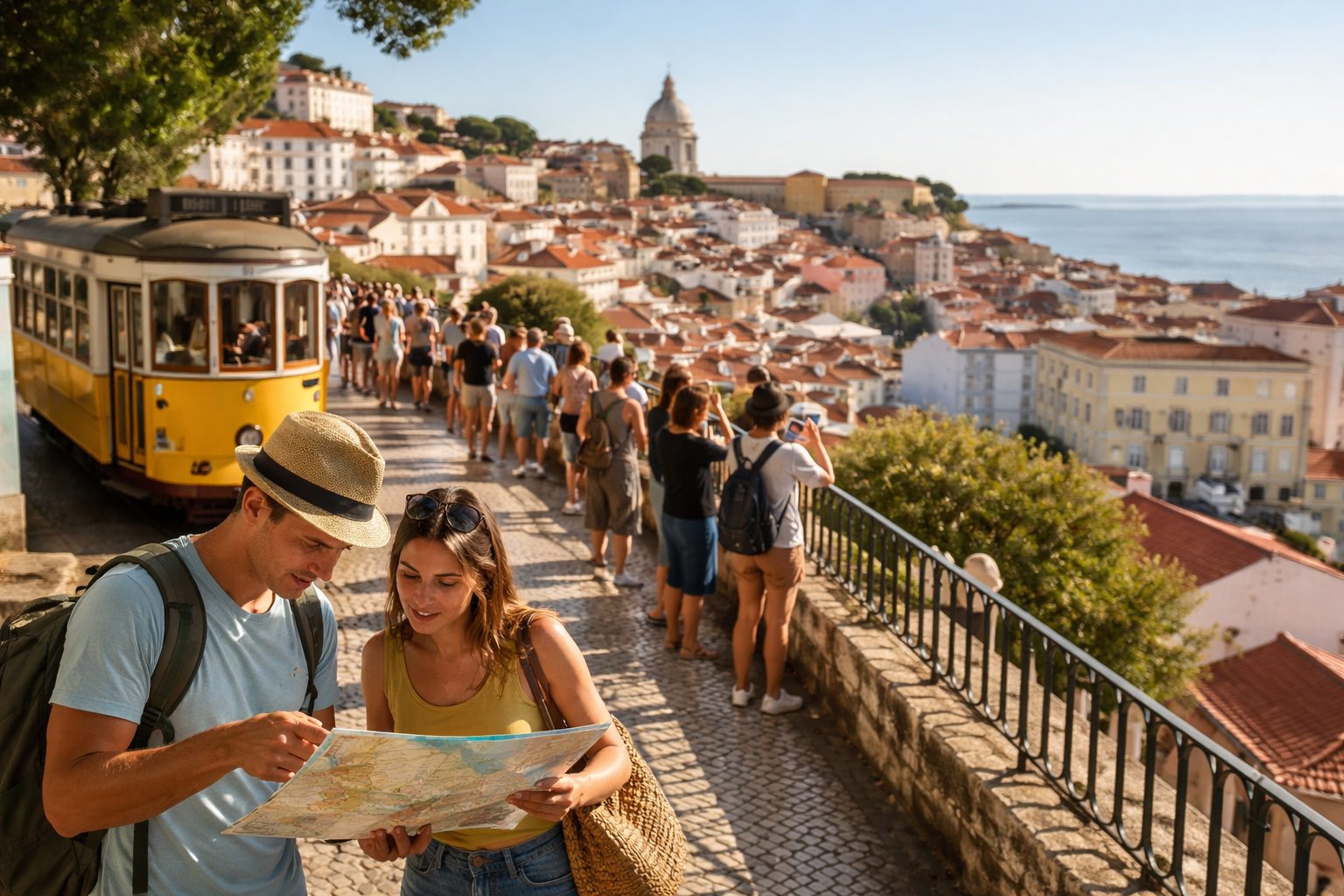
Getting around Portugal is straightforward once you understand the options.
- Lisbon and Porto: Both cities have good metro systems, trams, and buses. The metro in Lisbon covers the main tourist areas and outer neighborhoods. In Porto, the metro connects the airport to the city center and runs out to the coast at Matosinhos.
- Between cities: Comboios de Portugal (CP), the national rail company, connects Lisbon and Porto in about three hours. High-speed trains (Alfa Pendular) are comfortable and reliable. Booking in advance saves money.
- Car rental: Essential for the Algarve, Alentejo, Douro Valley, and anywhere rural. Roads are generally in good condition. Parking in city centers can be challenging and expensive.
- Intercity buses: Companies like Rede Expressos and Flixbus cover routes not served by train. Often cheaper but slower.
- Flights to the islands: TAP Air Portugal and Ryanair serve both Madeira and the Azores from Lisbon and Porto.
Getting from Lisbon’s Humberto Delgado Airport to the city center is easy by metro (red line) or taxi. Porto’s Francisco Sa Carneiro Airport is linked to the city by the metro purple line.
Currency and Budgeting
Portugal uses the euro. It remains one of the more affordable countries in Western Europe, though prices in Lisbon and the Algarve have risen significantly over the last five years.
Rough daily budgets:
- Budget traveler: 50-80 EUR per day (hostel, local restaurants, public transport)
- Mid-range: 100-180 EUR per day (3-star hotel, sit-down meals, day trips)
- Comfortable: 200+ EUR per day (boutique hotels, better restaurants, guided experiences)
ATMs are widely available and usually the best way to get cash. Most restaurants and shops accept cards, though smaller, older establishments may be cash-only. Service is generally included in the bill. Tipping is appreciated but not expected; leaving a couple of euros for a meal or rounding up the total is standard.
The biggest cost drivers are accommodation and transport. Eating at lunch rather than dinner in sit-down restaurants saves money, as many places offer a prato do dia (dish of the day) that includes bread, a drink, and dessert at a set price.
Language and Communication
Portuguese is the official language, and it bears almost no resemblance to Spanish despite geographical proximity. The pronunciation, in particular, catches people off guard. It’s nasal, rich in sounds that don’t exist in most other languages, and varies notably between Portugal and Brazil.
That said, English is widely spoken in Lisbon, Porto, and tourist areas. Younger people and those working in hospitality will almost always be comfortable in English. In rural areas and among older generations, you may need to use gestures and goodwill.
Learning a few words in Portuguese goes a long way. “Obrigado” (thank you, if you’re male) or “obrigada” (if you’re female), “por favor” (please), and “faz favor” (to get a waiter’s attention) will earn you immediate goodwill. People notice when visitors make the effort, and they respond warmly.
Accommodation Options
Hotels vs. Hostels
The hotel market in Portugal covers every price point. Five-star hotels in Lisbon and Porto offer genuine luxury at prices well below comparable hotels in Paris or London. Mid-range three-star hotels are comfortable and widely available. Budget chains like ibis are reliable for no-frills stays.
Portugal also has an excellent hostel culture, particularly in Lisbon and Porto. Some of the best-rated hostels in Europe are here. They’re not just for backpackers: many have private rooms, good common spaces, and strong local knowledge from staff. For solo travelers, they’re often the best choice for meeting people.
Hostel prices in Lisbon start around 20-30 EUR for a dorm bed and 60-90 EUR for a private room. Hotel prices range from around 70 EUR for a budget option to 300+ EUR for a boutique property in the Alfama. Book well ahead for summer stays, especially in the Algarve.
Rentals and Vacation Homes
Short-term rentals through platforms like Airbnb and Booking are abundant across Portugal. In many areas, particularly outside the main cities, they represent better value than hotels, especially for families or groups.
The Alentejo has a strong tradition of rural tourism, with converted farmhouses and manor houses available for rent. These often come with pools, outdoor space, and a slower pace of life that pairs well with the region’s character. Self-catering works well here because local markets and small shops stock excellent produce.
Note that Lisbon has introduced some restrictions on short-term rentals in response to housing pressure. The market is still active, but some central neighborhoods have fewer options than they did a few years ago. Porto faces similar dynamics.
Unique Stays: Pousadas and Quintas
Pousadas are a network of state-owned hotels, many of them housed in historic buildings including castles, monasteries, and palaces. They offer a way to sleep inside genuinely significant architecture. The Pousada do Convento de Evora, in a former convent in the medieval city center, is one of the finest examples. The Pousada do Castelo in Obidos puts you inside a 12th-century castle.
Quintas are agricultural estates, traditionally associated with wine production in the Douro Valley or olive oil and cork in the Alentejo. Many have opened their guest rooms or cottages to visitors, offering an experience that sits between a boutique hotel and an agritourism stay. Wine quintas in the Douro often include tastings, vineyard walks, and the option to join the harvest in September.
Both pousadas and quintas tend to be more expensive than standard hotels at the same level, but the setting and the experience justify the premium for the right traveler. They’re particularly good for special occasions or for anyone who wants a stay that feels connected to the place.
Travel Itinerary Suggestions
One Week in Portugal: Highlights
A week is enough to get a genuine feel for the country if you keep the pace manageable.
- Days 1-3: Lisbon – Settle in and explore the Alfama, Belem, and Chiado neighborhoods. Do a day trip to Sintra on day two or three.
- Day 4: Travel to Porto – Take the morning Alfa Pendular train (about 3 hours). Spend the afternoon walking the Ribeira and crossing the bridge.
- Days 5-6: Porto and surroundings – Visit the port wine lodges in Vila Nova de Gaia. Consider a day trip into the Douro Valley by train or car.
- Day 7: Return to Lisbon – Travel back south, with time for a final evening in the capital.
This itinerary skips the Algarve and Alentejo entirely, which is the main trade-off. But trying to add either in a week means sacrificing depth elsewhere. One week done well beats two weeks done poorly.
Two Weeks in Portugal: In-Depth Exploration
Two weeks gives you room to breathe and explore properly.
- Days 1-3: Lisbon – Thorough exploration of the city including the Museu do Azulejo, Sintra day trip, and evening in Mouraria or Intendente.
- Days 4-5: Alentejo – Drive south to Evora (1.5 hours from Lisbon). Explore the walled city and surrounding countryside. Overnight in a quinta if budget allows.
- Days 6-8: Algarve – Move south to the coast. Base yourself in Lagos for beach time, boat trips to sea caves, and exploring the western coastline around Sagres.
- Days 9-10: Return north, visit Coimbra – Stop in Coimbra, home to one of Europe’s oldest universities and a beautiful old town, on the drive back north.
- Days 11-13: Porto and Douro Valley – Spend time in Porto and take at least one full day on the Douro Valley, ideally by boat or train.
- Day 14: Return to Lisbon – Final night in the capital before departure.
This structure gives you a genuine cross-section of Portugal’s variety without feeling rushed.
Family-Friendly Itinerary
Portugal works well for families. Kids are genuinely welcomed in most restaurants and public spaces, and there’s enough variety to keep different ages engaged.
- Lisbon: The coastal tramway, interactive science museum (Pavilhao do Conhecimento in Parque das Nacoes), and the Oceanarium are all strong choices with children.
- Sintra: Pena Palace reads as a fairy tale castle. Kids generally love it. Book ahead to manage the wait.
- Algarve: The calm waters of the eastern Algarve (Tavira, Fuzeta) are safer for young swimmers than the Atlantic-facing beaches in the west. Boat trips to see caves and dolphins are popular with all ages.
- Fatima: For families with religious roots, Fatima is one of the most visited Catholic pilgrimage sites in the world and has strong emotional significance for many visitors.
Driving with children is manageable on Portuguese roads. Rest stops are clean, food is available, and distances are short compared to larger countries. Restaurants generally eat late, but most places will accommodate families with children earlier in the evening without any fuss.
Safety and Health Considerations
Travel Safety Tips
Portugal is one of the safer countries in Europe for travelers. Violent crime is rare. The main concerns in tourist areas are petty theft and pickpocketing, particularly in crowded spots like Lisbon’s Alfama, busy tram routes, and popular beach areas.
Practical precautions:
- Keep valuables in a front pocket or a bag worn in front of your body.
- Don’t leave anything visible in a parked car.
- Be aware on crowded public transport, particularly Tram 28 and the Elevador de Santa Justa area.
- Avoid ostentatious displays of expensive equipment in busy tourist zones.
- Use hotel safes for passports and extra cash.
Road safety deserves a mention. Portugal has had historically high road accident rates, partly due to aggressive driving habits on rural roads. Drive defensively, respect speed limits, and take extra care on narrow roads in the Douro Valley and mountainous regions.
Health Care and Insurance
Portugal has a national health system (SNS) that provides emergency care to all visitors. EU citizens with a European Health Insurance Card (EHIC) can access public healthcare on the same terms as Portuguese nationals. Non-EU visitors should ensure they have travel insurance that covers medical expenses, as private hospital costs can be substantial.
Pharmacies (farmácias) are widely available and well-stocked. Pharmacists can advise on minor ailments and often speak enough English to be helpful. For anything more serious, private clinics in Lisbon and Porto tend to have English-speaking doctors and faster access than the public system.
Tap water is safe to drink throughout mainland Portugal. The sun is stronger than many northern Europeans and North Americans expect, especially in summer. Sunscreen, hats, and staying hydrated are not optional when you’re spending time outdoors in the Algarve or Alentejo in July or August.
Emergency Contacts
The universal emergency number in Portugal is 112. It connects to police, fire, and medical services. Operators usually speak Portuguese and English.
- Police (PSP in cities, GNR in rural areas): 112 or local police station
- National emergency line: 112
- SNS health line: 808 24 24 24 (for non-emergency medical advice)
- Poison Control Center: 808 250 143
Keep a photo of your passport and insurance documents saved to your phone. Register with your country’s embassy or consulate if you’re staying for an extended period, particularly outside the main cities.
Frequently Asked Questions about Traveling to Portugal
What are the entry requirements for Portugal?
EU citizens need only a valid national ID card. Citizens of the US, Canada, UK, Australia, and most other non-EU countries can enter visa-free for stays up to 90 days within any 180-day period. Portugal is part of the Schengen Area, so your 90-day allowance covers all Schengen countries collectively, not Portugal alone.
How to get around Portugal?
The train network connects the major cities efficiently and affordably. A car is the best option for rural areas, the Algarve, and the Douro Valley. Buses fill gaps where trains don’t run. Within Lisbon and Porto, the metro, trams, and rideshare apps (Uber and Bolt both operate here) handle most needs.
What is the best cuisine to try in Portugal?
Start with pasteis de nata, bacalhau (salt cod), and grilled fresh fish. In Porto, try a francesinha. In the Alentejo, seek out migas (a bread-based side dish), local black pork products, and sheep’s cheese. Vinho Verde from the Minho, red wines from the Douro and Alentejo, and ginjinha (sour cherry liqueur) are all worth sampling.
Are there any cultural customs to be aware of?
Portugal is relaxed about most things, but a few points matter. Greet people properly when entering a shop or restaurant, even just a “bom dia” (good morning) or “boa tarde” (good afternoon). Tipping is appreciated but not mandatory. Dress modestly when entering churches. And don’t compare Portugal to Spain, especially in the presence of Porto residents.
Conclusion: Embrace the Journey to Portugal
Deciding to travel to Portugal is one of the easier travel decisions you’ll make. The country delivers on almost every front: history, landscape, food, wine, architecture, and people. It’s accessible without being generic. It has depth if you look for it. And it remains, despite growing popularity, a place that feels like itself rather than a performance for tourists.
Whether you have a week in Lisbon and Porto or two weeks crossing the country from north to south, you’ll leave with a clear sense of why Portugal has become one of the most visited countries in Europe. The light in the late afternoon. The sound of a fado song drifting from an open window. A cold glass of vinho verde by the river. These things stay with you. Planning your trip thoughtfully means you get to experience them in full rather than rushing past. Go when the timing works for you, stay a little longer than planned, and eat more pasteis de nata than you intended. That’s the right way to do it.