
Portugal has been quietly winning the hearts of beach lovers for decades, and honestly, it’s not hard to see why. With over 1,800 kilometers of Atlantic coastline, the country offers an astonishing range of beaches, from dramatic cliff-backed coves in the Algarve to wild, wind-swept stretches in the north. Whether you’re chasing perfect waves, golden sand, or just a quiet spot to read a book with your feet in the sand, the best beaches in portugal have something for every type of traveler.
I’ve spent a fair amount of time exploring this coastline, and each visit reveals something new. The water is clean, the scenery is often breathtaking, and the Portuguese approach to beach life strikes a nice balance between laid-back and well-organized. This guide covers the beaches I keep returning to, along with everything you need to plan a trip around them.
Introduction to Portugal’s Beaches
Portugal’s beaches are remarkable for their sheer variety. You’ll find calm, sheltered bays perfect for swimming alongside rugged Atlantic-facing shores that draw serious surfers from around the world. The landscape shifts dramatically depending on where you go: the south tends toward towering sandstone cliffs and turquoise water, while the west coast and north deliver raw, windswept beauty with more powerful surf.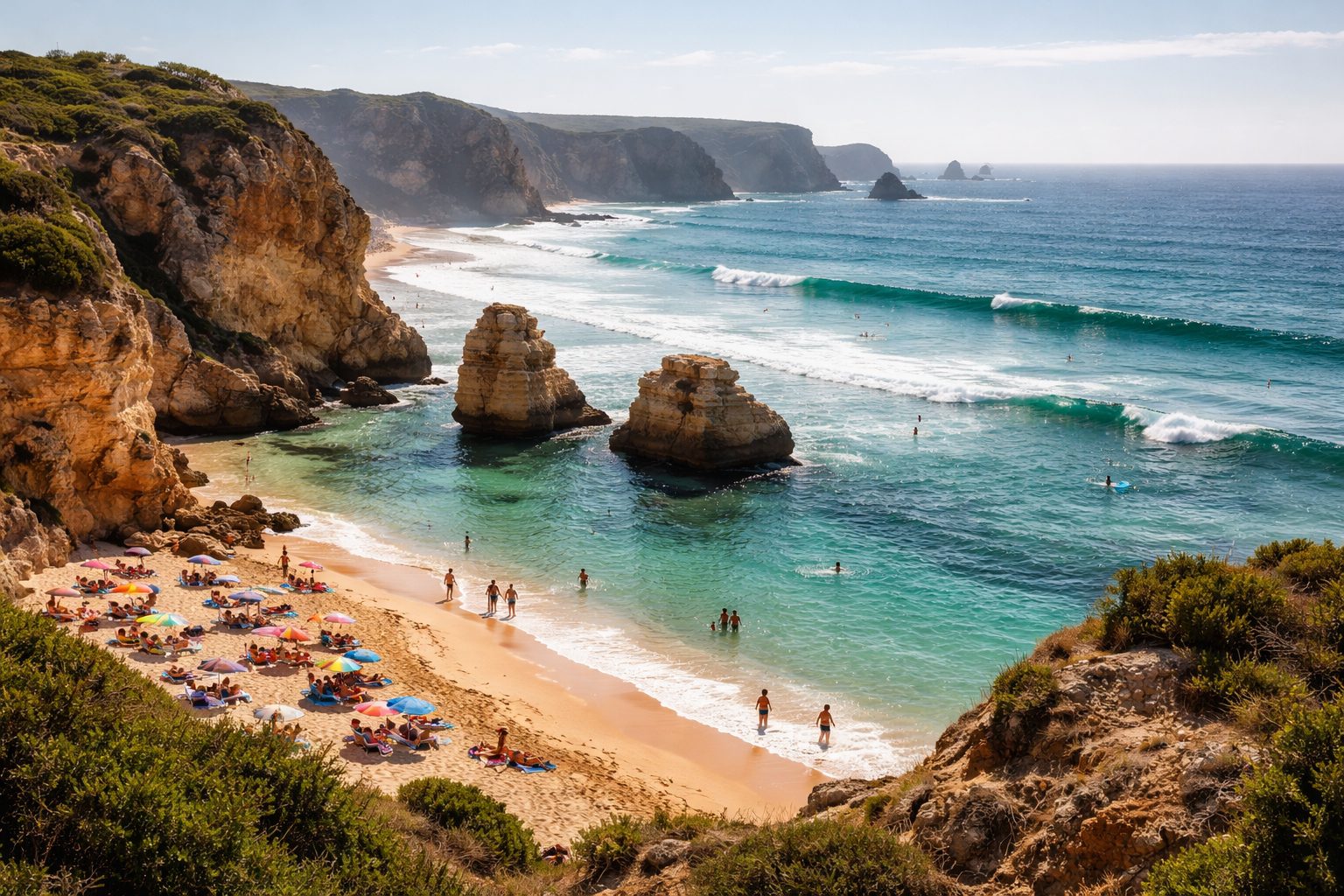
The water temperature varies significantly by region. Southern beaches can reach comfortable swimming temperatures from June through September. The north and west-facing Atlantic coasts tend to stay cooler year-round due to the Canary Current, which keeps things refreshing even in midsummer. That said, surfers in wetsuits are a common sight even on hot August days along the western stretches.
Blue Flag status is taken seriously here. Many Portuguese beaches hold this international certification for water quality, environmental management, and safety services, which gives you a solid baseline guarantee about what to expect when you arrive.
Overview of Portugal’s Coastal Regions
Understanding where Portugal’s different coastal zones sit helps enormously when planning a trip. The country’s beaches aren’t uniform, and each region has a distinct character that suits different types of visits.
Algarve Coast
The Algarve is the region most people think of first, and for good reason. Stretching along the southern tip of Portugal, it offers warm water, high sunshine hours, and those iconic golden-orange limestone cliffs that photographers can’t stop shooting. Towns like Lagos, Albufeira, and Tavira give you strong infrastructure alongside beautiful beaches.
The Algarve splits broadly into two sections. The western Algarve tends to be wilder and less developed, with beaches like Praia do Amado and Praia da Bordeira attracting surfers and nature lovers. The eastern stretch is calmer and warmer, with barrier island beaches and long sandy spits that feel almost Mediterranean. This is the region where you’ll find the highest concentration of the best beaches in portugal.
Lisbon Coast
The Lisbon Coast runs north and south of the capital along the Atlantic shoreline. To the south, the Setúbal Peninsula hides gems like Arrábida, where the water turns an almost tropical shade of blue-green thanks to limestone geology. To the north and west of Lisbon, the Estoril and Cascais coastline offers easily accessible beaches with good facilities, popular among city residents on weekends.
Beaches here tend to have stronger Atlantic swells than the Algarve, which makes them excellent for surfing but occasionally challenging for casual swimming. Guincho is the most famous example, consistently ranked among the best windsurfing locations in Europe.
Silver Coast
The Silver Coast, or Costa de Prata, runs from north of Lisbon up toward Porto. It’s less touristed than the Algarve, which means fewer crowds and a more authentic feel. The beaches here are long, often backed by pine forests and sand dunes, and they attract a mix of Portuguese families, surfers, and travelers who prefer a quieter experience.
Towns like Peniche, Nazaré, and Figueira da Foz anchor this stretch. Nazaré is world-famous for its enormous winter waves, which draw big wave surfers from across the globe. In summer, the same beach is calm enough for families.
Northern Portugal Beaches
Northern beaches are the most underrated in the country. The Minho coast, bordering Spain, has beautiful beaches that see far fewer foreign visitors than the south. The water is cold by most standards, but the scenery, the dramatic estuaries, and the sense of remoteness make up for it. Beaches near Viana do Castelo and around the Lima estuary are particularly striking.
These northern stretches suit travelers who prioritize landscape and solitude over warm water and beach clubs. They’re also genuinely beautiful in their own way, with green hills meeting the ocean rather than desert cliffs.
Top 10 Best Beaches in Portugal
Choosing a definitive top ten from such a varied coastline involves some tough calls. This list covers beaches that stand out for distinct reasons, whether that’s scenery, water quality, surf, or overall experience.
Praia da Marinha
Praia da Marinha is the kind of beach that shows up on every postcard, and it genuinely earns the attention. Located near Lagoa in the central Algarve, it sits at the base of dramatic golden cliffs sculpted by centuries of wave erosion. The water is usually calm enough for snorkeling, and the rock pools at either end are rich with marine life.
It’s a smaller beach, which means it fills up quickly in July and August. Go early, or visit outside peak season when you’ll have space to actually appreciate the scenery. The walk down from the clifftop is steep but manageable, and the payoff is well worth it.
Praia do Amado
Praia do Amado sits in the Alentejo coast near Carrapateira, within the Southwest Alentejo and Vicentine Coast Natural Park. It’s one of the best surf beaches in the country, consistently offering good swell conditions and a friendly atmosphere for both beginners and experienced surfers.
The beach itself is wide and backed by dunes rather than cliffs, giving it a more open, windswept feel. Several surf schools operate here, and the small village above the beach has a few good cafes and restaurants. Development is deliberately limited because of the natural park designation, which keeps it feeling genuinely unspoiled.
Praia da Rocha
Praia da Rocha near Portimão is one of the Algarve’s most famous beaches, and it’s about as developed as Portuguese beaches get. That’s not necessarily a criticism. The long stretch of golden sand backed by impressive cliffs and a busy promenade gives it an energy that suits travelers looking for action, amenities, and nightlife alongside their beach time.
The beach is wide enough that even in high season you can find space. Water sports rentals, beach bars, and restaurants line the clifftop road above. For first-time visitors to the Algarve who want a classic, fully-equipped beach experience, Praia da Rocha delivers.
Praia de Carvoeiro
Carvoeiro is a smaller, more intimate version of the classic Algarve experience. The beach sits in a tight cove surrounded by cliffs, with the pretty village of Carvoeiro climbing up the hillside behind it. It’s picturesque in a way that feels natural rather than manufactured.
The water here is usually calm and clear, making it popular with families and snorkelers. The beach does get crowded in peak summer, but the surrounding cliff walks reveal smaller, quieter coves nearby. Algar Seco, just east of the main beach, is a spectacular rock formation worth exploring even if you don’t swim there.
Praia da Ursa
Praia da Ursa is remote, spectacular, and not easy to reach. Located northwest of Sintra on the Atlantic coast, it requires a long, steep walk down an unofficial path. But when you get there, you find a wild, dramatic beach flanked by two enormous sea stacks rising from the sand. There are no facilities, no lifeguards, and often very few people.
The waves here can be powerful and the currents unpredictable, so swimming requires caution. But as a landscape experience, few beaches in Portugal match it. Time a visit for late afternoon and you’ll have the low Atlantic light turning everything golden.
Praia do Guincho
Guincho is about 30 minutes west of Lisbon and consistently ranks among the best beaches in portugal for windsurfing and kitesurfing. The constant Atlantic winds and long, flat stretch of sand make it ideal for these sports. Even if you’re not into wind sports, it’s a genuinely beautiful beach with a wild, exposed character that feels miles away from the city.
The Sintra-Cascais Natural Park surrounds Guincho, so development is limited. There’s a restaurant in a converted fort at one end and a couple of parking areas, but otherwise the beach is left in its natural state. Crowds are lighter here than at comparable scenic beaches, partly because the wind and waves deter casual beachgoers.
Praia da Falésia
Falésia near Albufeira is famous for its extraordinary cliffs, which run for several kilometers along the beach in bands of red, orange, and white. It’s one of the most visually distinctive stretches of coastline in the Algarve, and it’s large enough that it never feels overcrowded despite its popularity.
The beach is backed by several large resort hotels at one end, which means facilities are plentiful. But walk 20 minutes east along the sand and the resorts disappear from view, leaving just the cliffs, the sea, and the occasional other walker. It’s one of those beaches that rewards you for going a bit further than everyone else.
Praia da Adraga
Adraga sits just south of Praia da Ursa on the Atlantic coast near Sintra. Like Ursa, it has a wild, Atlantic-facing character, but it’s more accessible and has a lifeguard service in summer. The beach is framed by cliffs and backed by a hillside, with a well-regarded restaurant at the top of the access road that’s been attracting day-trippers for years.
The waves are consistently good for bodyboarding, and the scenery is stunning. On clear days you can see the lighthouse at Cabo da Roca, the westernmost point of continental Europe, from the beach. It’s the kind of place that reminds you why Portugal’s western coastline is worth exploring beyond the Algarve.
Praia de Mira
Praia de Mira on the Silver Coast is a different experience entirely from the cliff-backed Algarve beaches. It’s a long, flat, Atlantic-facing beach backed by the Lagoa de Mira, a freshwater lagoon. The contrast between the calm lagoon and the open ocean is distinctive, and the local fishing community has maintained traditional puxavara net fishing from the beach, which you can sometimes observe.
The town itself is low-key and genuinely Portuguese in character, which is refreshing if you’ve been around the more tourist-heavy parts of the country. Facilities are adequate without being excessive, and the beach is long enough to find quiet space even in summer.
Praia de São Julião
São Julião near Ericeira on the Silver Coast is less known internationally than it deserves to be. Ericeira is a World Surfing Reserve, meaning the entire stretch of coastline around it has been recognized for the quality and variety of its surf breaks. São Julião offers a good mix of conditions suitable for intermediate surfers while being accessible enough for swimmers outside of peak swell periods.
The village of Ericeira itself is one of the most charming on the Portuguese coast, with excellent seafood restaurants and a lively local atmosphere that doesn’t feel constructed for tourists. Combining a beach visit with time in the village makes for a very satisfying day.
Activities and Attractions at Portugal’s Beaches
The beach in Portugal isn’t just somewhere to lie down. The coastline offers a full range of activities, from relaxed to adrenaline-fueled, and the supporting infrastructure has improved significantly over the past decade.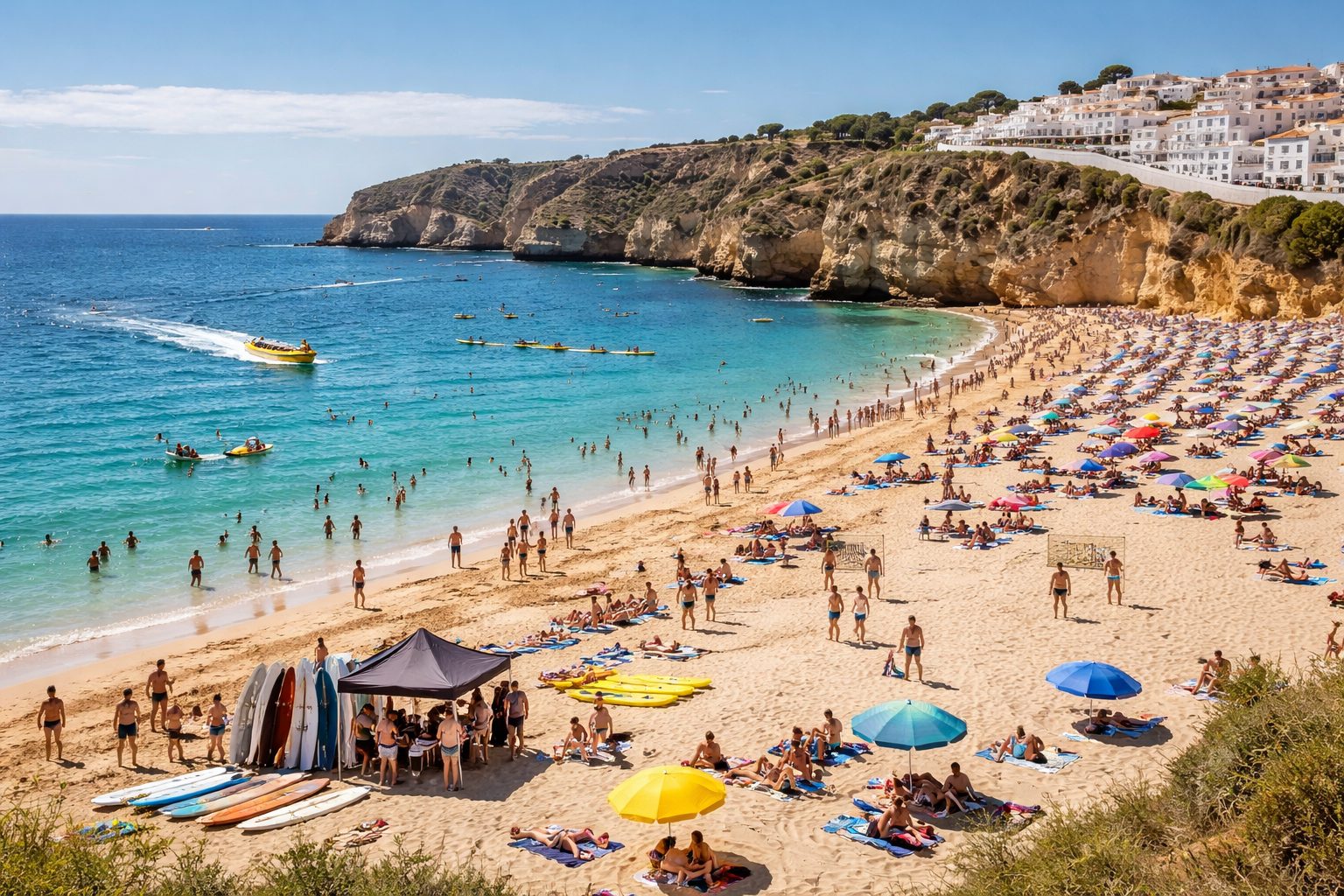
Water Sports
Surfing is the obvious one, and Portugal has some of the best waves in Europe. The Alentejo coast, Ericeira, Peniche, and the Algarve all have established surf communities with good schools for beginners. Kitesurfing and windsurfing are especially popular at Guincho and at beaches near Portimão.
Stand-up paddleboarding has become a fixture at most Algarve beaches, and it’s a great way to explore sea caves and cliff formations from the water. Kayak rentals are widely available too, particularly useful for reaching smaller, inaccessible coves that have no road access.
- Surfing: Best at Sagres, Ericeira, Peniche, Amado
- Windsurfing and kitesurfing: Guincho, Portimão area
- Paddleboarding and kayaking: Most Algarve resorts
- Snorkeling: Marinha, Carvoeiro, Arrábida
- Boat trips to sea caves: Lagos, Portimão, Albufeira
Beach Clubs and Bars
Portugal has embraced the beach club concept without losing its character. The Algarve, particularly around Vilamoura and Vale do Lobo, has upscale beach clubs with sunbeds, cocktail bars, and light food menus. But you’ll also find simpler, more atmospheric beach bars everywhere.
The classic Portuguese beach bar is unpretentious: plastic chairs, cold beer, grilled fish, and a view of the sea. These places are often better value and more interesting than the polished resort alternatives. Look for the word “chiringuito” on signs, which typically signals a basic but good beachside setup.
Scenic Walks and Hikes
Some of the best beach experiences involve getting above the shoreline. The Seven Hanging Valleys Trail in the Algarve links several of the region’s best coves along clifftop paths with genuinely spectacular views. The section between Marinha and Benagil is consistently popular and for good reason.
On the west coast, the Fishermen’s Trail (Trilho dos Pescadores) runs from Porto Covo down to Sagres, hugging the coastline for over 220 kilometers. Hiking sections of it and descending to beaches along the way is one of the best ways to experience the Alentejo coast. The trail is well-marked and accommodation options exist at regular intervals.
Local Cuisine and Dining Options
Eating well near Portuguese beaches is not difficult. Grilled fish is the obvious starting point, particularly the famous sardinhas assadas (grilled sardines), which are best between June and September when sardines are in peak season. Seafood rice dishes, percebes (barnacles), amêijoas (clams) with white wine and garlic, and caldeirada (fish stew) are all worth seeking out.
Fish restaurants clustered near fishing villages are almost always good value. In tourist-heavy areas, walk a few streets back from the beachfront to find better prices and more honest cooking. Markets in towns like Olhão and Loulé stock excellent local produce and seafood if you’re self-catering.
Family-Friendly Beaches in Portugal
Portugal is genuinely good for families with children. The infrastructure at most beaches has improved significantly, and the culture is relaxed and welcoming toward kids.
Best Beaches for Kids
Calm water is the primary concern for families, and several beaches deliver this reliably.
- Praia de Meia Praia near Lagos: long, sandy, and sheltered enough for calm swimming most days
- Praia Verde in the eastern Algarve: shallow water and a relaxed atmosphere with good facilities
- Praia de Armação de Pêra: large, calm, and with good amenities within walking distance
- Praia da Comporta: beautiful and spacious, popular with Portuguese families
- Praia de Santa Eulália near Albufeira: calm, family-oriented, and well-equipped
The eastern Algarve, particularly around Tavira and the barrier island beaches, has some of the calmest water in Portugal. The Ilha de Tavira, reached by a short ferry ride, has long stretches of undeveloped sand with calm lagoon-facing water on one side and Atlantic waves on the other.
Safety and Amenities
Most well-known Portuguese beaches have lifeguard services from June through September. Flag systems are consistently used: green means safe to swim, yellow means swim with caution, red means no swimming. These are taken seriously and enforced.
Baby-changing facilities, showers, and accessible beach access are standard at Blue Flag beaches and most major resort beaches. Parking can be challenging at popular spots in July and August, so arriving before 10am or after 5pm helps significantly. Many beaches also have designated accessible zones with matting and adapted equipment for visitors with mobility needs.
Romantic Beaches in Portugal
Portugal has plenty of settings that suit a romantic trip, from secluded coves only accessible by boat to cliffside restaurants with views over the Atlantic.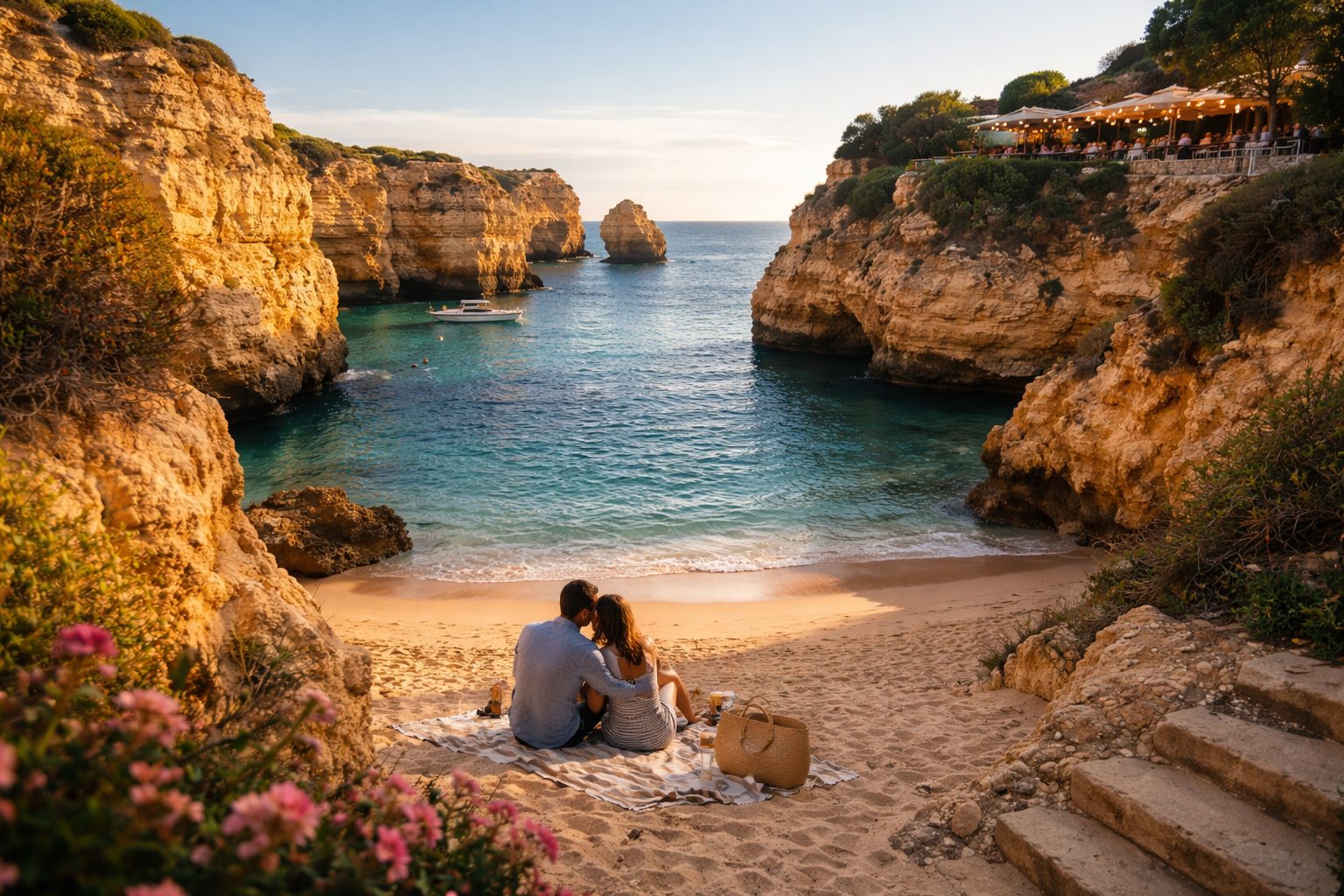
Most Romantic Spots
The intimate scale of Praia da Marinha makes it a natural choice for couples. Praia do Castelejo near Vila do Bispo in the western Algarve is dramatic and isolated, backed by cliffs with very little development, which gives it a genuinely away-from-it-all quality.
Arrábida, south of Lisbon, consistently surprises people. The water there is a luminous blue-green that looks more like Greece than Atlantic Portugal, and the natural park setting means development is strictly limited. Renting a kayak from Portinho da Arrábida and exploring the coastline at your own pace is a genuinely special experience.
Praia de Odeceixe, on the border between the Algarve and the Alentejo, sits at the mouth of a river estuary with a sheltered beach on one side and open Atlantic on the other. The village above is charming, and the surrounding landscape of the natural park makes it feel removed from the busier parts of the coast.
Sunset Viewing Locations
Portugal’s western exposure means sunset watching is a genuine ritual, especially at certain spots.
- Cabo de São Vicente near Sagres: the southwesternmost point of Portugal, where the sunsets are legendary
- Praia do Guincho: the open exposure and flat horizon make for vivid Atlantic sunsets
- Praia da Ursa: the sea stacks create dramatic silhouettes against a setting sun
- Praia de Odeceixe: the estuary setting catches evening light beautifully
- Cascais waterfront: accessible and reliably spectacular, especially from the lighthouse area
The evenings along most Portuguese beaches are pleasant from May through October. The light changes slowly at this latitude, giving you a long window for good photography or just sitting quietly watching the sky change color.
Comparing Portugal’s Beaches
Algarve vs. Lisbon Coast
| Factor | Algarve | Lisbon Coast |
|---|---|---|
| Water temperature | Warmer (July avg 22°C) | Cooler (July avg 18°C) |
| Wave conditions | Mixed, calmer east | Stronger Atlantic swells |
| Scenery | Sandstone cliffs, golden sand | Varied, dramatic west cliffs |
| Development | High in central, lower west | Moderate, resort-heavy Estoril |
| Surf | Good in western Algarve | Excellent (Guincho, Ericeira nearby) |
| Accessibility from Lisbon | 2.5-3 hours by car | Under 1 hour |
| Best for | Families, swimming, sunbathing | Day trips, surfing, scenic walks |
The Algarve wins on warmth, sunshine, and infrastructure. The Lisbon Coast wins on accessibility and tends to attract visitors who want something a bit rawer and less packaged. Neither is objectively better; they serve different purposes.
Northern Beaches vs. Southern Beaches
Northern beaches are colder, wilder, and less visited by international tourists. They suit travelers who prioritize landscape, solitude, and authentic local character over swimming conditions and resort facilities. Southern beaches offer warmer water, more sunshine, and considerably more developed tourism infrastructure.
The north-south divide is also economic. A meal or accommodation in northern Portugal typically costs noticeably less than the equivalent in the Algarve during peak season. For budget-conscious travelers, the north and the Silver Coast offer excellent value alongside genuinely beautiful beaches.
Practical Tips for Visiting Portugal’s Beaches
Best Time to Visit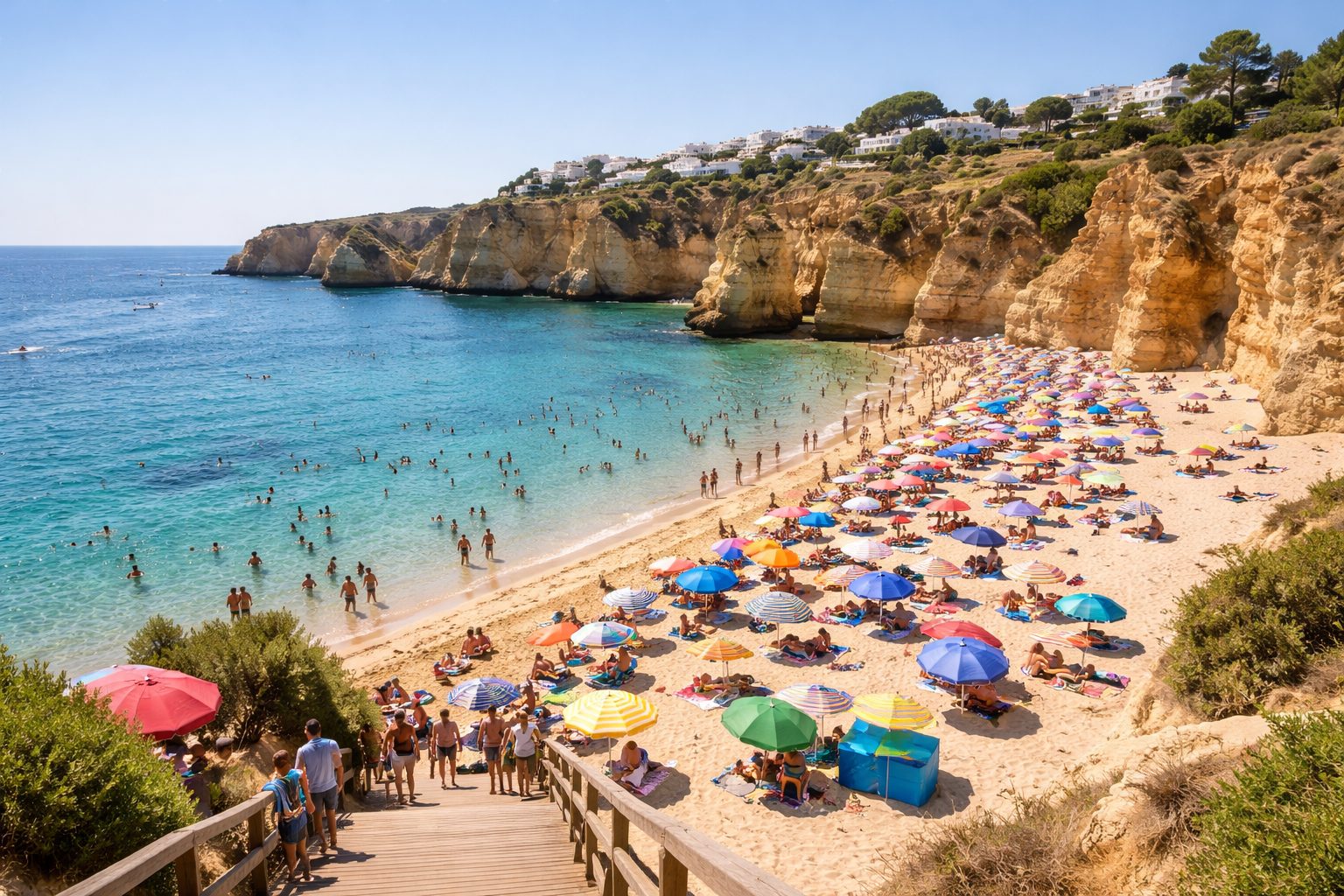
June through September is the main beach season. July and August are peak months with the warmest temperatures and most facilities in operation, but also the highest prices and largest crowds, particularly in the Algarve.
May and October are often ideal for beach travel. The weather is still pleasant, water temperatures are acceptable, and crowds are significantly reduced. Prices drop considerably outside school holidays. September is often considered the sweet spot: summer crowds are thinning, water is still warm from the summer, and the light is beautiful.
If you’re primarily interested in surfing, autumn and winter bring the best swells, particularly on the west coast and north. The world-famous big waves at Nazaré peak between October and March.
Transportation Options
Renting a car is by far the most practical option for exploring multiple beaches, particularly outside major tourist centers. Public transport covers main towns adequately but doesn’t reach most smaller beaches.
In the Algarve, the coastal train line connects Faro, Lagos, and intermediate stations, with some beaches accessible on foot from stations. Tuk-tuks and local buses serve beach areas near tourist towns. From Lisbon, Cascais and Estoril are easy on the commuter rail, and the Setúbal buses reach Arrábida with some planning.
- Rent a car for maximum flexibility
- Algarve train: Faro to Lagos, useful for several beach towns
- Lisbon to Cascais: fast commuter train, under 40 minutes
- Lisbon to Sesimbra (Arrábida): bus connection with transfers
- Uber and Bolt work well in Faro, Portimão, Lagos, and Lisbon
Beach Etiquette and Regulations
Portuguese beaches have a few firm rules worth knowing. Driving on beaches is prohibited across the entire coastline. Camping on beaches or in dunes is not permitted. Campfires are banned on beaches and in natural park areas.
Alcohol is increasingly regulated at beaches, with some areas limiting it or banning glass entirely. Most beaches in or near natural parks have strict littering rules that are actively enforced. Dogs are prohibited on most main beaches from June through September, though some beaches designate specific dog-friendly zones.
Dress codes are relaxed. Topless sunbathing is broadly accepted and common. Designated nudist beaches exist (Meco near Sesimbra is the most established), but nudism outside designated areas is technically regulated, though rarely an issue in remote locations.
Frequently Asked Questions (FAQs)
What are the best beaches for swimming?
The eastern Algarve around Tavira offers consistently calm, warm water ideal for swimming. Praia de Meia Praia near Lagos and Praia de Santa Eulália near Albufeira are also reliably calm and have lifeguard services through the summer. Avoid west-facing Atlantic beaches if calm swimming is your priority.
Are there any nudist beaches in Portugal?
Yes. Praia de Meco, about 35 kilometers south of Lisbon, is the best-known naturist beach in Portugal and has been clothing-optional for decades. The western Algarve has several unofficial naturist areas, particularly at more remote beaches. Nudism is technically restricted to designated zones, but enforcement at remote beaches is minimal.
How can I reach the beaches from Lisbon?
Cascais and Estoril are under 40 minutes by commuter train from Cais do Sodré station. Arrábida is reachable by bus from Setúbal (which is 45 minutes by train from Lisbon). Sintra-area beaches like Adraga and Guincho require a car or taxi from Cascais. The Algarve is about 2.5 to 3 hours by car or 3 hours by train.
What should I pack for a day at the beach?
Pack reef-safe sunscreen (important for environmental protection at marine areas like Marinha and Arrábida), water, and a light cover-up. Most beaches have no shade whatsoever, so a UV-protective layer is practical beyond early morning. Cash is still useful at smaller beach bars that don’t accept cards. A windproof layer is worth having on Atlantic-facing beaches where afternoon winds can be significant.
Are the beaches in Portugal family-friendly?
Most major Portuguese beaches have strong family-friendly credentials, with lifeguard services, accessible facilities, and calm enough water for children. The best beaches in portugal for families tend to cluster in the eastern Algarve and around larger resort towns where facilities are well-developed. The flag system is reliably maintained, giving parents a clear safety signal before entering the water.