Planning a japan itinerary is one of the most rewarding things you can do as a traveler. Japan is layered, complex, and endlessly surprising. You can spend two weeks there and still feel like you’ve barely scratched the surface. I’ve planned trips to Japan for myself and helped dozens of friends structure their visits, and I’ll tell you upfront: the difference between a great trip and a frustrating one almost always comes down to how you plan your time. This guide covers everything from choosing the right season to deciding between a bullet train pass and a rental car. Whether you’re visiting for the first time or returning after years away, there’s something here for you.
Introduction to Japan Itinerary
A well-structured japan itinerary isn’t just about checking off landmarks. It’s about understanding the rhythm of each city, knowing when to slow down, and leaving space for the unexpected. Japan rewards people who pay attention. The convenience store sushi is genuinely good. The train schedules run to the minute. The temple gardens at 6am, before the tour buses arrive, are absolutely worth the early wake-up.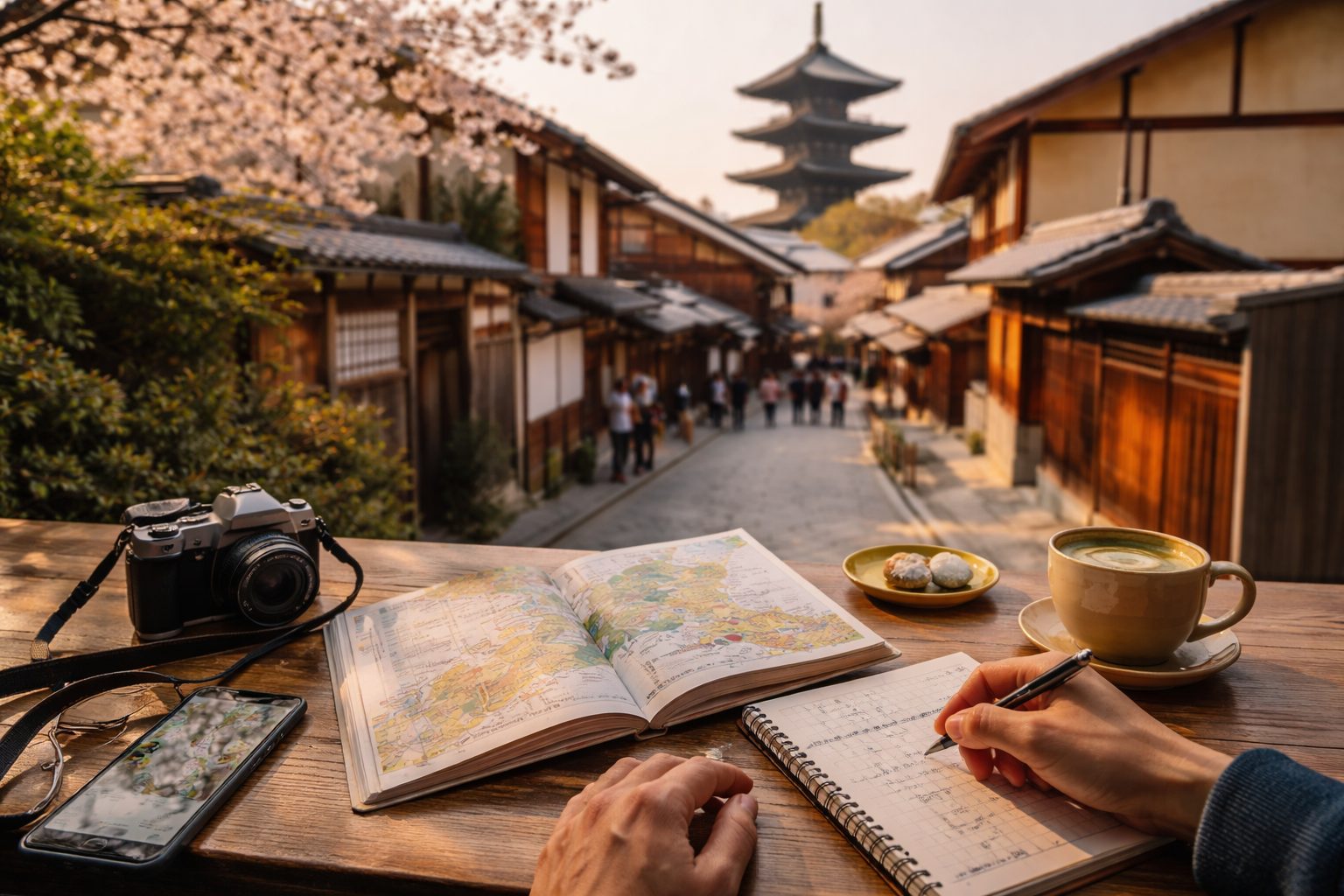
The country has a reputation for being complicated to navigate, but that’s largely overstated. Japan is actually one of the most foreigner-friendly destinations in the world once you understand a few key systems. Signage in major cities is consistently bilingual, IC transport cards work nearly everywhere, and most tourist information centers have English-speaking staff.
What makes planning tricky isn’t the logistics. It’s the sheer volume of options. There’s a reason people spend hours researching a japan itinerary before booking flights. You genuinely can’t do everything, and accepting that early will save you a lot of stress.
Best Times to Visit Japan
Japan has four distinct seasons, and each one changes the experience significantly.
Spring (late March to early May) is the most famous time to visit, especially during cherry blossom season. Sakura blooms typically peak in late March in Kyushu and early April in Tokyo and Kyoto, then gradually move north toward Hokkaido through May. It’s beautiful and genuinely worth experiencing once, but crowds are intense and accommodation prices spike.
Autumn (late October to mid-November) is my personal favorite time to plan a japan itinerary. The foliage turns in a progression of red, orange, and gold that rivals anything you’d see in New England. Crowds are smaller than spring, the weather is crisp and comfortable, and temple gardens look extraordinary.
Summer (June to August) is hot, humid, and busy with domestic tourists. That said, it’s also festival season, and if you’re interested in Obon, fireworks festivals, and summer matsuri, the heat is a fair trade-off.
Winter (December to February) is underrated. Ski resorts in Hokkaido and Nagano are world-class. Fewer tourists visit Kyoto and Nara, meaning you can actually experience famous sites without jostling for position. Heating in Japanese accommodations and restaurants is excellent.
| Season | Best For | Crowd Level | Price Level |
|---|---|---|---|
| Spring | Cherry blossoms, mild weather | Very High | High |
| Summer | Festivals, beach trips | High | Moderate |
| Autumn | Foliage, comfortable temps | Moderate-High | Moderate |
| Winter | Skiing, uncrowded temples | Low | Low-Moderate |
Japan Itinerary for First-Time Visitors
First-timers should resist the urge to cover too much ground. Japan has incredible regional variety, but moving cities every day is exhausting and expensive. Build in at least two or three nights per base and use day trips to extend your reach.
7-Day Japan Itinerary
Seven days is a tight but workable timeframe. Keep it to two cities with day trips rather than trying to hop across the whole country.
- Day 1: Arrive in Tokyo. Settle in, explore Shinjuku or your local neighborhood, recover from jet lag with a walk and some ramen.
- Day 2: Tokyo east side. Senso-ji Temple in Asakusa in the morning, teamLab Planets or another digital art space in the afternoon, Akihabara or Shibuya in the evening.
- Day 3: Tokyo west side. Harajuku, Meiji Shrine, Omotesando, Shibuya Crossing.
- Day 4: Take the Shinkansen to Kyoto. Check in, walk the Philosopher’s Path if time allows, Gion district in the evening.
- Day 5: Kyoto temples and shrines. Fushimi Inari in the early morning, Kinkaku-ji, Arashiyama bamboo grove.
- Day 6: Day trip to Nara. Deer, Todai-ji Temple, back to Kyoto by evening.
- Day 7: Morning in Kyoto or take the train to Osaka for the afternoon before heading to the airport.
10-Day Japan Itinerary
Ten days allows you to breathe a little. Add Osaka as a proper base, not just a transit stop, and consider a day trip to Hiroshima.
- Days 1 to 3: Tokyo, covering neighborhoods, museums, and day trips to Nikko or Kamakura.
- Days 4 to 5: Hakone or Fuji Five Lakes for a nature break and a view of Mount Fuji.
- Days 6 to 7: Kyoto, temples, shrines, and traditional culture.
- Day 8: Hiroshima and Miyajima Island.
- Days 9 to 10: Osaka. Dotonbori, Namba, street food, day trip to Himeji Castle.
This shape of a japan itinerary works well because it moves geographically and builds from urban to cultural to historic without backtracking.
14-Day Japan Itinerary
Two weeks is enough time to go deeper or branch out into less-visited regions. I’d suggest keeping the Tokyo-Kyoto-Osaka spine but adding either Hokkaido in the north or Kyushu in the south.
- Days 1 to 4: Tokyo and surroundings.
- Day 5: Shinkansen to Kyoto via Nagoya. Stop in Nagoya for lunch and Nagoya Castle.
- Days 6 to 8: Kyoto, Nara, Uji.
- Days 9 to 10: Hiroshima, Miyajima.
- Days 11 to 12: Osaka.
- Days 13 to 14: Fly to Sapporo for a taste of Hokkaido, or head south to Fukuoka and Nagasaki in Kyushu.
The 14-day format rewards travelers who have already seen the highlights and want something more textured.
Regional Highlights in Japan
Japan is made up of four main islands and dozens of distinct regions, each with its own character. A complete japan itinerary should ideally touch on more than just the golden triangle of Tokyo, Kyoto, and Osaka.
Tokyo: Must-See Attractions
Tokyo is the kind of city that reveals itself slowly. On the surface it’s overwhelming: 35 million people, a web of train lines, neighborhoods that feel like entirely different cities. But once you get your bearings, it becomes one of the most navigable and genuinely exciting places on earth.
Key areas to explore:
- Shinjuku: neon-lit entertainment, Golden Gai alley bars, Kabukicho nightlife
- Shibuya: the famous crossing, department stores, youth culture
- Asakusa: the oldest part of the city, Senso-ji Temple, craft shops
- Harajuku: Takeshita Street, Meiji Shrine, upscale Omotesando
- Yanaka: old-school Tokyo streets, art galleries, cemetery walks
- Akihabara: electronics, anime, gaming culture done at full volume
The Tokyo National Museum in Ueno is worth a half-day if you’re interested in Japanese art and history. TeamLab has multiple locations in the city and is genuinely unlike anything else.
Kyoto: Cultural Gems
Kyoto was Japan’s imperial capital for over a thousand years, and that weight of history shows in everything from the architecture to the pace of daily life. It’s more reserved than Tokyo, more visually cohesive, and unmistakably Japanese in a way that some other cities have traded away for modernity.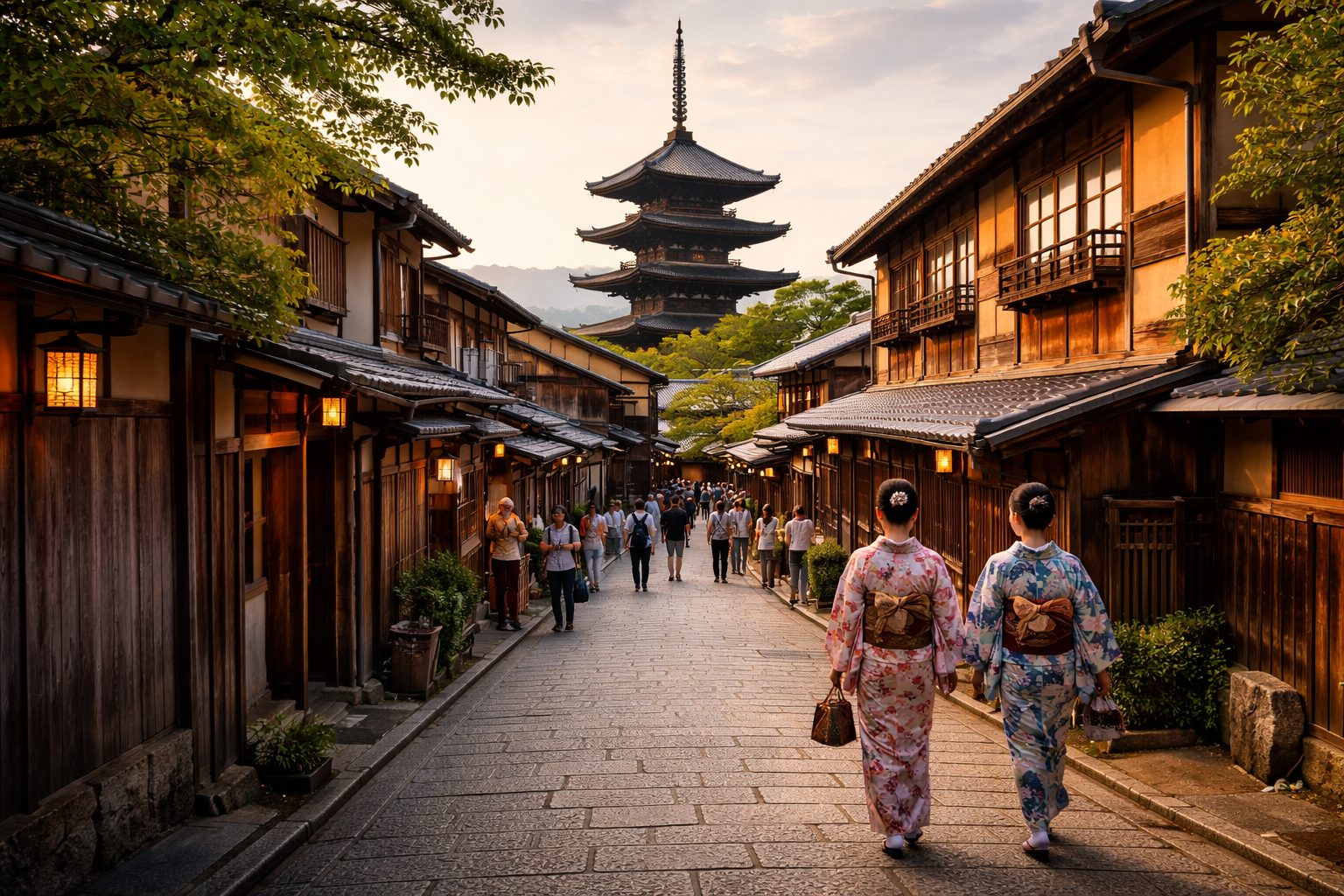
The temple and shrine circuit is Kyoto’s backbone:
- Fushimi Inari Taisha: thousands of torii gates winding up a forested mountain
- Kinkaku-ji: the gold-leafed pavilion that looks exactly like the postcards
- Arashiyama: bamboo groves, riverside walks, Tenryu-ji garden
- Nijo Castle: historic shogunate palace with nightingale floors
- Gion: the geisha district, especially atmospheric at dusk
Kyoto also rewards slow travel. Walking between neighborhoods, stopping at small temples that don’t appear on any tourist map, eating kaiseki at a restaurant that’s been family-run for three generations.
Osaka: Culinary Delights
Osaka has a reputation as Japan’s kitchen, and it earns it. The locals eat with enthusiasm and pride. Takoyaki (octopus balls), okonomiyaki (savory pancakes), and kushikatsu (deep-fried skewers) all originated here or found their most devoted following in this city.
Dotonbori is the entertainment and food heart of the city. It’s brash, neon-bright, and wonderful in its unapologetic commercialism. Namba and Shinsaibashi are for shopping and nightlife. Kuromon Ichiba market is where serious cooks and curious tourists both end up.
Osaka Castle is worth a visit for the history and the views from the top. The Umeda Sky Building has one of the best observation decks in the country.
Hokkaido: Nature and Adventure
Hokkaido is Japan’s northernmost main island, and it’s a completely different landscape. Vast national parks, volcanic calderas, lavender fields, and some of the best powder snow anywhere in the world.
Sapporo is the main city, known for its beer, its annual snow festival in February, and Ramen Alley. Niseko is the ski resort area that’s attracted international skiers for decades. Shiretoko National Park in the far northeast is one of UNESCO’s most remote World Heritage sites.
Summer in Hokkaido is spectacular. Furano’s lavender blooms in July and August create landscapes that look almost artificially colorful. Temperatures stay comfortable when the rest of Japan is sweltering.
Okinawa: Tropical Paradise
Okinawa sits hundreds of kilometers south of the main islands, closer to Taiwan than to Tokyo, and it shows. The culture, the food, the language, and the landscape are all distinct from mainland Japan. Coral reefs, clear turquoise water, and a subtropical climate make it the closest thing Japan has to a beach holiday destination.
The Ryukyu Kingdom castles, particularly Shuri Castle in Naha, reflect a unique history separate from the rest of Japan. The food emphasizes pork, sea grapes, bitter melon, and the longevity-associated purple sweet potato called beni-imo.
Okinawa also carries significant World War II history. The Okinawa Peace Memorial Park and the many battlefield sites are sobering and important to visit.
Transportation in Japan
Getting around efficiently is central to any good japan itinerary. Japan’s public transport infrastructure is genuinely world-class, and understanding how to use it will save you time and money.
Navigating Japan by Train
The Shinkansen bullet train network is the spine of intercity travel. Tokyo to Kyoto takes about 2 hours and 15 minutes. Tokyo to Hiroshima is under 4 hours. The trains are punctual, comfortable, and fast enough that flying between major cities rarely makes sense.
A Japan Rail Pass gives you unlimited travel on most JR trains, including most Shinkansen routes, for 7, 14, or 21 consecutive days. It’s worth doing the math before you buy. For some itineraries, especially those concentrated in the Kansai region, individual tickets or an Icoca card are cheaper.
Within cities, the metro networks in Tokyo, Osaka, and Kyoto cover almost everything you need. IC cards like Suica (Tokyo) and Icoca (Osaka/Kyoto) work across systems and can also be used at convenience stores and vending machines. Get one at the airport on arrival and load it with 2,000 to 3,000 yen.
Buses and Local Transport Options
Overnight highway buses are significantly cheaper than Shinkansen and a viable option for budget travelers willing to sacrifice comfort for price. The Tokyo to Kyoto journey by overnight bus costs a fraction of the bullet train fare and arrives in the morning, saving you a night’s accommodation.
Local buses fill gaps that trains miss, particularly in tourist areas like Kyoto, where buses are often the most direct way to reach specific temples. Day passes for city buses are usually available and worth considering if you’re making multiple stops.
Taxis in Japan are clean, reliable, and expensive. Use them for late-night trips or when you’re carrying heavy luggage, not as a primary mode of transport.
Renting a Car in Japan
A rental car makes the most sense in Hokkaido, the Tohoku region, rural Kyushu, and Okinawa, where public transport is sparse and the scenery rewards driving at your own pace.
International Driving Permit required. Drive on the left. Navigation apps work well in Japan, including Google Maps, which supports Japanese addresses effectively. Expressway tolls can add up quickly on longer drives.
Parking in Tokyo and Osaka is expensive and stressful. Don’t rent a car for urban travel. But for a road trip through the Japanese Alps, Shiretoko, or the backroads of Shikoku, having a car is transformative.
Accommodation Options in Japan
Japan has one of the widest accommodation ranges in the world, from pod hotels to boutique ryokan that cost as much as a luxury European hotel.
Best Neighborhoods to Stay in Tokyo
Where you stay in Tokyo determines how easy the rest of your time there will be. Each major neighborhood has a different character:
- Shinjuku: Central, hugely well-connected by train, easy access to everything. Busy and noisy but convenient.
- Asakusa: Traditional feel, great for exploring on foot. The east side of the city, so slightly less central for western attractions.
- Shibuya and Harajuku: Good for fashion, nightlife, and western Tokyo. Young and energetic.
- Ginza: Upscale, close to Tokyo Station and the Marunouchi business district. Better for business travelers or those with high budgets.
- Akihabara: Central and well-connected. Quiet once you’re off the main streets.
For most first-timers, Shinjuku or Shibuya are the easiest bases. For a second trip, Asakusa or one of the quieter residential neighborhoods like Shimokitazawa or Nakameguro can offer something more personal.
Traditional Ryokan Experience
Staying in a ryokan is one of those experiences that shifts how you understand Japan. You sleep on a futon laid on tatami mats. You wear a yukata robe. Dinner is served in your room or a private dining area and consists of a multi-course kaiseki meal with seasonal ingredients. Breakfast is a formal affair of grilled fish, miso soup, rice, and pickles.
Most ryokan include access to an onsen, either a communal hot spring bath or a private one in your room (called a kashikiri). The onsen experience is deeply rooted in Japanese culture and worth understanding before you arrive. There are etiquette rules: wash and rinse before entering, no swimsuits, tattoo policies vary.
Traditional ryokan are concentrated in Kyoto, Hakone, the Japanese Alps, and Tohoku hot spring towns like Ginzan Onsen. Prices range from 15,000 yen per person per night on the accessible end to well over 100,000 yen at the most exclusive properties.
Budget-Friendly Hostels
Japan’s hostel scene is strong, particularly in the major cities. Dormitory beds in Tokyo or Osaka start around 2,500 to 3,500 yen per night and offer clean facilities, secure storage, and often a social common area where you’ll meet other travelers.
Capsule hotels are a step up in privacy from dormitories and a genuine cultural experience. Most capsule hotels have good bathroom facilities, lockers, and sometimes a small lounge. The capsules themselves are surprisingly comfortable for sleeping.
Budget guesthouses (often called “guesthouses” rather than hostels in Japan) sometimes offer private tatami rooms at reasonable prices, giving you a taste of traditional accommodation without the full ryokan price tag.
Food and Dining in Japan
Food is one of the central pleasures of any japan itinerary, and the range is extraordinary. Tokyo has more Michelin-starred restaurants than any other city in the world. But some of the best meals you’ll eat cost under 1,000 yen.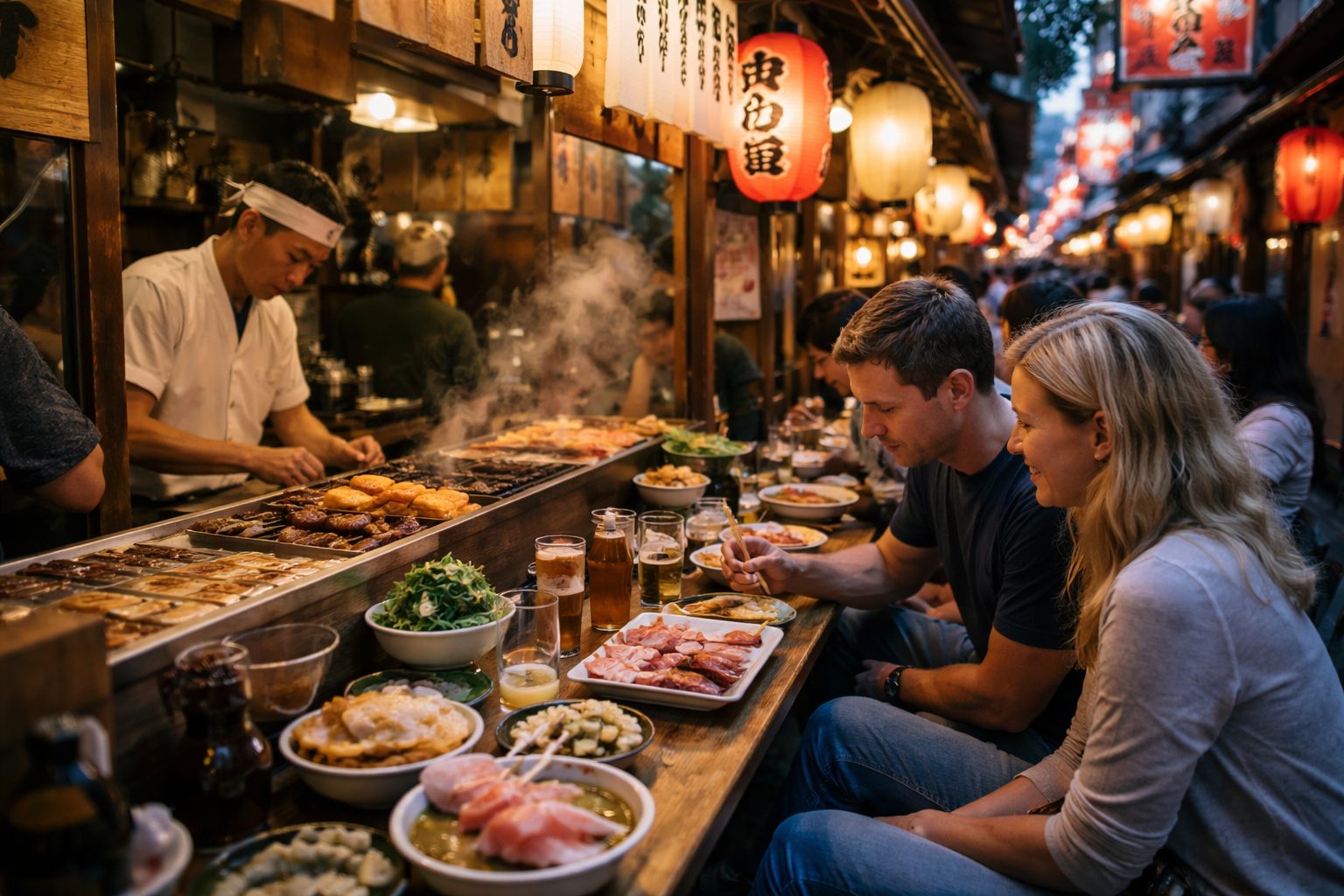
Must-Try Dishes
Don’t leave Japan without eating these:
- Ramen: regional variations matter enormously. Hokkaido miso ramen, Hakata tonkotsu, Tokyo shoyu, Kyoto’s lighter style.
- Sushi: at a conveyor belt, a sushi bar, or a high-end omakase counter, the fish quality across Japan is exceptional.
- Tempura: light battered seafood and vegetables, best eaten at the counter watching the chef work.
- Tonkatsu: breaded pork cutlet, simple and perfectly executed at good dedicated restaurants.
- Yakitori: grilled chicken skewers over charcoal, eaten at a standing bar with cold beer.
- Kaiseki: the formal multi-course cuisine of Kyoto, an education in seasonal Japanese cooking.
- Wagyu beef: worth splurging on at least once. Kobe beef gets the fame, but Matsusaka and Omi wagyu are equally remarkable.
Street Food in Japan
Street food in Japan is different from most Asian countries. It tends to be organized around festival stalls (yatai) and specific food streets rather than permanent hawker setups.
Asakusa’s Nakamise shopping street has ningyo-yaki (sweet bean paste cakes in character molds) and other traditional snacks. Osaka’s Dotonbori is the best place for takoyaki fresh from the griddle and taiyaki (fish-shaped pastry with sweet filling). Nishiki Market in Kyoto is a narrow covered arcade called Kyoto’s kitchen, selling pickles, grilled mochi, fresh tofu, and all manner of local specialties.
Convenience stores in Japan deserve their own mention. Seven-Eleven, Lawson, and FamilyMart stock genuinely good onigiri, sandwiches, hot foods, desserts, and full meals. It’s not a fallback. It’s legitimately good eating for a fraction of restaurant prices.
Fine Dining Experiences
Japan’s fine dining scene is among the world’s best, and it doesn’t require advance planning the way some destinations do. That said, the most sought-after omakase sushi counters and kaiseki restaurants in Tokyo and Kyoto can require reservations months ahead.
For high-end sushi, the counter omakase format is the standard. You sit at a counter, the chef works in front of you, and you eat whatever is freshest that day, piece by piece. Meals typically run 30,000 to 60,000 yen per person at top establishments.
Tempura kaiseki and French-Japanese fusion are both well-represented in Tokyo’s fine dining landscape. Osaka has a strong tradition of counter-based kappo cuisine, which sits between kaiseki formality and the ease of an izakaya. For the price, Japan’s top restaurants often provide better value than comparable meals in Paris or New York.
Cultural Etiquette in Japan
Understanding the cultural expectations in Japan isn’t about avoiding embarrassment. It’s about participating more fully and showing genuine respect.
Important Customs and Traditions
Shoes come off. Almost everywhere with tatami flooring and many traditional spaces require you to remove shoes and put on provided slippers. Pay attention to the entryway, called a genkan, where shoes are left.
Bowing is the primary greeting. Depth indicates formality. A slight forward nod is a casual acknowledgment. A 30-degree bow is a polite formal greeting. Don’t stress about doing it perfectly. The effort is appreciated.
Cash is still important. Japan is moving toward cashless, but many smaller restaurants, temples, and rural businesses are cash-only. Keep 10,000 to 20,000 yen in small bills available.
Tipping is not a custom in Japan. Don’t do it. It can cause genuine confusion or embarrassment. Excellent service is standard, not something that requires additional payment.
Public spaces are quiet. Loud phone conversations on trains are frowned upon. Eating while walking is generally considered impolite, though it’s more accepted in tourist areas.
Tips for Respectful Travel
At temples and shrines, follow the posted rules. Dress modestly, stay on marked paths, don’t photograph prohibited areas, and don’t touch or climb on anything that isn’t clearly intended for visitor interaction.
In onsen, the etiquette rules exist for hygiene and cultural reasons. Wash thoroughly before entering any shared bath. Keep your towel out of the water. Don’t splash or make excessive noise. Many facilities prohibit guests with visible tattoos, so check policies before booking.
When visiting homes or the traditional private areas of a ryokan, follow your host’s lead. Accept hospitality graciously. If offered food or drink, the polite first response is a modest refusal, followed by acceptance.
Unique Experiences in Japan
The highlights of a japan itinerary aren’t always the famous temples or the bullet trains. Some of the most memorable experiences come from leaning into the unexpected.
Festivals and Events
Japan’s festival calendar is dense and deeply regional. A few that are worth planning a trip around: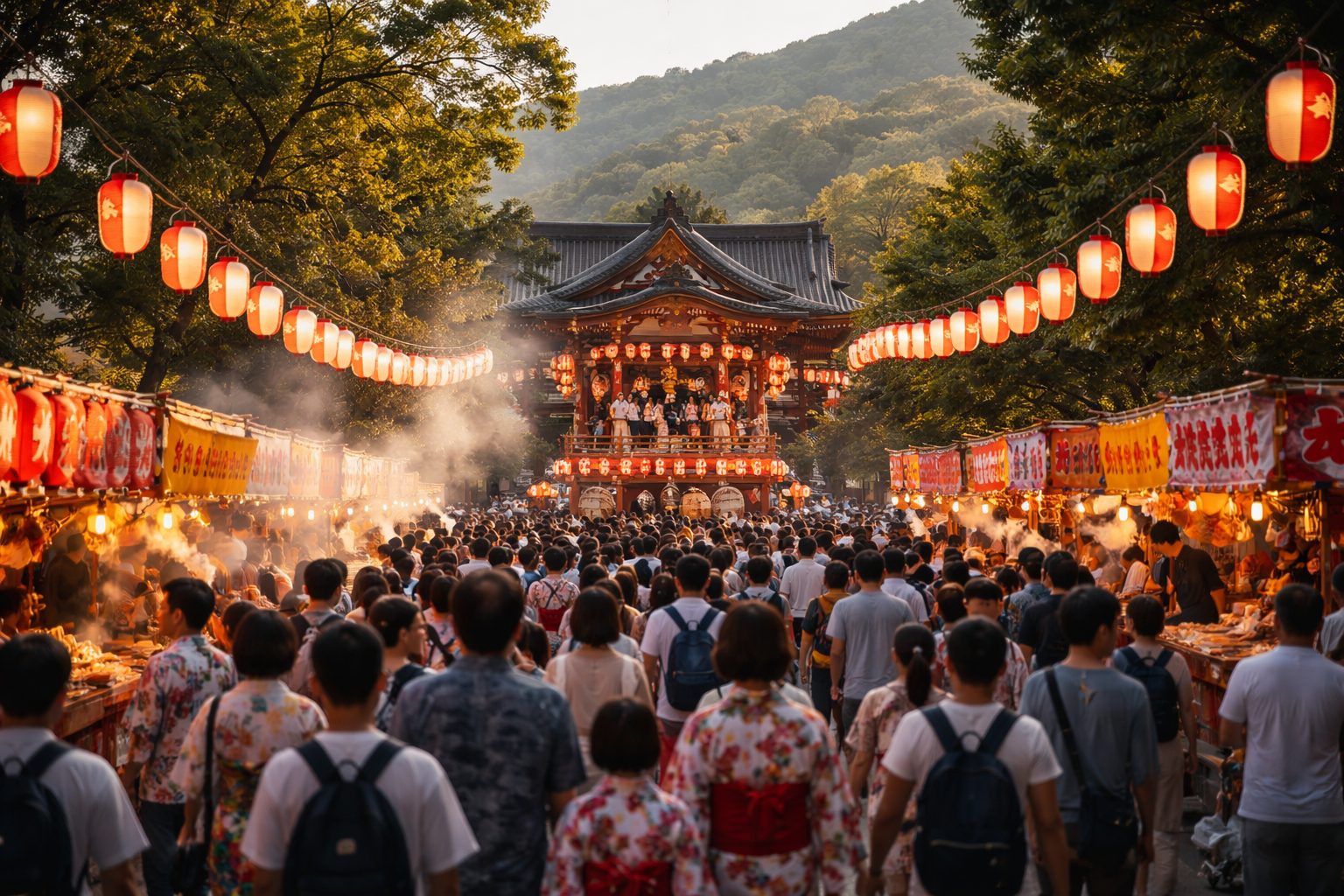
- Gion Matsuri (Kyoto, July): one of Japan’s three great festivals, featuring elaborate processions of floats decorated with historical tapestries.
- Awa Odori (Tokushima, August): a mass street dance festival that takes over an entire city with thousands of performers.
- Sapporo Snow Festival (Hokkaido, February): enormous snow and ice sculptures in Odori Park.
- Nebuta Matsuri (Aomori, August): giant illuminated papier-mache floats carried through the city at night.
- Nozawa Onsen Fire Festival (Nagano, January): a centuries-old ritual involving a large wooden structure, fire, and local men defending it against attack.
Cherry blossom season isn’t a single event, but the hanami picnic tradition beneath blooming sakura trees is one of Japan’s most joyful and inclusive experiences.
Off-the-Beaten-Path Destinations
Kanazawa is often called Kyoto without the crowds, and it’s a fair description. Samurai and geisha districts, Kenroku-en garden (consistently rated among Japan’s top three landscape gardens), exceptional seafood from the Sea of Japan.
Yakushima is a subtropical island off the southern tip of Kyushu, covered in ancient cedar forests that supposedly inspired the setting for Studio Ghibli’s Princess Mononoke. The trees here are genuinely ancient, some over a thousand years old.
The Kumano Kodo pilgrimage trails in the Kii Peninsula are among Japan’s most important sacred routes and are now a UNESCO World Heritage site. Walking even a section of the trail connects you to a tradition that’s over a thousand years old.
Matsumoto is a well-preserved castle town in the Japanese Alps, with one of Japan’s few surviving original feudal castles. It’s a good base for exploring the Kamikochi valley in summer or the ski resorts in winter.
Sample Japan Itineraries
Family-Friendly Itinerary
Families generally do well in Japan. The country is safe, clean, food options are child-friendly, and many attractions have strong appeal for kids.
- Days 1 to 3: Tokyo. teamLab Planets or teamLab Borderless for the kids, Ueno Zoo and the Natural History Museum, a day at DisneySea if that’s in the budget.
- Day 4: Hakone. Mount Fuji views, the open-air sculpture museum, a ryokan stay with onsen.
- Days 5 to 7: Kyoto. Fushimi Inari (kids love the tunnel of gates), Arashiyama, Nishiki Market for food exploration.
- Days 8 to 10: Osaka. Osaka Aquarium Kaiyukan (one of the best in the world), Dotonbori food tour, Universal Studios Japan.
Keep the pace relaxed. Japan’s food is mostly very accessible for children, including ramen, sushi, tonkatsu, and convenience store snacks that kids inevitably love.
Romantic Getaway Itinerary
Japan offers some of the world’s best settings for a romantic trip, particularly when you lean into traditional experiences.
- Days 1 to 2: Tokyo. Dinner in the Sky Bar area of Roppongi, morning walk along the Meguro River, Yanaka’s quiet streets.
- Day 3: Hakone by private car or Romancecar train. Check into a ryokan with a private onsen, kaiseki dinner.
- Days 4 to 5: Kyoto. Early morning at Fushimi Inari before the crowds, Arashiyama at dusk, dinner at a kaiseki restaurant in Gion.
- Days 6 to 7: Kinosaki Onsen in the Hyogo countryside. One of the best traditional hot spring towns in Japan, with seven public baths to hop between in yukata robes.
- Days 8 to 9: Kanazawa. Higashi Chaya geisha district, Kenroku-en, incredible seafood at the Omicho market.
Adventure-Seeker Itinerary
Japan has excellent options for active travelers that go well beyond the temple circuit.
- Days 1 to 2: Tokyo base.
- Days 3 to 4: Fuji-Q Highland and Fuji Five Lakes area for hiking on Mount Fuji (July to September only). The Yoshida Trail is the most popular route to the summit.
- Days 5 to 7: Japanese Alps. Kamikochi valley hiking, Matsumoto Castle, the Nakasendo trail between Magome and Tsumago.
- Days 8 to 10: Hokkaido. Daisetsuzan National Park for hiking, Shiretoko for wildlife, or Niseko for mountain biking in summer.
- Days 11 to 14: Okinawa. Scuba diving in Kerama Islands or around Iriomote, sea kayaking through mangroves, snorkeling the coral gardens.
Frequently Asked Questions (FAQs)
How to Plan a Japan Itinerary?
Start with your travel window and choose one or two regions to focus on rather than trying to cover everything. Book accommodation for your first and last nights immediately after buying flights, then fill in the middle as your plans solidify. A basic skeleton of cities and dates is more useful than over-planning every day.
What are the must-visit places in Japan?
Tokyo, Kyoto, and Osaka form the essential core of any japan itinerary. Beyond that, Hiroshima, Hakone, Nara, Kanazawa, and Hokkaido are all strong additions depending on your interests and available time.
How much does a trip to Japan cost?
A mid-range budget is roughly 15,000 to 25,000 yen per person per day, covering accommodation, transport, meals, and entry fees. Budget travelers can do it for 8,000 to 12,000 yen. High-end travel with ryokan stays and fine dining can run 60,000 yen or more per day without effort.
Is it necessary to know Japanese to travel in Japan?
No. Major tourist areas have adequate English signage and many restaurants have picture menus or English translations. Learning a few basic phrases like “sumimasen” (excuse me), “arigato” (thank you), and how to say your food allergies will be appreciated and makes interactions smoother.
Planning a thoughtful japan itinerary is the single biggest factor in how much you’ll enjoy the trip. Japan is generous to travelers who come prepared and flexible to those who stay curious. The country has a way of exceeding expectations at every turn, whether it’s the precision of a sushi chef, the silence inside a moss garden, or the unexpected kindness of a stranger who walks you to your destination rather than just pointing the way.