
India is one of those countries that keeps surprising you. Every time I think I’ve seen enough of its landscapes, another trail opens up and proves me wrong. From the high-altitude passes of Ladakh to the misty shola forests of the Nilgiris, hikes in India span an incredible range of terrain, culture, and difficulty. Whether you’re a weekend warrior looking for a quick escape or a seasoned trekker planning a serious multi-week adventure, the Indian subcontinent has something genuinely worth lacing up your boots for.
What makes hiking here different from most other destinations is the sheer variety compressed into one country. You can walk through rhododendron forests, cross glaciated cols, descend into ancient volcanic valleys, or traverse dry scrubland dotted with medieval forts, often within the same state. The trails aren’t just physical challenges. They’re windows into local life, ecology, and history that no road trip can replicate.
Introduction to Hikes in India
India’s hiking culture has grown dramatically over the past decade. A new generation of urban hikers is rediscovering the outdoors, and operators have responded with better-organised trails, improved safety protocols, and more accessible entry points for beginners. But even with that growth, much of the country’s trail network remains underexplored and far from crowded.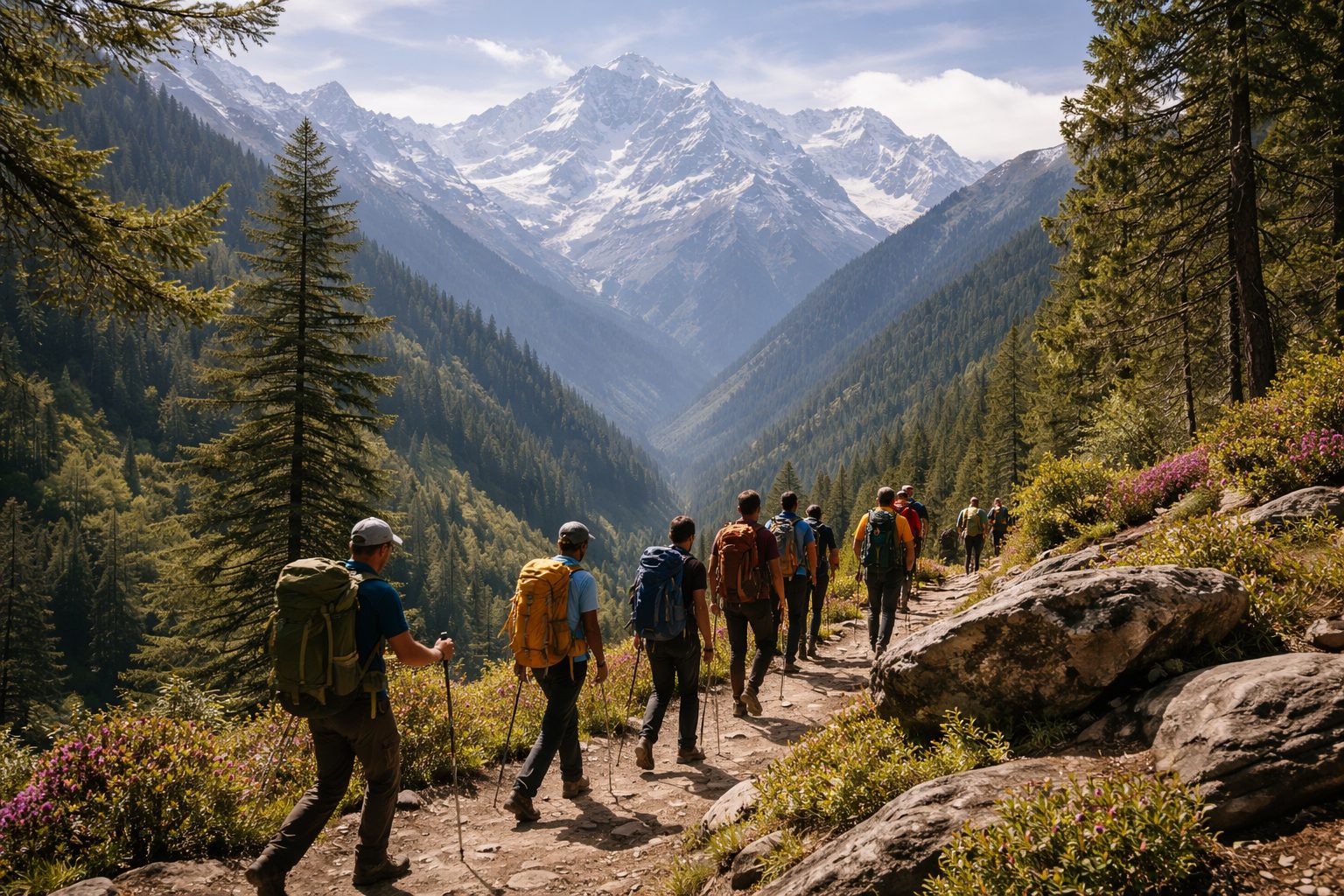
The country’s geography is one of the most diverse on the planet. The Himalayas form an enormous arc across the north, stretching from Jammu and Kashmir through Uttarakhand, Himachal Pradesh, Sikkim, and Arunachal Pradesh. The Western Ghats run along the western coast as a mountain chain full of biodiversity hotspots. The Vindhya and Satpura ranges cut through central India. The northeastern states offer dense forested hills that most travelers never reach. Add the Thar Desert in the west and the volcanic Deccan Plateau in the middle, and you start to understand why hikes in India cover almost every ecological zone imaginable.
This guide covers all of it. I’ll walk through the key types of hikes, the most popular routes, regional breakdowns, gear essentials, timing, and how to stay safe and responsible on the trail.
Types of Hikes in India
Before picking a route, it helps to understand how hiking terminology works in India. The words “trek” and “hike” get used interchangeably by most people, but there are meaningful differences depending on context.
Trekking vs. Hiking
In Indian outdoor culture, trekking typically refers to multi-day journeys over mountain terrain, often involving significant altitude gain, camping or guesthouse stays, and some degree of logistical planning. Trekking in Uttarakhand, Himachal Pradesh, or Sikkim usually means committing to several days on the trail, covering distances that require physical conditioning.
Hiking, by contrast, tends to mean shorter outings, often day walks or weekend trips that don’t require overnight camping. A hike in the Western Ghats or around Pune or Bangalore might involve three to six hours of walking with no overnight stay. The distinction matters when planning because trekking demands more gear, more time, and often a permit.
That said, both experiences are deeply rewarding in their own ways. Trekking gives you the immersive slow travel that completely detaches you from routine. Day hiking lets you sample landscapes without a heavy pack or a week off work.
Day Hikes vs. Multi-Day Treks
Day hikes in India range from gentle forest walks and waterfall trails to full summit pushes that take eight to ten hours round trip. Many popular routes in Coorg, the Sahyadri hills, the Nilgiris, and around Manali are well-suited to day trips. You don’t need a permit for most of them, the logistics are minimal, and the payoff in views and fresh air is immediate.
Multi-day treks are a different commitment. Routes like the Chadar Trek, the Goechala Trek, or the Valley of Flowers Trek require permits, acclimatisation time, and either camping gear or advance guesthouse bookings. They’re also physically demanding in ways a day hike rarely is, because altitude fatigue compounds over consecutive days in ways that are hard to simulate at home.
Here’s a quick comparison:
| Feature | Day Hike | Multi-Day Trek |
|---|---|---|
| Duration | 3-10 hours | 3-20+ days |
| Gear needed | Light daypack | Full expedition kit |
| Altitude gain | Moderate | Often very high |
| Permits required | Rarely | Frequently |
| Fitness level | Beginner-Intermediate | Intermediate-Advanced |
| Accommodation | None or nearby hotel | Camping or guesthouses |
| Cost | Low | Moderate to high |
Most Popular Hikes in India
The most well-known routes tend to be popular for good reason. They combine accessibility, scenery, and a level of infrastructure that makes planning easier. But popularity comes with trade-offs, namely crowds and permit caps during peak season.
Himalayan Hikes
The Himalayas dominate conversations about hikes in India, and understandably so. No mountain range in the world offers this combination of altitude, cultural richness, and trail variety.
Some routes stand out consistently:
- Roopkund Trek (Uttarakhand): Famous for the skeletal remains found at its glacial lake at 5,029 metres. It’s a moderately difficult trek with stunning high-altitude meadows and ridge walks.
- Valley of Flowers (Uttarakhand): A UNESCO World Heritage site that blooms into a riot of wildflowers from July to September. Best combined with the Hemkund Sahib pilgrimage route.
- Markha Valley Trek (Ladakh): A classic trans-Himalayan route passing through remote villages, high passes, and stark desert mountain scenery. Usually 8-10 days.
- Chadar Trek (Ladakh): A winter walk on the frozen Zanskar River. One of the most surreal and physically demanding experiences in Indian trekking.
- Goechala Trek (Sikkim): Offers one of the closest views of Kangchenjunga, the world’s third-highest peak. Requires a permit and usually goes through a licensed operator.
- Hampta Pass (Himachal Pradesh): A relatively accessible crossing that connects the green Kullu valley to the desert landscapes of Lahaul. Good for those new to Himalayan trekking.
- Pin Parvati Pass (Himachal Pradesh): For experienced trekkers only. One of the hardest routes in the country, crossing a glaciated pass between two radically different valleys.
Western Ghats Hikes
The Western Ghats don’t have the altitude drama of the Himalayas, but they make up for it with lush forests, dramatic monsoon-fed waterfalls, and a biodiversity that’s extraordinary by any global standard.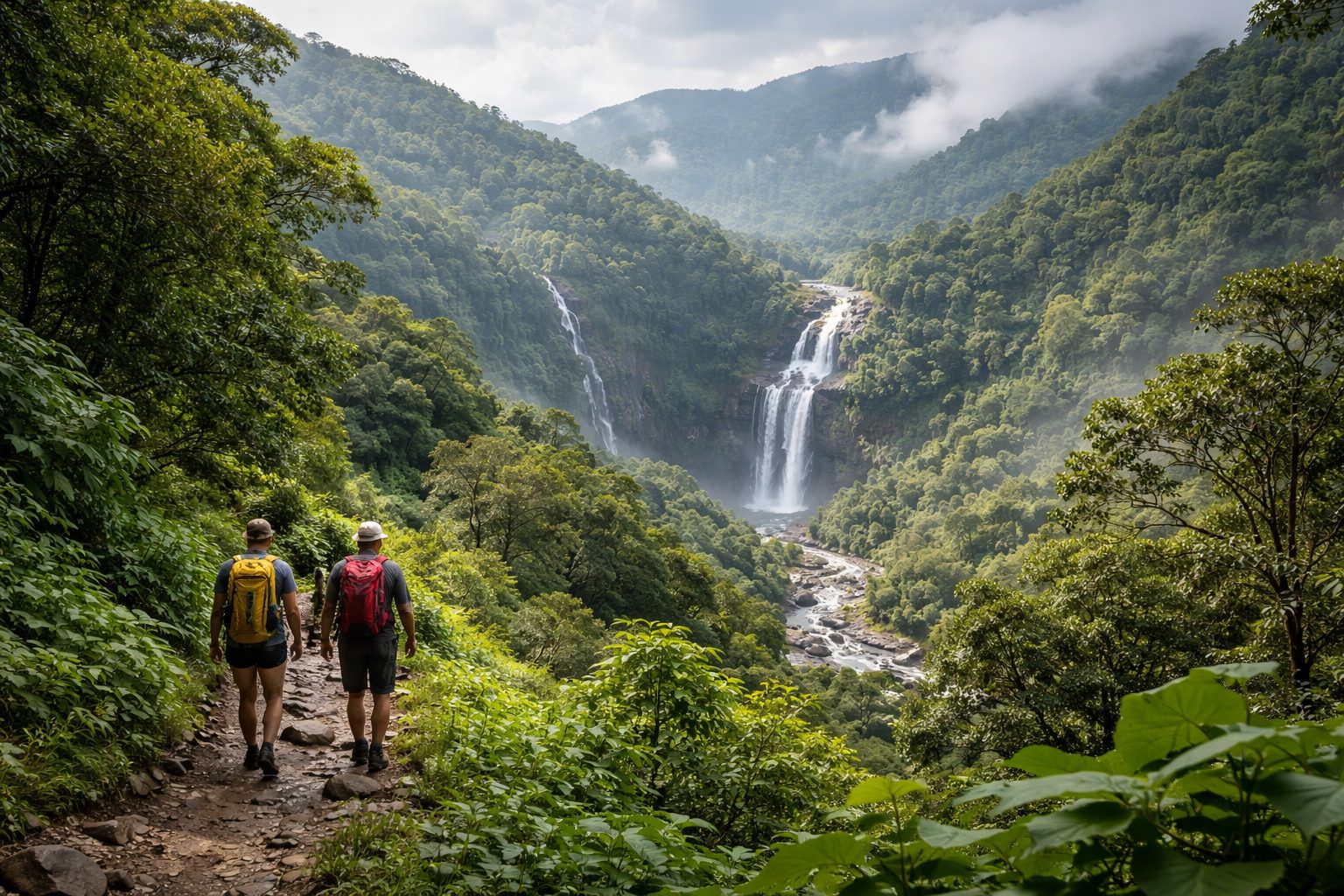
Some routes worth knowing:
- Kudremukh Trek (Karnataka): Dense shola grassland and forest. One of the most scenic treks in the southern Ghats.
- Mullayanagiri (Karnataka): The highest peak in Karnataka, accessible via a half-day hike. Great for beginners wanting a taste of the Ghats.
- Brahmagiri Peak (Coorg): Good views of the Brahmagiri Wildlife Sanctuary and the surrounding coffee estates.
- Agasthyamalai Trek (Kerala/Tamil Nadu): A three-day permit trek through a core biodiversity zone. Permits are strictly controlled, which keeps the trail in good condition.
- Kalsubai Peak (Maharashtra): Maharashtra’s highest peak and an easy to moderate day hike from Mumbai, making it extremely popular on weekends.
- Harishchandragad (Maharashtra): One of the most rewarding hill fort treks in the Sahyadris. The Konkan Kada cliff face is genuinely spectacular.
Desert Hikes in Rajasthan
Rajasthan isn’t the first place hikers think of, but it offers a completely different experience. Desert hiking here is about landscape, silence, and history rather than elevation.
- Sam Sand Dunes near Jaisalmer: Less a formal trail than an open walk through classic Thar Desert scenery. Best done at dawn or dusk to avoid midday heat.
- Aravalli Hills: The oldest mountain range in India offers multi-day trekking through sparse scrubland, dotted with temples and forts.
- Kumbhalgarh to Ranakpur: A two to three day trail passing through the buffer zone of the Kumbhalgarh Wildlife Sanctuary. You walk between two of Rajasthan’s most impressive historical sites.
Desert hikes demand different preparation. Heat management, sun protection, and water carrying capacity matter more here than technical fitness.
Best Hiking Regions in India
India’s geographic diversity means each region offers something distinct. Let me break down what to expect and where the best opportunities lie.
Northern India
Northern India is synonymous with high-altitude trekking. Uttarakhand, Himachal Pradesh, Jammu and Kashmir, and Ladakh account for the vast majority of serious mountain routes in the country.
Uttarakhand has the largest concentration of established trekking trails. The Garhwal Himalaya offers routes ranging from accessible week-long treks like the Kedarkantha Trek to challenging multiweek expeditions into the Gangotri and Nanda Devi regions. The trail infrastructure here is better than most of the Himalayas, with teahouses, guesthouses, and government rest huts on popular routes.
Himachal Pradesh is more varied. The Kullu valley is accessible and relatively commercial. Spiti and Kinnaur are remote, arid, and culturally distinct from the rest of India. The Dharamsala area around McLeod Ganj offers excellent day hikes and introductory treks.
Ladakh is a world unto itself. The high-altitude desert landscape, Buddhist monasteries perched on clifftops, and genuine remoteness make it unlike anywhere else in the country. Most treks here require a level of preparation that goes beyond what casual hikers are used to, but the rewards match the effort.
Southern India
Southern India’s hiking scene is centred on the Western Ghats and the Nilgiri hills. The landscape is lush, the wildlife is outstanding, and the temperatures are far more forgiving than the north.
Tamil Nadu’s Nilgiris include the area around Ooty and Coonoor, which offers gentle tea estate walks and forest trails. The Palani Hills and the High Ranges of Kerala are home to some of the country’s richest wildlife corridors, though permits are often required to hike within forest reserves.
Karnataka has a strong hiking culture, particularly around Chikmagalur and Coorg. Andhra Pradesh and Telangana have less-publicised hiking areas in the Eastern Ghats, which remain genuinely off the beaten track.
Eastern India
Eastern India is hiking’s best-kept secret. Sikkim is the exception, widely known for its mountain routes and the Goechala Trek, but the rest of the northeast is barely on most hikers’ radar.
Meghalaya has extraordinary landscapes, including the root bridges of Cherrapunjee and high plateau walks that offer panoramic views over Bangladesh. Nagaland, Manipur, and Arunachal Pradesh have trail networks that remain largely unmapped and require indigenous community permissions to access. These are trips for experienced independent travellers with flexibility and patience.
West Bengal’s Singalila Ridge offers one of India’s finest dawn panoramas, with views stretching from Everest to Kangchenjunga on clear mornings. It’s accessible from Darjeeling and is suited to those who want Himalayan views without high-altitude acclimatisation challenges.
Western India
Maharashtra’s Sahyadri range, which forms the northern section of the Western Ghats, is the most hiked mountain region in western India. Proximity to Mumbai and Pune means a large population of weekend hikers has created a rich network of documented routes. Hill forts built by the Marathas in the 17th and 18th centuries give these hikes a historical dimension you don’t find elsewhere.
Goa has a small but growing hiking scene around its hinterland forests and the border areas with Karnataka. Gujarat’s Gir Forest and the Barda Hills offer hiking adjacent to wildlife corridors. Rajasthan, as mentioned, has the Aravallis and desert routes that are genuinely worth exploring in the cooler months.
Essential Gear for Hiking in India
The right gear makes a meaningful difference to your safety and comfort. India’s trails vary so dramatically that there’s no single universal packing list, but there are some consistent principles.
Footwear
Footwear is the one item I’d never compromise on. The terrain across hikes in India ranges from rocky scree and glaciated slopes to wet mud, loose laterite, and dry scrubland.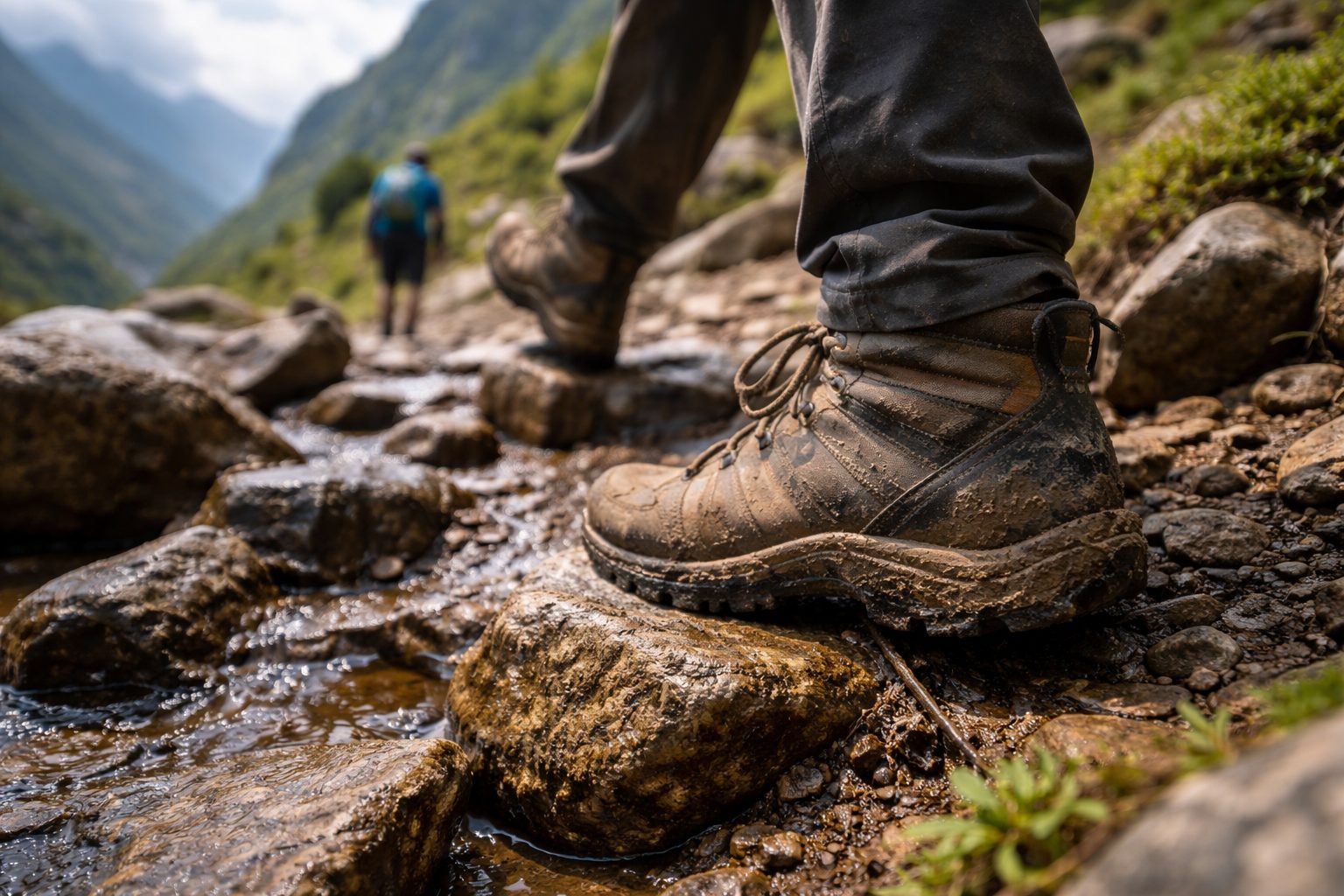
For day hikes and lower-altitude trekking:
- Trail running shoes work well on well-marked paths with moderate terrain.
- Mid-cut hiking boots offer better ankle support for rocky or uneven ground.
- Waterproof liners help in monsoon conditions but reduce breathability.
For Himalayan trekking above 4,000 metres:
- Sturdy, waterproof, ankle-high hiking boots are the baseline.
- Above 5,000 metres or on snow and ice, double-layered boots or mountaineering boots may be needed.
- Gaiters are useful in snow and on muddy trails.
Avoid cotton socks entirely. Merino wool or synthetic trekking socks prevent blisters and dry faster. Carry at least two pairs for multi-day trips.
Clothing
Layering is the key principle, especially in mountain environments where temperatures swing dramatically between day and night.
A basic layering system for Himalayan treks:
- Base layer: Moisture-wicking synthetic or merino wool. Not cotton.
- Mid layer: Fleece or lightweight down jacket for warmth.
- Outer layer: Waterproof, windproof shell jacket and trousers.
For Western Ghats and southern hikes in non-monsoon months, a moisture-wicking shirt and lightweight trekking trousers with sun protection are usually sufficient. During monsoon season, expect everything to get wet regardless of what you wear, so focus on quick-dry fabrics and keep dry clothes sealed in plastic bags inside your pack.
A wide-brim hat or cap is essential in most Indian hiking contexts. Sun exposure is intense even at altitude.
Safety Equipment
This is where many casual hikers cut corners, which is a mistake.
Essential safety items:
- First aid kit: Include altitude sickness medication (Diamox) for anything above 3,000 metres, blister treatment, rehydration salts, and basic wound care supplies.
- Navigation: Offline maps downloaded to your phone (Maps.me or AllTrails), and ideally a separate GPS device for remote routes.
- Headlamp with spare batteries: Trails take longer than expected. You don’t want to be descending without light.
- Emergency whistle and space blanket: Lightweight, and potentially lifesaving.
- Water purification: A SteriPen or filter pump for routes without reliable clean water sources.
- Personal locator beacon (PLB) or satellite communicator: For remote Himalayan or northeastern routes where mobile coverage is nonexistent.
Let someone know your route and expected return time before every hike. This simple habit has saved lives.
Best Time to Hike in India
Timing matters enormously. India’s hiking conditions are shaped by two major weather patterns: the southwest monsoon from June to September, and the winter snowfall in the Himalayas from November to March.
Seasonal Considerations
| Region | Best Season | Avoid |
|---|---|---|
| Uttarakhand | May-June, Sept-Oct | Monsoon (July-Aug), Deep winter |
| Himachal Pradesh | June-Oct | Nov-April (most passes closed) |
| Ladakh | June-Sept | Oct-May (extreme cold) |
| Western Ghats | Oct-Feb | June-Sept (monsoon flooding) |
| Rajasthan | Nov-Feb | April-Sept (extreme heat) |
| Sikkim | April-May, Oct-Nov | Monsoon |
| Northeast | Oct-April | Monsoon |
There are exceptions. The Valley of Flowers is at its best during monsoon, when the flowers bloom. Chadar Trek is exclusively a winter experience on the frozen river. Monsoon trekking in the Western Ghats, while wet, has its own appeal for those who enjoy the greenery and the solitude.
Weather Impacts on Hiking
Mountain weather in India can change rapidly. A clear morning in the Himalayas can turn into a full-blown snowstorm by afternoon. The Western Ghats receive some of the heaviest rainfall on earth during monsoon, making paths slippery and rivers dangerous to cross.
Always check weather forecasts before setting out. In the Himalayas, local knowledge from guides, teahouse owners, or other trekkers is often more reliable than apps. Cloud cover, wind direction, and morning temperature are all useful indicators.
Flash flooding is a real risk in river valleys during monsoon, particularly in Uttarakhand and Himachal Pradesh. Don’t camp in valley bottoms during heavy rain. At altitude, afternoon thunderstorms are common in summer months. Plan to reach your destination or high point by midday to reduce exposure to lightning.
Hiking Trails for Beginners
Not every hike in India requires months of preparation. There’s a growing number of trails designed for or well-suited to people who are new to hiking.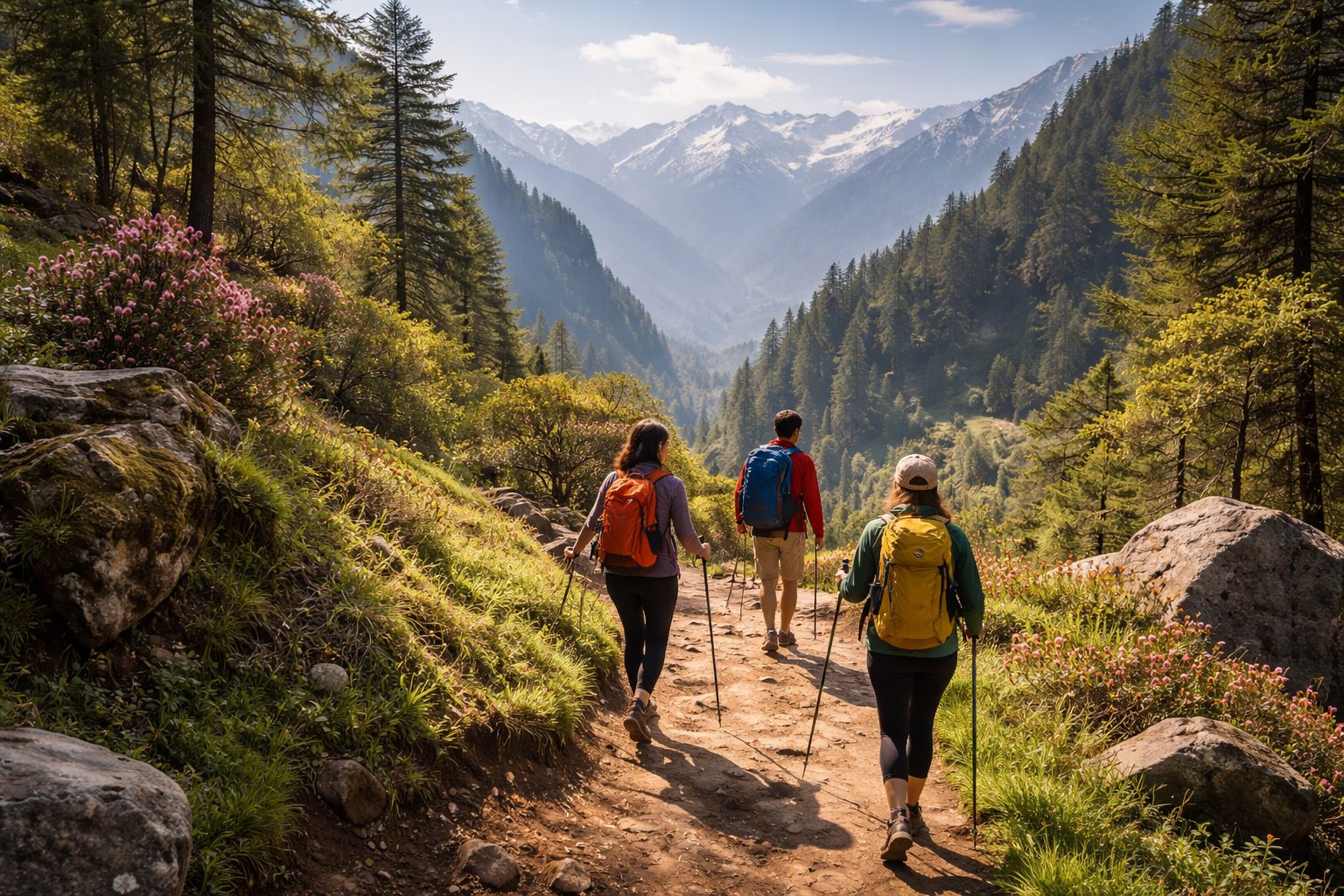
Good options for beginners:
- Triund Trek (Himachal Pradesh): A 9 km trail from McLeod Ganj to a ridge at 2,875 metres. Well-marked, serviced by tea stalls, and offering views of the Dhauladhar range. Suitable for fit beginners.
- Kedarkantha Trek (Uttarakhand): A winter trek that’s become a favourite for first-time Himalayan trekkers. Good snow camping experience with manageable difficulty.
- Mullayanagiri (Karnataka): A short, steep trail to Karnataka’s highest peak. Good physical introduction without logistical complexity.
- Laitlum Canyons (Meghalaya): Gentle trails through stunning canyon country near Shillong. Minimal elevation change.
- Nandi Hills (Karnataka): Popular weekend escape from Bangalore. A short walk with excellent sunrise views.
- Rajmachi Trek (Maharashtra): An overnight hill fort trek close to Pune and Mumbai that’s well-suited to beginners wanting their first camping experience.
What makes a trail beginner-friendly isn’t just the distance. It’s the clarity of the route, the availability of water and food, the elevation profile, and the proximity to help if something goes wrong. Start with well-documented routes that have active hiking communities behind them.
Challenging Hikes in India
For experienced trekkers looking to test themselves, India has routes that rank among the hardest in the world.
The most demanding include:
- Pin Parvati Pass (Himachal Pradesh): 110 km, 6+ days, crossing a 5,319-metre glacier pass from green valley to high desert. Requires technical experience, full expedition camping, and strong navigation skills.
- Goecha La (Sikkim): Reaching the viewpoint at 4,940 metres involves significant altitude gain over several days. Permit-controlled and best done with a licensed guide.
- Chadar Trek (Ladakh): Walking on the frozen Zanskar River in January and February at temperatures that drop to -25 degrees Celsius. The physical and psychological demands are extreme.
- Roopkund Trek via Ali Bugyal (Uttarakhand): The full loop version rather than the standard out-and-back is considerably harder and less guided. Altitude, weather, and navigation all challenge you.
- Nanda Devi Base Camp (Uttarakhand): Access to the sanctuary around India’s second-highest peak. Requires special permits and involves remote, serious Himalayan terrain.
- Satopanth and Bhagirath Kharak (Uttarakhand): Glacier approaches near Badrinath that take you deep into the Garhwal Himalaya. Technical terrain and high altitude demand serious preparation.
Challenging doesn’t just mean long or high. Remoteness, weather unpredictability, and the absence of rescue infrastructure in certain areas add layers of risk that fitness alone can’t address. Honest self-assessment matters here more than ambition.
Guided vs. Solo Hiking in India
This is one of the most common questions I hear from people planning their first serious hike. The honest answer is that both have value, and the right choice depends on the route, your experience, and what you want from the trip.
Arguments for going with a guide:
- Mandatory for certain permit-controlled areas (Goechala, Agasthyamalai, Nanda Devi)
- Invaluable local knowledge about weather windows, water sources, and safe campsites
- Cultural access and translation, especially in remote villages
- Emergency support when something goes wrong
- Takes logistical pressure off so you can focus on the experience
Arguments for going solo or independently:
- Greater flexibility in pace and route choices
- Cheaper, particularly on day hikes and well-marked routes
- More solitary experience with fewer group dynamics
- Better for experienced trekkers who understand their own limits
Most popular routes in Uttarakhand, Himachal Pradesh, and the Western Ghats can be done independently with proper preparation. But even experienced trekkers should strongly consider hiring a local guide in Ladakh, Sikkim, and the northeast, where trails can be indistinct, weather can be severe, and local connections are genuinely useful.
If you’re choosing an operator, look for those registered with the Indian Mountaineering Foundation (IMF) or with verifiable reviews. Ask about their guide-to-client ratio, emergency protocols, and equipment standards before booking.
Environmental Considerations for Hikers
India’s trail environments are under significant pressure. High footfall on popular Himalayan routes has led to visible litter accumulation, soil erosion from overuse, and the degradation of sensitive meadows. It’s a problem that responsible hikers can either contribute to or help mitigate.
Principles to follow:
- Pack out everything you pack in. This includes plastic wrappers, sanitary items, batteries, and food waste. Don’t assume someone else will deal with it.
- Use established campsites and fire rings where they exist. Don’t cut new clearings or build new fires in sensitive meadow environments.
- Biodegradable soap and shampoo still pollute waterways. Wash at least 60 metres from any stream, lake, or water source.
- Respect permit systems. They exist to control footfall and protect ecosystems. Circumventing them damages the trails for everyone.
- Stay on marked trails in fragile habitats. Rhododendron forests, alpine meadows, and wetland areas take years to recover from trampling.
- Don’t feed wildlife. This disrupts natural behaviour and can lead to human-wildlife conflict over time.
Several Indian states have started implementing stricter waste management rules on popular routes. Himachal Pradesh now charges waste deposits on some trails, refunded when you exit with your waste. Uttarakhand has introduced “carry your bag” mandates on certain routes. These are good developments.
The environmental case for guided trekking is often underappreciated. Responsible operators manage waste, know sustainable campsite locations, and can enforce leave-no-trace principles with their groups in ways that are harder to achieve independently.
Safety Tips for Hiking in India
Safety on hikes in India is as much about preparation as it is about in-the-moment decisions.
Before you go:
- Research your route thoroughly. Read recent trip reports from the last season, not just general information from a few years ago. Conditions change.
- Acclimatise properly before going to altitude. Spend at least two nights at altitude before making significant gains. Acute Mountain Sickness (AMS) is dangerous and can escalate to HACO or HAPO without warning.
- Register your trek with local authorities where registration systems exist. Some regions have trekker registration points that are worth using.
- Buy travel insurance that specifically covers high-altitude trekking and helicopter evacuation. Standard travel insurance rarely covers activities above 3,500 metres or 4,000 metres.
On the trail:
- Start early. Most trail accidents happen in afternoon when fatigue, changing weather, and reduced daylight compound risk.
- Know the symptoms of AMS: headache, nausea, dizziness, fatigue, and loss of appetite. If symptoms appear, descend immediately. Do not push on hoping it will improve at altitude.
- Stay hydrated. Altitude and physical exertion both increase fluid requirements. Drink more than you think you need.
- Don’t underestimate local animals. Encounters with bears, leopards, and wild elephants do happen in forest areas. Make noise on the trail, especially in dense vegetation. Carry no food in your outer pockets.
- Cross rivers with care. Glacial meltwater rivers are strongest in the afternoon. Cross in the morning when flow is lower.
After the hike:
- Report significant trail damage or safety hazards to local forest departments or trekking associations. This information helps other hikers and can trigger maintenance.
Conclusion: Embrace the Adventure
After years of exploring trails across the country, I’m still consistently surprised by what hikes in India can offer. The range of experiences available here, from a two-hour monsoon forest walk in Kerala to a three-week Himalayan crossing, is not matched by many countries of any size. What makes India exceptional is the layering of wilderness with living culture. You’re rarely in a landscape that’s purely wild. There are shepherds, pilgrims, farmers, and monks who share these mountains and forests, and engaging with them adds a dimension to hiking that pure wilderness can’t replicate.
The barriers to getting started are lower than many people think. India has trails for absolute beginners, modest budgets, and short timeframes. It also has routes that will test the most experienced alpinists. The infrastructure has improved considerably, and the hiking community is active, generous, and well-connected.
What I’d encourage anyone reading this to do is stop waiting for the perfect time or the perfect level of fitness and just start. Pick a route that matches where you are right now, not where you hope to be someday. The trails will meet you there, and they’ll bring you back for more.
Frequently Asked Questions about Hikes in India
What are the best beginner hikes in India?
Triund in Himachal Pradesh and Kedarkantha in Uttarakhand are excellent first Himalayan experiences, both manageable for fit beginners with proper preparation. In the south, Mullayanagiri in Karnataka and the trails around Kodaikanal in Tamil Nadu are accessible and well-documented with minimal logistics required.
How to prepare for a hike in India?
Start with cardiovascular fitness, specifically sustained cardio like running, cycling, or stair climbing for at least six to eight weeks before a serious trek. For Himalayan routes, practice with a loaded pack and include hill walking in your preparation. Research your specific route’s water and permit requirements well in advance, as some permits have booking windows that fill months ahead.
Are there guided hiking tours available?
Yes, guided hiking tours are available across all major regions, from Himalayan specialist operators in Manali, Leh, and Rishikesh to Western Ghats operators based in Bangalore, Pune, and Kochi. Look for operators with IMF-registered guides and transparent emergency protocols. For permit-controlled routes like Goechala and Agasthyamalai, booking through a licensed operator is not just convenient but required by forest department regulations.