
Planning where to go next year is one of those genuinely exciting problems to have. With so many corners of the world opening up, recovering from the disruptions of earlier years, and developing new infrastructure for travelers, deciding on the best travel destinations 2027 has to offer comes down to knowing what’s actually changed, what’s trending, and what suits your travel style. I’ve spent a lot of time tracking these shifts, and I want to give you a practical, honest guide to where your time and money will be best spent in 2027.
Whether you’re after cultural immersion, outdoor adventure, family fun, budget-conscious exploration, or full-on luxury, there’s more choice now than ever. And the traveler who does a bit of homework ahead of time will consistently have a richer experience than one who follows the crowd without a plan.
Top Trending Travel Destinations for 2027
Overview of Emerging Destinations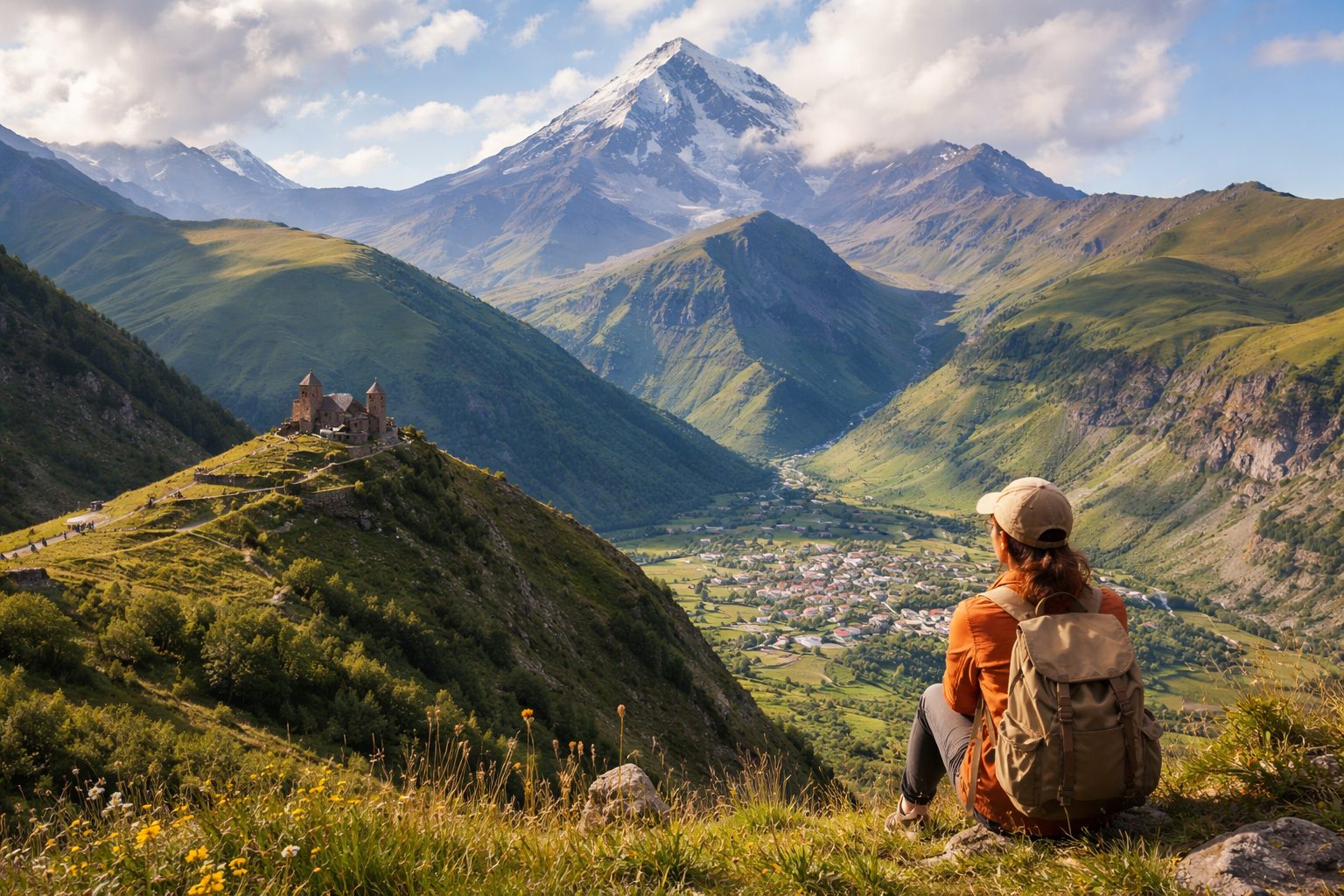
Some destinations have been quietly building toward a breakthrough moment, and 2027 is it for several of them. Georgia (the country, not the state) has established itself as one of the most surprising travel stories of the decade. Tbilisi’s mix of ancient churches, Soviet-era architecture, and a genuinely excellent food and wine scene makes it hard to ignore. Albania is finally getting the recognition it deserves, drawing visitors who missed out on Croatia before it got crowded. Rwanda is drawing serious attention not just for gorilla trekking but for its model of sustainable tourism and its remarkable cultural revival.
Closer to the well-trodden paths, secondary cities across Southeast Asia have become compelling alternatives to Bangkok or Bali. Da Nang in Vietnam, Siem Reap’s surrounding region in Cambodia, and Flores in Indonesia are all drawing curious travelers who want a more genuine experience. The infrastructure has caught up in many of these places without fully erasing what made them special.
Popular Cities to Visit in 2027
A handful of cities are seeing real momentum heading into 2027:
- Medellín, Colombia has transformed dramatically over the past decade and is now one of the most energetic cities in Latin America. The climate is extraordinary, the food scene is evolving fast, and the public transportation rivals cities twice its size.
- Thessaloniki, Greece is drawing visitors who want Greek history and food without the overcrowding of Athens or Santorini. The local cuisine is considered the best in Greece by many Greeks themselves.
- Chengdu, China is increasingly accessible to international travelers and offers the Giant Panda Research Base alongside a remarkable culinary tradition and a lifestyle the city is genuinely proud of.
- Tallinn, Estonia remains one of the best-preserved medieval cities in Europe and is far less visited than cities with comparable history in Western Europe.
- Cartagena, Colombia continues to attract travelers looking for Caribbean color, colonial architecture, and a lively arts scene.
Each of these cities rewards even a few days of unhurried exploration, and none of them has reached the point of feeling overrun.
Unique Natural Wonders to Explore
Some natural destinations have been getting harder to access on purpose, as local governments attempt to manage visitor numbers and preserve what makes them valuable. The Faroe Islands have implemented a visitor cap system and require tourists to contribute to conservation efforts. The Azores in Portugal operate similar controls. Both are worth the process of booking early.
Patagonia, split between Chile and Argentina, remains one of the most breathtaking landscapes on earth. The key is going outside the peak months of January and February, when trails are less crowded and the light is often more interesting. Iceland’s interior highlands, accessible only in summer, offer a surreal volcanic landscape that most visitors never see because they stick to the coastal ring road.
Cultural Hotspots to Experience in 2027
Must-Visit Historical Sites
History travel has matured. People want context, not just checkboxes. The sites that stand out in 2027 are the ones where that context is available and well-presented.
Jerash in Jordan is one of the most complete Roman cities outside of Italy and rarely gets the attention it deserves. Visiting Petra the same trip is obvious, but Jerash alone justifies the flight. In Mexico, Oaxaca serves as a base for exploring Monte Albán, one of the oldest cities in Mesoamerica, and the surrounding archaeological zone is still being actively studied.
In Southeast Asia, Bagan in Myanmar presents a complicated travel decision given the political situation, but for those who do go, the scale of its temple complex is unlike anything else in the region. Hoi An in Vietnam pairs remarkably well with nearby My Son, a Cham archaeological site that gets a fraction of the visitors despite its historical significance.
- Jerash, Jordan
- Monte Albán, Oaxaca, Mexico
- Hoi An and My Son, Vietnam
- Plovdiv, Bulgaria (one of the oldest continuously inhabited cities in the world)
- Matera, Italy (cave city, UNESCO World Heritage Site)
Festivals and Events in 2027
Festivals are a legitimate reason to plan a trip around specific dates, and some events in 2027 are worth building an itinerary around entirely:
- Carnival in Rio de Janeiro (late February 2027) remains the most spectacular street party on earth. Booking accommodation a year out is not an exaggeration.
- Holi in Rajasthan, India (March 2027) is transformative in a way that’s hard to describe. Jaipur and Jodhpur are both excellent bases.
- Oktoberfest in Munich (September/October 2027) sounds predictable, but doing it properly, with a reserved table in a tent rather than standing outside, is a completely different experience than most people expect.
- Day of the Dead in Oaxaca, Mexico (late October/early November) is one of the most misunderstood and genuinely moving cultural events in the world. It’s celebratory, not morbid.
- La Tomatina, Buñol, Spain (August 2027) is exactly as chaotic and fun as advertised.
Culinary Destinations for Food Lovers
Food travel has become its own legitimate category, and a few cities have established themselves as destinations worth visiting for eating alone.
San Sebastián in the Basque Country has more Michelin stars per square kilometer than almost anywhere. But the real reason to go is the pintxos bars in the old town, where you can eat extraordinary food standing at a counter for very little money. Lima, Peru has positioned itself as one of the great food cities of the world, and that reputation is fully justified. Ceviche, tiradito, causa, and chifa (Peruvian-Chinese fusion) represent a culinary tradition that’s both ancient and constantly evolving.
Japan remains the gold standard for food travel at every price point. Tokyo and Osaka are obvious, but Fukuoka has a ramen and street food culture that’s worth a dedicated trip. Kyoto’s kaiseki tradition is refined to the point of being almost meditative.
Adventure and Outdoor Destinations for 2027
Thrilling Activities for Adventure Seekers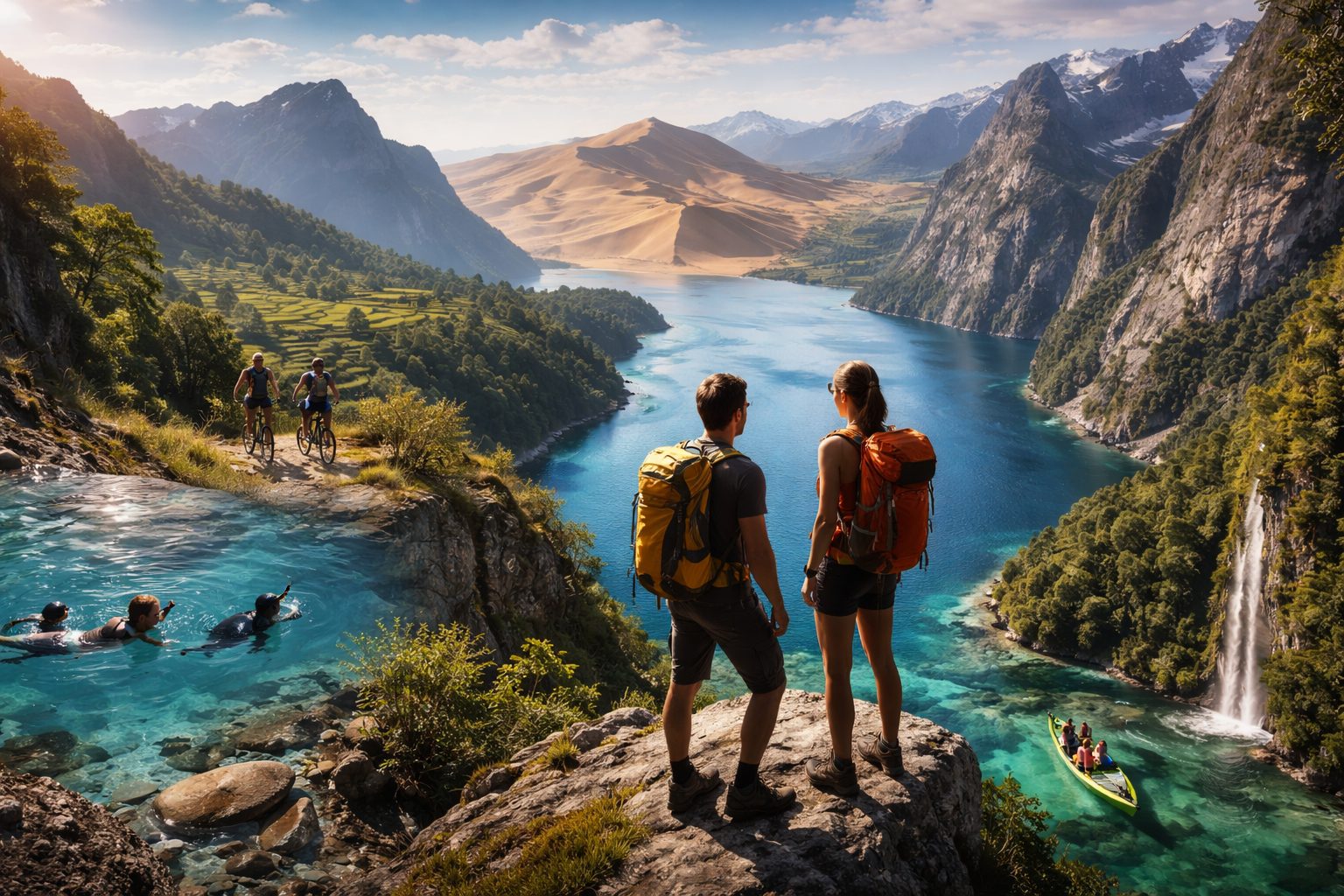
Adventure travel has diversified significantly. It’s no longer just mountaineering and white-water rafting. Some of the most compelling options for 2027 include:
- Via ferrata routes in the Dolomites, Italy (fixed cable climbing on mountain faces, accessible to non-technical climbers)
- Paragliding above Pokhara, Nepal, with views of the Annapurna range
- Multi-day sea kayaking in Ha Long Bay, Vietnam, camping on beaches inside the bay
- Sandboarding in the Wahiba Sands desert in Oman
- Freediving courses in Dahab, Egypt, one of the world’s best spots for the discipline
The shift toward multi-day, immersive experiences rather than single-day activities is notable. Travelers who invest more time tend to come away with experiences that stay with them longer.
Best National Parks to Discover
National parks worldwide have become more sophisticated about managing access, and booking well in advance is now standard for many of the most popular ones.
Torres del Paine in Chilean Patagonia operates a lottery system for some campsites and requires booking the iconic W Trek months ahead. The result is a more controlled experience that, in my view, actually improves the visit. Plitvice Lakes National Park in Croatia is stunning but genuinely crowded in summer. Visiting in April or October gives you the waterfalls and color without the shoulder-to-shoulder experience.
Less well-known parks worth seeking out:
- Canaima National Park, Venezuela (tepuis and Angel Falls)
- Kahuzi-Biega, Democratic Republic of Congo (eastern lowland gorillas, far fewer visitors than Rwanda)
- Jiuzhaigou Valley, China (reopened after earthquake restoration, the turquoise lakes are extraordinary)
- Ordesa y Monte Perdido, Spain (the Pyrenees at their most dramatic, relatively undervisited)
Coastal Escapes for Beach Enthusiasts
Beach travel is extremely personal, but a few considerations apply broadly. The Maldives remains the benchmark for overwater bungalow experiences, though the environmental pressures are real and worth thinking about. For those who want similar aesthetics with less guilt, the Banda Islands in Indonesia offer crystal-clear water, almost no crowds, and a fascinating history connected to the spice trade.
The Alentejo coast in Portugal is one of Europe’s most underrated coastlines. Rough, dramatic, uncrowded, and close enough to Lisbon to combine easily. Comporta, in particular, has developed a quiet following among people who want natural beaches without the Algarve crowds.
For Caribbean travel in 2027, Dominica continues to distinguish itself as an island that’s genuinely committed to eco-tourism and offers some of the most dramatic volcanic landscapes in the region.
Family-Friendly Travel Destinations in 2027
Top Theme Parks to Visit
Theme parks have evolved considerably, and the best ones now offer experiences that hold up for adults alongside kids.
- Universal Epic Universe, Orlando opened in 2025 and continues to add content. The Wizarding World expansion and the Nintendo World zone are both genuinely impressive.
- Efteling, Netherlands is one of Europe’s oldest and most beloved theme parks, rooted in European fairy tale tradition. It’s worth traveling to the Netherlands specifically for it.
- Tokyo DisneySea, Japan is consistently rated the best Disney park in the world. The attention to detail and the food quality are on another level.
- Ferrari World, Abu Dhabi combines genuine thrill rides with good family pacing.
- Parque Warner, Madrid is smaller and less crowded than the big parks while still delivering a full day of entertainment.
Educational Destinations for Kids
Travel with children works best when there’s something for them to engage with actively, not just look at. A few destinations stand out:
- Washington D.C., USA: The Smithsonian museums are free, extraordinary in depth, and genuinely engaging for children of almost any age. The Natural History Museum alone can fill an entire day.
- London, UK: The Natural History Museum, Science Museum, and British Museum are all within easy reach and all free. The city is also just manageable to navigate with kids.
- Galápagos Islands, Ecuador: Expensive but transformative for older children. Animals that show no fear of humans make for wildlife encounters that can’t be replicated anywhere else.
- Costa Rica: Zip-lining, wildlife corridors, and well-organized eco-lodges make it one of the most accessible adventure destinations for families.
Relaxing Resorts for Family Vacations
Not every family trip needs to be educational or adventurous. Sometimes the goal is simply to be comfortable together somewhere beautiful.
Club Med resorts operate well for families because the all-inclusive model removes daily negotiation about costs and activities. Phuket, Bali, and the Maldives all have excellent family resort infrastructure. For something with more character, the Algarve in Portugal has an extraordinary concentration of excellent hotels alongside beaches that are safe for children and diverse enough to keep adults interested for a week.
Mexico’s Pacific coast, particularly around Punta Mita and San Pancho, has developed a set of boutique resort options that work well for families who want a more genuine Mexican experience than the Cancún hotel strip provides.
Budget-Friendly Travel Destinations for 2027
Affordable Cities for Travelers
Budget travel in 2027 is most rewarding in places where your money has genuine purchasing power. Eastern Europe, Central Asia, and Southeast Asia all fit this profile, but there are also pockets of value in places you might not expect.
- Tbilisi, Georgia: Accommodation and food are genuinely cheap by European standards, the city is walkable, and the quality of local wine is remarkable for the price.
- Plovdiv, Bulgaria: One of the most underrated cities in Europe, with a strong arts scene, excellent cheap food, and a beautifully preserved old town.
- Hanoi, Vietnam: Street food culture means you can eat extraordinarily well for almost nothing. The city rewards slow exploration on foot.
- Medellín, Colombia: Strong peso exchange rate for dollar and euro holders, excellent public transport, and a social scene that’s accessible to budget travelers.
- Porto, Portugal: Cheaper than Lisbon, equally beautiful, and with an authenticity the capital sometimes struggles to maintain.
Tips for Traveling on a Budget
Stretching a budget in 2027 comes down to a few consistent principles:
- Travel shoulder season: The weeks immediately before and after peak season offer dramatic price drops with only minor compromises on weather.
- Book accommodation with kitchens: Even cooking two or three meals a week yourself significantly reduces food costs without cutting into experience quality.
- Use local transit: In most cities, public transportation is faster, cheaper, and more interesting than taxis or ride-shares.
- Stay longer: Flight costs per day go down the longer you stay. A two-week trip almost always costs less per day than a one-week trip to the same destination.
- Skip the tourist restaurants: The best food in almost every city is eaten by locals, not in the places with English menus near the main attractions.
- Use overnight trains and buses: Combining travel and accommodation saves both money and time in regions with good rail or bus networks.
Best Value Accommodations
Hostels have changed enormously. The best ones in 2027 offer private rooms with en-suite bathrooms, strong WiFi, excellent common areas, and curated social programming. Generator Hostels across Europe, Selina in Latin America and elsewhere, and Tribal Hostel in Tbilisi are examples of places that have turned budget accommodation into a genuine experience.
Guesthouses operated by local families remain the best value in much of Asia and Eastern Europe. They’re typically cheaper than hotels, more personal, and more revealing of local life. Booking directly rather than through large platforms often gets you a better rate and cuts out the middleman commission.
Luxury Travel Destinations in 2027
Exclusive Resorts and Hotels
Luxury travel has shifted toward exclusivity and authenticity rather than simply opulence. The hotels that stand out in 2027 tend to offer something that can’t be replicated elsewhere.
- Singita lodges, East Africa: Built into private game reserves with extraordinarily low guest density. The wildlife access and conservation mission make them genuinely distinctive.
- Amanjiwo, Java, Indonesia: Set against the backdrop of Borobudur temple with some of the most architecturally considered rooms of any hotel in Asia.
- Londoñero, Cartagena, Colombia: A small boutique property in the walled city that’s become the benchmark for Colombian luxury hospitality.
- Fogo Island Inn, Canada: Remote, architecturally striking, and deeply embedded in local Newfoundland community. The experience is unlike anything else in North America.
- Six Senses Bhutan: A series of lodges across multiple valleys, combining wellness programming with an extraordinary cultural immersion.
High-End Experiences and Activities
At the top end of the travel market, the experiences that justify their price tags tend to be access-driven rather than comfort-driven:
- Private gorilla trekking permits in Rwanda: The standard permits are regulated, but private access to specific groups of gorillas exists and is worth it for the uncrowded encounter.
- Helicopter access to backcountry skiing in Canada: Heli-skiing in British Columbia remains one of the most dramatic skiing experiences on earth.
- Private villa in Tuscany with a dedicated chef: The food, the landscape, and the pace combine into something that’s genuinely restorative.
- Chartered yacht in the Greek islands: Complete flexibility over islands and anchorages, and the ability to see the Aegean as it was meant to be experienced.
- Private guided Machu Picchu sunrise access: Available with the right operator and permits, it transforms one of the world’s most visited sites into something intimate.
Luxury Cruises to Consider
River cruising has matured into a sophisticated product, and for certain itineraries it remains the most sensible way to travel. The Danube from Passau to Budapest is an obvious classic. The Douro in Portugal offers exceptional wine country scenery. And Mekong river cruises between Laos and Vietnam combine cultural access with a pace that’s almost impossible to replicate by land.
For ocean luxury, expedition cruising continues to grow. Ships to Antarctica, the Northwest Passage, and the remote islands of the South Pacific are designed for smaller passenger counts and genuine exploration. Ponant and Hurtigruten are both worth researching for these routes. The experience is demanding in some ways but produces travel memories that outlast almost anything else.
Sustainable Travel Destinations for 2027
Eco-Friendly Hotels and Resorts
Sustainable accommodation has moved well beyond “please reuse your towels.” The properties that take it seriously are now integrating renewable energy, local food sourcing, water recycling, and genuine community benefit into their operations.
Lapa Rios Lodge in Costa Rica has been a benchmark in this area for years. Solar-powered, locally staffed, surrounded by private rainforest reserve, and connected to genuine conservation outcomes. Feynan Ecolodge in Jordan’s Dana Biosphere Reserve is solar-powered, operates under a community employment model, and sits in one of the most dramatic landscapes in the Middle East. Longitude 131° in Australia positions itself at the edge of Uluru with sustainability credentials and genuine engagement with Anangu cultural knowledge.
Responsible Tourism Practices
Traveling responsibly in 2027 is less about guilt and more about making better choices that are increasingly easy to make:
- Choose operators that pay guides fair wages and maintain direct community benefit
- Avoid wildlife experiences that involve animal captivity or contact (elephant riding, lion petting, etc.)
- Eat local and seasonal wherever possible
- Offset flights through credible programs, ideally through verified carbon removal rather than cheap avoidance credits
- Stay longer in fewer places rather than rushing through many destinations
- Learn a few words of the local language. It costs nothing and changes the quality of every interaction.
The shift toward slow travel is one of the most positive developments in the industry. People are taking longer trips to fewer places, engaging more deeply, and leaving with something closer to genuine understanding.
Best Destinations for Eco-Conscious Travelers
Some countries have made sustainability a genuine part of their national tourism identity:
- Costa Rica: Over 25% of the country is protected national park or reserve. Renewable energy powers the majority of the country. The eco-lodge infrastructure is excellent.
- Slovenia: One of the most sustainably certified tourism destinations in Europe. Ljubljana is compact, walkable, and genuinely committed to environmental standards.
- Bhutan: The country measures success in Gross National Happiness rather than GDP and charges a daily visitor fee that funds conservation and social services.
- Palau: A Pacific island nation with a strict environmental visitor pledge and a Pristine Seas marine sanctuary covering most of its waters.
- Rwanda: The gorilla trekking permit fees fund conservation directly, and the country has banned single-use plastics more effectively than almost any other nation.
Comparison of Top Travel Destinations for 2027
Side-by-Side Comparison of Popular Spots
| Destination | Best For | Avg Daily Cost | Crowds | Safety |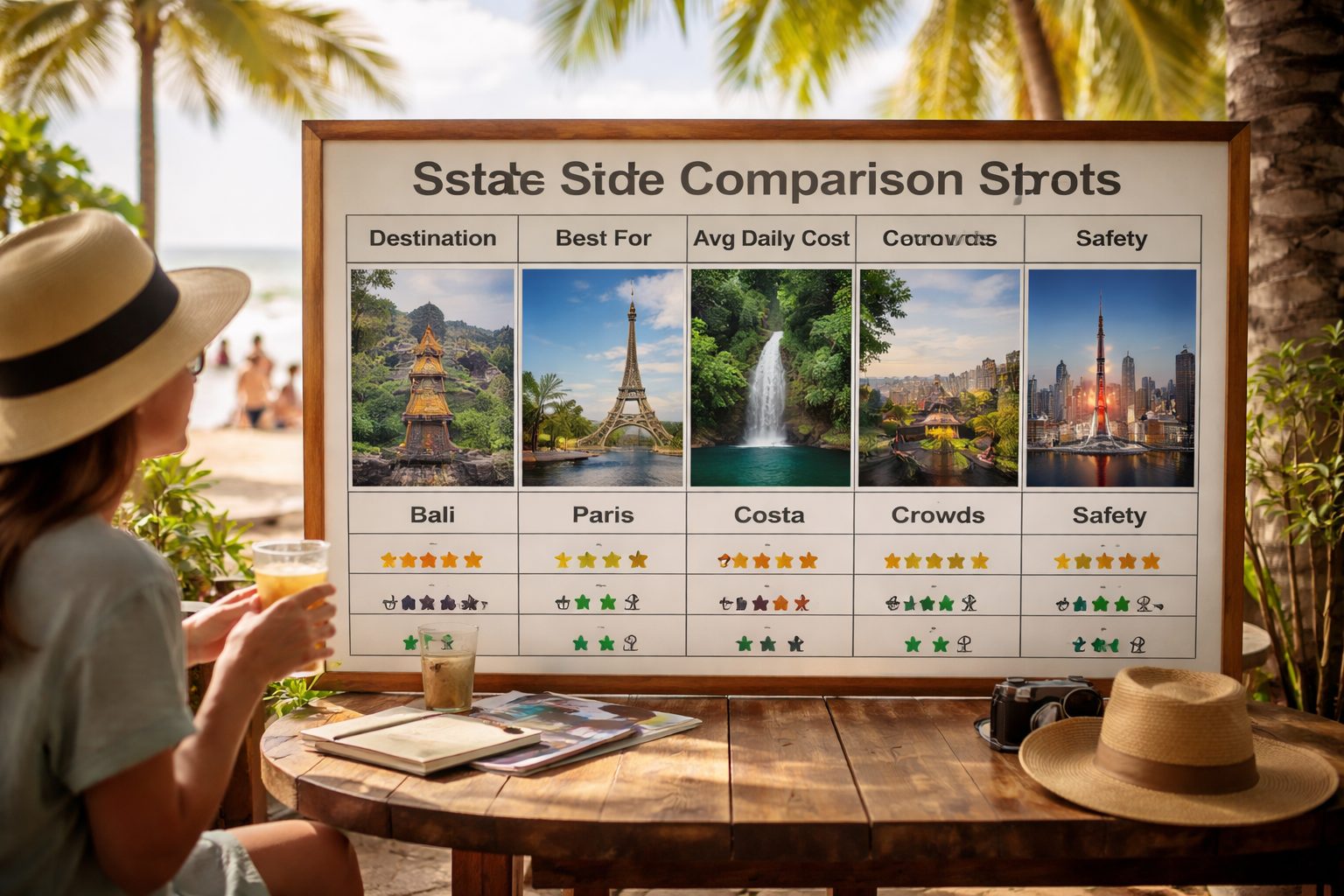
|—|—|—|—|—|
| Tbilisi, Georgia | Culture, food, budget | $50-80 | Low | High |
| Medellín, Colombia | Urban culture, adventure | $60-100 | Medium | Medium-High |
| Lisbon, Portugal | History, food, nightlife | $100-160 | High | High |
| Chiang Mai, Thailand | Culture, budget, food | $40-70 | Medium | High |
| Ljubljana, Slovenia | Eco-travel, charm | $80-130 | Low | High |
| Kyoto, Japan | History, food, culture | $120-200 | High (peak) | Very High |
| Cartagena, Colombia | History, beaches, luxury | $80-150 | Medium | Medium |
| Plovdiv, Bulgaria | History, art, budget | $40-70 | Low | High |
Cost Analysis of Different Destinations
The most expensive destinations in 2027 by overall travel cost are concentrated in Western Europe, Japan, Australia, and the Maldives. A comfortable week in Zurich or Oslo will cost more than a month in Georgia or Vietnam. But the comparison isn’t always straightforward because value means different things depending on what you’re looking for.
Japan is expensive in absolute terms but delivers extraordinary value per experience. The food quality, the cultural depth, the safety, the transportation efficiency, and the cleanliness of cities create a travel experience that justifies higher costs for many people. The Maldives is expensive in absolute and relative terms but offers a specific experience unavailable elsewhere.
For pure budget stretching:
- Georgia ($40-80 per day for comfortable travel)
- Vietnam ($35-70 per day)
- Bulgaria ($40-75 per day)
- Albania ($40-75 per day)
- Colombia ($55-90 per day)
Travel Time and Accessibility
Getting there matters. Long-haul flights add both cost and recovery time to any trip. Some of the most rewarding destinations for travelers based in North America or Europe are actually quite accessible:
- Eastern Europe from Western Europe: 2-3 hour flights on budget carriers, no jet lag
- Morocco from Europe: under 3 hours, same or one time zone difference
- Colombia from the US East Coast: 4-5 hours, manageable time difference
- Japan from the US West Coast: 11-12 hours, significant jet lag but direct routes are well-established
- Southeast Asia from Europe: typically 10-13 hours, with good hub connections through Dubai, Doha, or Singapore
Accessibility improvements in 2027 include expanded low-cost carrier routes into Eastern Europe and the Balkans, improved rail connections across Central Europe, and new direct routes from several North American cities into secondary Southeast Asian airports.
Practical Travel Tips for 2027
Best Times to Visit Key Destinations
Timing your visit correctly is one of the most impactful decisions you can make. Getting it wrong means crowds, heat, rain, or all three:
- Japan: Cherry blossom season (late March to mid-April) and autumn foliage (mid-October to mid-November) are both spectacular but crowded. May and September are excellent compromises.
- Patagonia: November and March bracket the summer peak and offer better trail availability with good weather.
- Southeast Asia: November to February is generally dry season for most of the region, though timing varies significantly by country and coast.
- Eastern Mediterranean: May and September avoid summer heat and crowds while keeping sea temperatures swimmable.
- East Africa (safaris): The Great Migration in Kenya/Tanzania peaks between July and October. Green season (November to April) offers lower prices and dramatic storm photography.
- Scandinavia: June to August for midnight sun and outdoor life; December to February for northern lights.
Packing Essentials for Different Locations
Packing well is mostly about packing less. The travelers I’ve seen struggle most are the ones carrying too much, not too little. That said, some location-specific items genuinely matter:
For tropical destinations:
* Lightweight, quick-dry clothing (merino wool works surprisingly well in heat)
* High-SPF reef-safe sunscreen
* A portable water filter or purification tablets
* Insect repellent with DEET for areas with malaria or dengue risk
For cold or mountain destinations:
* Layering system (base, mid, shell) rather than one heavy jacket
* Waterproof boots with ankle support for trail hiking
* A lightweight down layer that compresses small
For urban travel:
* A day bag with RFID-blocking pockets
* Portable battery pack
* Universal adapter (one good one covers almost everywhere)
For all trips in 2027:
* An eSIM card for the destination (they’re widely available and dramatically cheaper than roaming)
* A downloaded offline map (Google Maps or Maps.me offline maps are reliable)
* Copies of key documents stored both in cloud and email
Navigating Travel Restrictions and Safety
Travel requirements have mostly stabilized since the disruptions of the early 2020s, but some friction remains. A few consistent principles help:
Check your government’s official travel advisory for any destination at the time of booking, not just when you’re about to leave. Situations change. Entry requirements for visas, vaccinations, and travel insurance are best verified through the official embassy or tourism authority website of the destination country rather than third-party travel blogs, which are often out of date.
Travel insurance is non-negotiable at this point. Medical evacuation from a remote location can cost tens of thousands of dollars without coverage. Policies that include emergency medical, evacuation, trip cancellation, and baggage loss are widely available at reasonable costs relative to the protection they provide.
Some regions require specific vaccinations as a condition of entry. Yellow fever documentation is required for certain African and South American destinations. Checking the entry requirements for your specific passport with the destination government gives you the accurate picture.
Frequently Asked Questions about Travel in 2027
What are the top travel trends for 2027?
Slow travel (longer stays in fewer places), regenerative tourism (travel that leaves destinations better than you found them), and culinary travel are the dominant trends. Wellness travel and digital nomad-oriented long stays are also growing significantly, as remote work has normalized extended travel as a lifestyle rather than a vacation format.
How to choose the best travel destination?
Start with what you actually want from the trip rather than a list of popular places. Adventure, culture, relaxation, food, history, and budget have different optimal answers. Then overlay your travel calendar against seasonal timing. The right destination is often not the most famous one but the one that fits your specific interests and the time of year you can travel.
What are the must-try experiences in 2027 destinations?
The experiences worth prioritizing tend to be locally specific and hard to replicate elsewhere. Wine tasting directly with a Georgian winemaker, hiking to a temple in Bhutan that requires several days of trail, eating at a chef’s counter in San Sebastián, or watching the sun rise over Angkor Wat are the kinds of things that justify international travel in a way that generic tourist activities don’t. Do the thing that you can only do there.
Choosing where to go is the first step, but the best travel destinations 2027 has to offer will only reward you if you show up with curiosity, flexibility, and a willingness to follow where the trip takes you. The world has more worth seeing than any one person can manage, and that’s a genuinely good problem to have.